

Our Verdict
Helicopter parenting is neither purely harmful nor purely helpful. Close oversight can meaningfully protect children in high-risk environments and support academic achievement in younger years. However, sustained over-involvement tends to work against the self-regulation, resilience, and independent decision-making skills children need as they grow. The research suggests that high parental warmth combined with gradually released autonomy is more likely to serve children well across development.
Parents who recognize tendencies toward over-involvement and want a grounded, evidence-informed view of what high engagement supports - and what it may quietly cost their kids over time.
What 'Helicopter Parenting' Actually Means
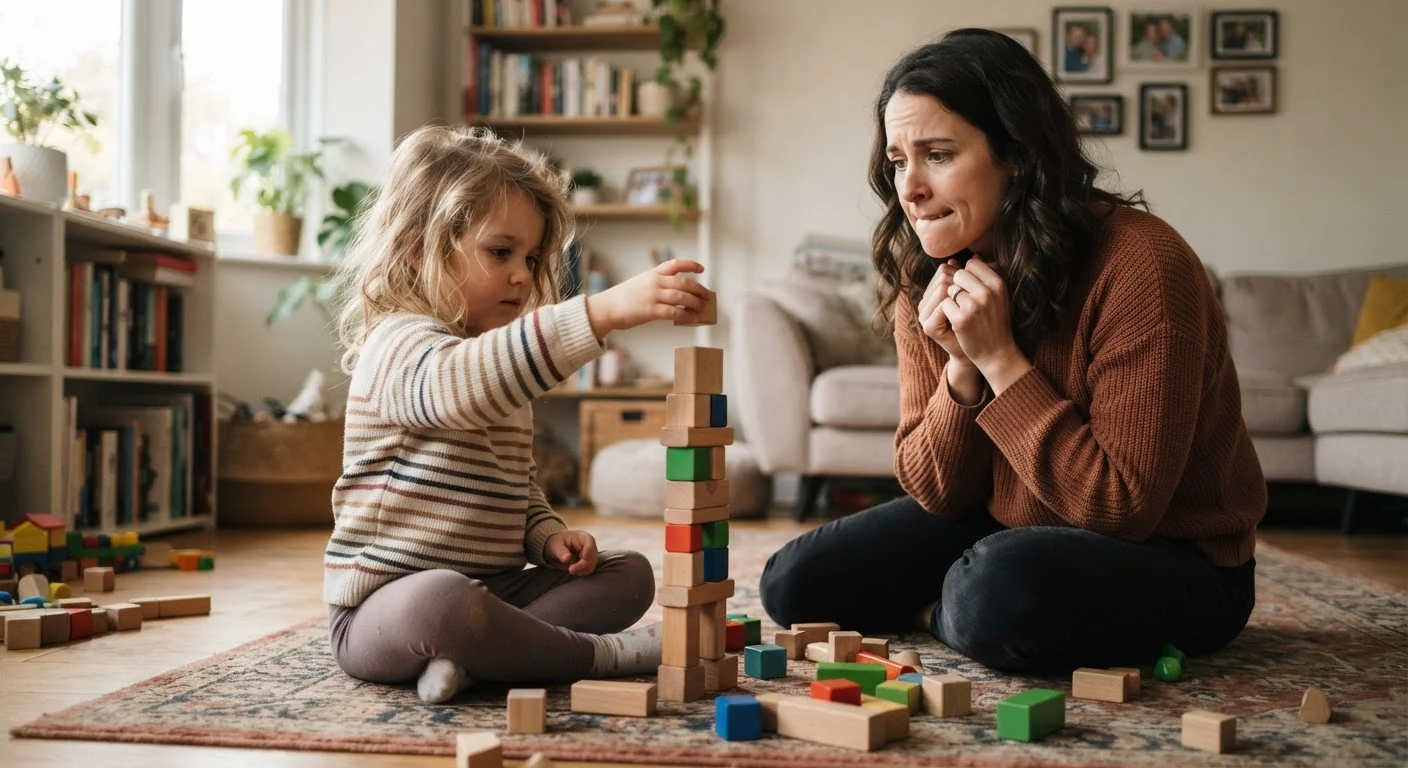
The term helicopter parenting describes a style of child-rearing in which parents remain extremely close - emotionally and physically - to their children's experiences, problems, and decisions. Rather than allowing a child to navigate difficulty independently, helicopter parents tend to anticipate obstacles, intervene quickly, and manage outcomes on the child's behalf.
Psychologists often contrast this style with authoritative parenting, which combines warmth and structure with deliberate encouragement of independence. For a broader look at these frameworks, see our overview of major parenting styles.
It's worth noting that helicopter parenting exists on a spectrum, and that parental involvement looks different across cultures, income levels, and neighborhood safety conditions. What reads as excessive control in one context may be a rational protective response in another.
Cultural Context Matters Here
What counts as 'too involved' is shaped significantly by cultural norms and socioeconomic context. In some cultures, close family involvement in a child's decisions is a valued sign of respect and care, not a developmental risk. Research findings from predominantly Western, middle-class samples may not translate uniformly across all American families. Any honest conversation about parenting style needs to account for the circumstances families are actually navigating.
The Case For: Where High Involvement Genuinely Helps
It would be unfair - and inaccurate - to dismiss close parenting as simply harmful. Research does identify real benefits, particularly in early childhood and in specific circumstances.
Stronger academic support and early intervention
Highly involved parents are more likely to notice academic struggles early and engage with teachers and school systems. This advocacy can make a meaningful difference for children who need additional learning support.
Greater physical safety, especially in high-risk settings
Close monitoring reduces a child's unsupervised exposure to physical hazards and risky peer behavior. In neighborhoods or situations with genuine safety concerns, this protective function has real value.
Children feel unconditionally supported
When parental involvement is paired with warmth rather than criticism, children often report feeling deeply secure and loved. That emotional foundation can support healthy attachment in the early years.
Faster problem-solving in genuine crises
Parents who stay close to their children's lives tend to recognize early warning signs - whether emotional distress, health changes, or social difficulties - and respond more quickly than less-engaged parents.
Studies of children in under-resourced or high-risk environments have found that close parental monitoring is associated with better safety outcomes and reduced exposure to harmful peer influences. In academic settings, highly involved parents often catch learning difficulties earlier and advocate more effectively for services. For children with anxiety disorders or developmental differences, extra scaffolding from a parent can be genuinely stabilizing rather than stifling.
The Case Against: What Over-Involvement May Cost
The concerns about helicopter parenting are well-documented - and they tend to compound as children move into adolescence and early adulthood.
Undermines development of self-regulation skills
Children who rarely manage frustration or failure on their own have fewer opportunities to develop emotional self-regulation. Research suggests this gap becomes more pronounced in adolescence, when independence demands increase sharply.
Linked to higher anxiety in older children and young adults
Several studies have found associations between helicopter parenting in adolescence and elevated anxiety symptoms in college-aged adults. The proposed mechanism is reduced confidence in one's own ability to cope with uncertainty.
Limits development of problem-solving and resilience
When obstacles are routinely removed before a child encounters them, the child misses the iterative experience of facing a problem, trying a solution, and adjusting. This process is foundational to building resilience.
Can strain the parent-child relationship over time
Adolescents in particular tend to interpret over-involvement as distrust. Research on teenage autonomy suggests that perceived parental control - even when well-intentioned - can damage communication and closeness during the teen years.
May reduce intrinsic motivation
When parents manage outcomes heavily, children can become reliant on external validation and direction rather than developing internal drive. Studies on self-determination theory connect high parental control with lower intrinsic motivation in academic and social domains.
A frequently cited body of research, including studies published in the Journal of Child and Family Studies, links high parental control with lower self-efficacy - children's belief in their own ability to handle challenges. When adults have rarely been allowed to fail safely, they often arrive at independence without the internal tools to manage it. This pattern shows up in anxiety rates among college-aged young adults whose parents remained intensely involved through their teenage years.
It's also worth considering how helicopter dynamics interact with sibling relationships. Our piece on how sibling bonds develop explores how parental behavior quietly shapes whether siblings build closeness or conflict - another area where constant parental mediation can have unintended effects.
Finding a Workable Middle Ground
Most developmental psychologists don't advise parents to simply step back and let children struggle unsupported. The goal is calibrated involvement - matching the level of parental engagement to the child's age, temperament, and actual risk level, then adjusting as the child demonstrates competence.
~75%
College students reporting parental over-involvement
Survey research published in the Journal of Child and Family Studies found approximately three-quarters of college students reported some form of helicopter parenting behavior from at least one parent.
Lower
Self-efficacy scores in highly controlled children
Multiple developmental studies have found that children raised with high parental control tend to score lower on self-efficacy measures - their belief in their own ability to handle challenges independently.
Practically, this might mean resisting the urge to resolve a social conflict your child could navigate themselves, while still being fully present when genuine safety is at stake. It means letting a seven-year-old experience the natural consequence of a forgotten homework assignment while staying closely involved in a teenager's mental health. Well-intentioned responses can sometimes reinforce dependence - the same principle applies beyond tantrums to many ordinary parenting moments.
This article is for general informational and educational purposes only. It does not constitute professional psychological or medical advice. If you have concerns about your child's development or wellbeing, please consult a qualified pediatrician, child psychologist, or licensed family therapist.
The content on this site is for informational purposes only and is not a substitute for professional advice. Always consult a qualified professional for guidance specific to your situation.