

Option A
Discipline
The long-game approach rooted in teaching and connection.
Best for: Parents who want to build self-regulation, emotional intelligence, and lasting cooperation in their children.
Option B
Punishment
A consequence-focused response aimed at stopping behavior.
Best for: Situations requiring immediate behavioral stops, though research suggests it works best when paired with teaching moments.
Two Words, Two Very Different Goals
Most parents use "discipline" and "punishment" as if they mean the same thing. They don't - and that distinction matters more than many of us realize when we're in the middle of a frustrating moment with a screaming toddler or a defiant ten-year-old.
Punishment is backward-looking. It applies a negative consequence to a behavior that already happened, with the goal of reducing the chance that behavior repeats. Think time-outs, privilege removal, or grounding when used purely as a penalty.
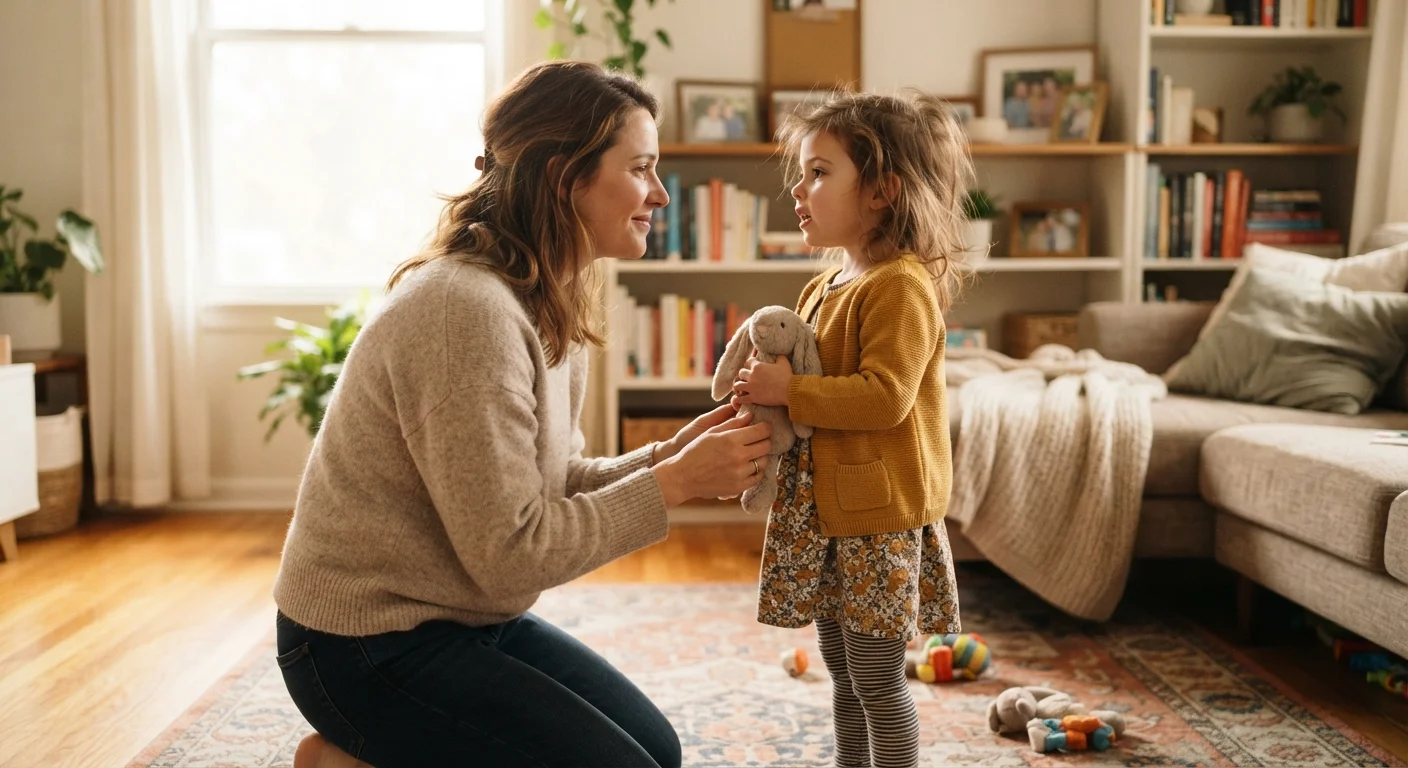
Discipline is forward-looking. The word itself comes from the Latin disciplina, meaning instruction or training. When parents discipline a child, they're actively teaching skills - how to manage emotions, how to make better choices, how to repair harm. The goal isn't compliance today; it's character over time.
This isn't just a philosophical distinction. Child development researchers, including those affiliated with the American Academy of Pediatrics, have long emphasized that guidance-centered approaches produce meaningfully different outcomes than punitive ones - and understanding why helps parents make more intentional choices in real, messy family moments.
| Criterion | Discipline | Punishment |
|---|---|---|
| Primary goal | Teach skills and build self-regulation | Stop or deter a specific behavior |
| Time orientation | Forward-looking (what comes next) | Backward-looking (response to what happened) |
| Emotional tone | Calm, connected, instructive | Can range from calm to reactive |
| Child's takeaway | What to do differently and why | That the behavior had a negative result |
| Long-term research outcomes | Linked to stronger self-regulation | Effective short-term; limited long-term alone |
| Relationship impact | Maintains or strengthens connection | Risk of eroding trust if harsh or inconsistent |
What the Research Actually Says
The science on this topic is fairly consistent. Studies in developmental psychology have repeatedly found that children raised with what researchers call authoritative parenting - warm relationships combined with clear expectations and reasoned guidance - show stronger self-regulation, higher academic achievement, and fewer behavioral problems over time compared with children raised in primarily punitive environments.
~40 years
Decades of authoritative parenting research
Developmental psychologist Diana Baumrind's foundational research, begun in the 1960s and extended across decades, consistently linked authoritative (warm + structured) parenting to positive child outcomes.
Significantly lower
Behavioral problems in guided vs. punitive homes
Multiple longitudinal studies in developmental psychology have found children in guidance-centered homes show meaningfully fewer conduct problems than those in primarily punitive environments.
1 in 4
Parents who report relying mainly on punishment
Surveys on American parenting practices suggest a notable share of parents default to punitive responses, often because they weren't shown alternatives in their own upbringing.
Punishment isn't always harmful. A clear, calm consequence applied consistently and paired with an explanation can be an effective parenting tool. The problem arises when punishment is the primary or only strategy - especially when it's harsh, unpredictable, or delivered in anger. Research from institutions like the Harvard Center on the Developing Child suggests that chronic stress from unpredictable punishment can actually impair the brain circuits children need to develop self-control.
What matters most, researchers say, is not eliminating all negative consequences, but ensuring that every consequence is accompanied by teaching. A child who loses screen time for hitting a sibling needs to understand why that happened and what they could do instead. Without that piece, they learn only that the behavior made you angry - not how to handle their frustration differently next time.
Practical Ways to Shift Toward Discipline
Making this shift doesn't require a perfect parenting overhaul. It starts with a simple question: Is my response teaching something, or just reacting?
- Name the behavior, not the child. "That was unkind" rather than "You're so mean" keeps the child's identity intact and the lesson focused.
- Use natural and logical consequences. When consequences connect directly to the behavior - leaving a mess means cleaning it up, breaking a toy through roughness means losing it - children understand cause and effect rather than experiencing arbitrary punishment.
- Repair after conflict. Reconnecting after a discipline moment - a hug, a brief check-in - reinforces that your relationship is secure even when behavior isn't acceptable.
- Wait for calm. Both parent and child learn better when the emotional storm has passed. A consequence stated calmly at a regulated moment is far more effective than one delivered in frustration.
Just as mindfulness and meditation are often conflated but serve distinct purposes - as explored in our piece on mindfulness vs. meditation - discipline and punishment require us to slow down and choose the right tool for the right goal.
Every Child and Family Is Different
Child temperament, cultural context, and family circumstances all shape which strategies feel workable and appropriate. What looks like "discipline" in one household may not translate directly to another. These principles are general guidance drawn from developmental research - not a prescription for any individual child or situation. A licensed child therapist or pediatrician can help tailor approaches to your family's specific needs.
This article is for general informational and educational purposes only. For concerns about your child's behavior or development, please consult a qualified pediatrician, child psychologist, or family counselor.
The content on this site is for informational purposes only and is not a substitute for professional advice. Always consult a qualified professional for guidance specific to your situation.