

The Hidden Hazards Most Pet Owners Don't See Coming
Pet owners tend to worry about the obvious dangers - busy roads, aggressive dogs at the park, or extreme weather. But inside the home, where pets spend most of their time, quieter hazards cause a surprising number of veterinary emergencies every year. Many of these are everyday objects or foods we barely think about.
This guide walks through the hazards that consistently catch well-meaning owners off guard, with practical steps to address each one. Whether you have a new puppy, a seasoned cat, or a multi-pet household, a room-by-room safety mindset goes a long way. For broader household safety, our Pet Care Basics hub has additional resources to help you keep every animal in your home healthy.
When to Call for Help Immediately
If you suspect your pet has ingested something toxic, don't wait for symptoms to develop before seeking help. Contact your veterinarian or an animal poison control line right away. Time is often a critical factor in treatment outcomes. Keep emergency contacts saved in your phone before you ever need them.
Hazards That Catch Pet Owners Off Guard
Toxic Houseplants That Look Perfectly Innocent
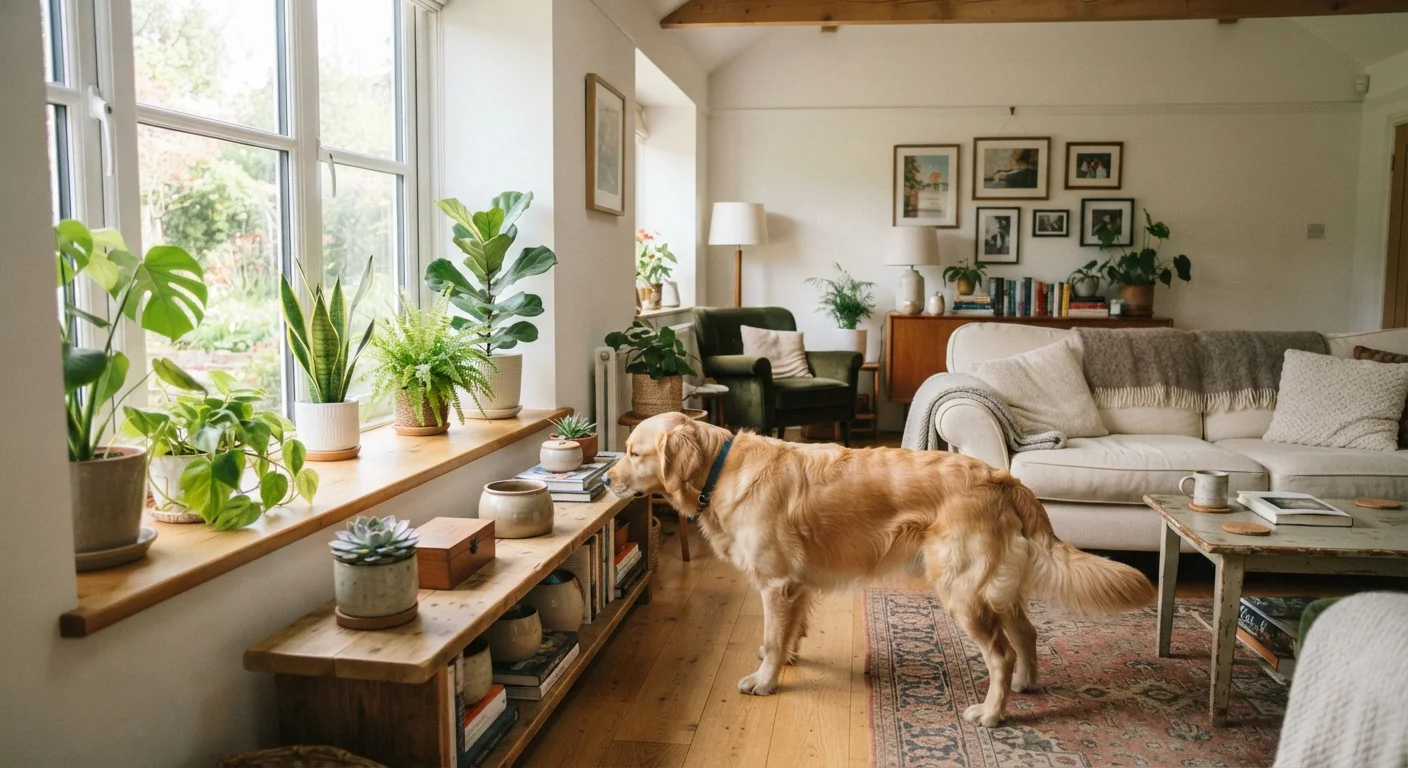
A surprising number of popular houseplants are toxic to pets. Lilies (particularly true lilies in the Lilium and Hemerocallis genera) are acutely dangerous to cats - even small exposures to pollen or water from the vase can cause kidney failure. Pothos, philodendron, and dieffenbachia are also common culprits, causing oral irritation, drooling, and gastrointestinal distress in both cats and dogs.
Before bringing any new plant into your home, cross-reference it with the ASPCA's comprehensive toxic plant database. For plants you already own, consider moving them to rooms your pets can't access, or choosing pet-safe alternatives like spider plants, Boston ferns, or certain succulents. Don't assume outdoor plants carried inside are safe either - many seasonal flowers like tulips and daffodils carry significant risks.
Even the water in a vase holding true lilies can be dangerous enough to cause kidney failure in cats.
Kitchen Foods That Are Dangerous in Small Amounts
Dogs and cats metabolize many human foods very differently than we do. Grapes and raisins are associated with kidney failure in dogs, even in small quantities - and the exact toxic mechanism isn't fully understood, making any amount concerning. Xylitol, an artificial sweetener found in sugar-free gum, some peanut butters, and baked goods, can cause a rapid drop in blood sugar and liver damage in dogs.
Other frequently overlooked dangers include onions, garlic, chives (which damage red blood cells in both dogs and cats), macadamia nuts, and raw yeast dough. Our article on common myths about feeding dogs human food separates the facts from the folklore about what's actually unsafe to share from your plate.
Xylitol - found in some sugar-free products - can cause dangerous blood sugar crashes in dogs.
Medications Left on Countertops or in Open Bags
Accidental medication ingestion is consistently among the top categories of calls to animal poison control lines. The danger isn't limited to prescription drugs - common over-the-counter pain relievers like ibuprofen and acetaminophen are acutely toxic to dogs and cats, respectively, at doses much lower than a human would take. Dropped pills on the floor are a particular risk because pets often find them before owners notice.
Pill organizers left on nightstands, purses with medications inside, and open medicine cabinets all present real access points. Proper storage - in latched, elevated cabinets - is essential in any home with animals. Our in-depth guide to safe storage of medications in homes with children and pets covers practical strategies that work for curious pets and kids alike.
A single dropped ibuprofen tablet can cause serious harm to a small dog or cat.
Electrical Cords and Blind Cords
Puppies and kittens are especially prone to chewing on electrical cords, which can cause burns to the mouth, electric shock, or, in serious cases, pulmonary edema (fluid in the lungs). Even adult pets can develop the habit if cords are left accessible. Bundling cords with cable management sleeves, routing them behind furniture, or using cord covers can significantly reduce risk.
Looped window blind cords are a separate but serious hazard - they pose a strangulation risk to both small pets and young children. Cordless blinds or those with safety tassels eliminate this danger entirely. If you're updating your home's safety setup, childproofing room by room covers many overlapping hazards that apply equally to pets and children.
Electrical cord chewing can cause injuries that aren't visible on the surface - internal burns are a real risk.
Cleaning Products and Household Chemicals
Many pet owners know to keep bleach and ammonia locked away, but the risk doesn't end after cleaning is done. Some disinfectants, floor cleaners, and surface sprays leave residue that pets absorb through their paws or by licking surfaces. Phenol-based cleaners (often found in certain pine-scented products) are particularly toxic to cats, whose livers can't process phenols efficiently.
After cleaning, ensure floors and surfaces dry completely before allowing pets back into the area, and store all products in latched cabinets. For households with both pets and children, our guide to household chemicals that should never share a cabinet offers a practical framework for organizing and storing hazardous products safely.
Pets can absorb residue from recently cleaned floors through their paws - ventilation and dry time matter.
Trash Cans Without Secure Lids
An unsecured trash can is essentially an all-you-can-eat buffet of hazards. Cooked bones (which splinter and can cause internal punctures), food wrappers coated in fat, coffee grounds, avocado skins, and discarded medications all end up in household trash. Dogs in particular are opportunistic scavengers - a few seconds of unsupervised access is all it takes.
Step-open or pedal-bin style trash cans are easy for determined dogs to nudge open. Bins with locking lids, or cans stored inside a latched cabinet under the sink, are more reliable solutions. Kitchen and bathroom waste bins both deserve attention - bathroom trash often contains cotton pads with product residue, dental floss (a gastrointestinal obstruction risk), and medication packaging.
Dental floss in the bathroom trash can cause life-threatening intestinal obstruction if swallowed by a cat.
Do a Pet-Eye-Level Audit
Walk through each room and crouch down to your pet's height to see what's actually within reach. Pay special attention to gaps under appliances, low shelves, and the backs of furniture where cords gather. This quick exercise often reveals hazards that aren't obvious from a standing position.
Building a Safer Home Takes a Pet's-Eye View
The most effective way to spot hazards is to literally get low - crouch to your pet's level in each room and look at what's accessible. Cords dangling behind furniture, small objects on low shelves, and gaps under appliances all become visible from that vantage point.
If your pet does get into something concerning, don't wait for symptoms to appear before calling for help. Keep the ASPCA Animal Poison Control Center number (888-426-4435 - note that a consultation fee may apply) saved in your phone alongside your regular vet's emergency line. If you notice signs of distress, our article on signs your pet may be in pain can help you recognize when something is wrong. The faster you act, the better the outcome tends to be.
This article is for general informational and educational purposes only. It is not a substitute for professional veterinary advice, diagnosis, or treatment. Always consult a licensed veterinarian regarding concerns about your pet's health or safety.
The content on this site is for informational purposes only and is not a substitute for professional advice. Always consult a qualified professional for guidance specific to your situation.