

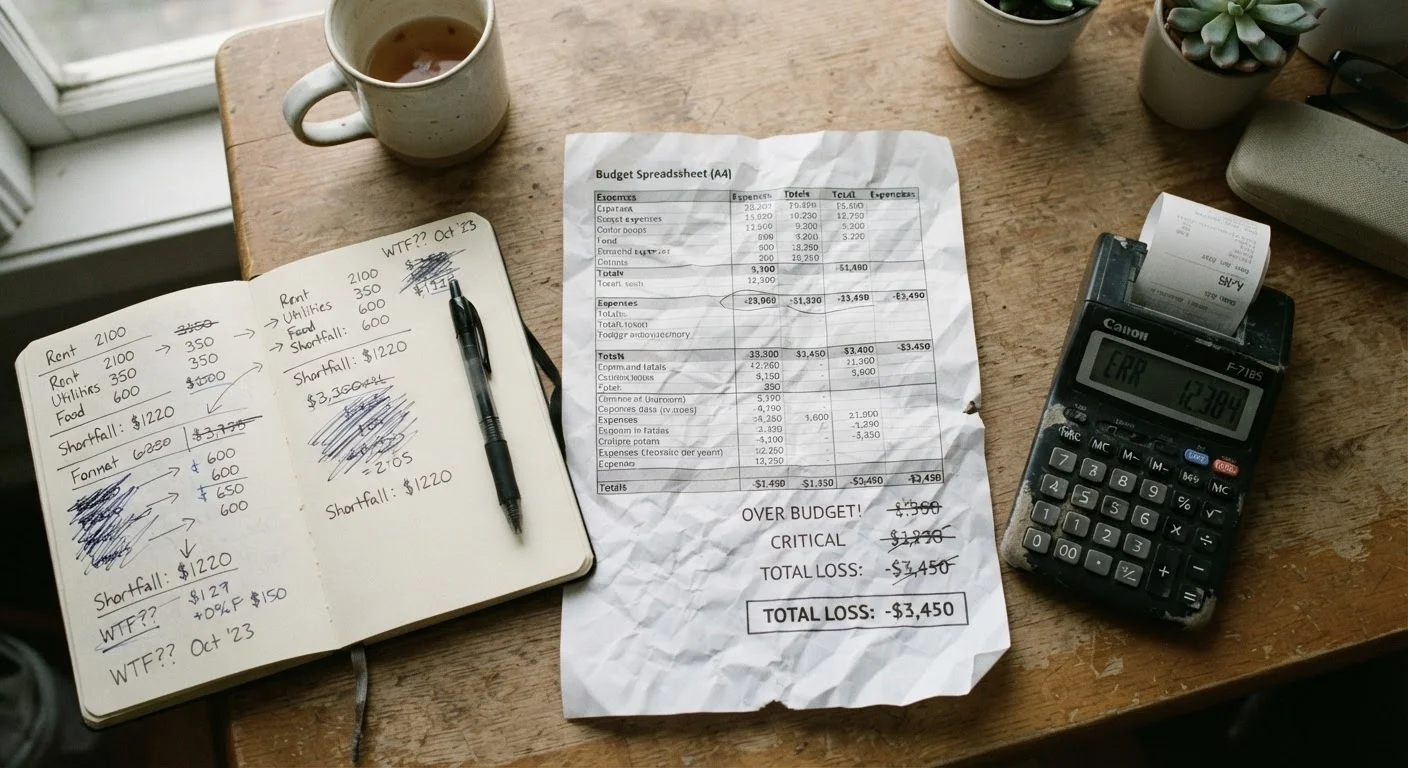
The Second-Month Problem
The first month of budgeting tends to go well. You're energized, paying close attention, and motivated by the novelty of tracking your money. Then month two arrives - and the wheels come off. This isn't a willpower problem. It's a structural one. The same pattern shows up with fitness routines, as explored in how exercise habits typically unravel: early momentum masks design flaws that only surface once the initial effort fades.
Understanding why budgets fail - not just that they do - puts you in a position to build one that lasts. If you've ever wondered whether certain budget myths are holding you back before you even begin, the mistakes below will look familiar.
Building a budget so tight there's no margin for normal life.
Why it happens: New budgeters often focus on maximum savings targets, cutting discretionary spending to near zero in an optimistic first-month push.
Forgetting irregular expenses that don't appear every month.
Why it happens: Monthly budgets are easy to populate with recurring bills, but annual subscriptions, car registration, medical co-pays, and seasonal costs don't show up on a standard monthly view.
Treating the budget as a one-time document rather than a living plan.
Why it happens: The setup feels like the hard part, so once it's done, many people assume the plan runs itself. Life changes - income, expenses, and priorities shift - but the budget doesn't.
Giving up entirely after one overspend instead of adjusting and continuing.
Why it happens: Budgeting is often framed as pass/fail, so one bad week feels like proof the whole system doesn't work - triggering abandonment rather than correction.
Tracking spending after the fact without any real-time awareness during the month.
Why it happens: Many people review their spending at month-end but don't check category balances while they're making decisions, so they overspend without realizing it until it's too late.
How to Keep Your Budget Running Month After Month
Avoiding these mistakes requires a shift in how you think about budgeting. A budget is not a plan you set once - it's a financial tool you tune regularly. Building a monthly reset routine is one of the most effective ways to catch drift early, before small gaps become reasons to quit entirely.
~80%
Of budgeters who quit do so within 2 months
Financial behavior research consistently shows that the majority of people who attempt budgeting abandon the effort within the first two months, often citing the plan feeling unsustainable.
3-4x
More irregular expenses than people initially estimate
Studies on household spending patterns suggest people routinely undercount non-monthly expenses by a factor of three or more when building their first budget.
Sustainable budgeting also depends on momentum. When progress feels invisible, motivation evaporates. Identifying tangible early milestones - like building a starter emergency fund or breaking even after an overspend - gives your brain evidence that the effort is working.
Finally, if you want a budget that genuinely accommodates savings without constant trade-offs, consider structuring your monthly plan to make savings a default rather than an afterthought. The habits of consistent long-term budgeters reflect exactly this kind of proactive design.
Perfection Is the Enemy of Consistency
A budget you follow imperfectly for six months delivers far more financial benefit than a perfectly designed budget you abandon after five weeks. Resist the urge to restart from scratch every time a month goes sideways. Small corrections compound over time in the same way that small missteps do.
This article is for general informational and educational purposes only and does not constitute personalized financial advice. Consult a qualified financial professional for guidance specific to your situation.
The content on this site is for informational purposes only and is not a substitute for professional advice. Always consult a qualified professional for guidance specific to your situation.