

How Zero-Based Budgeting Works
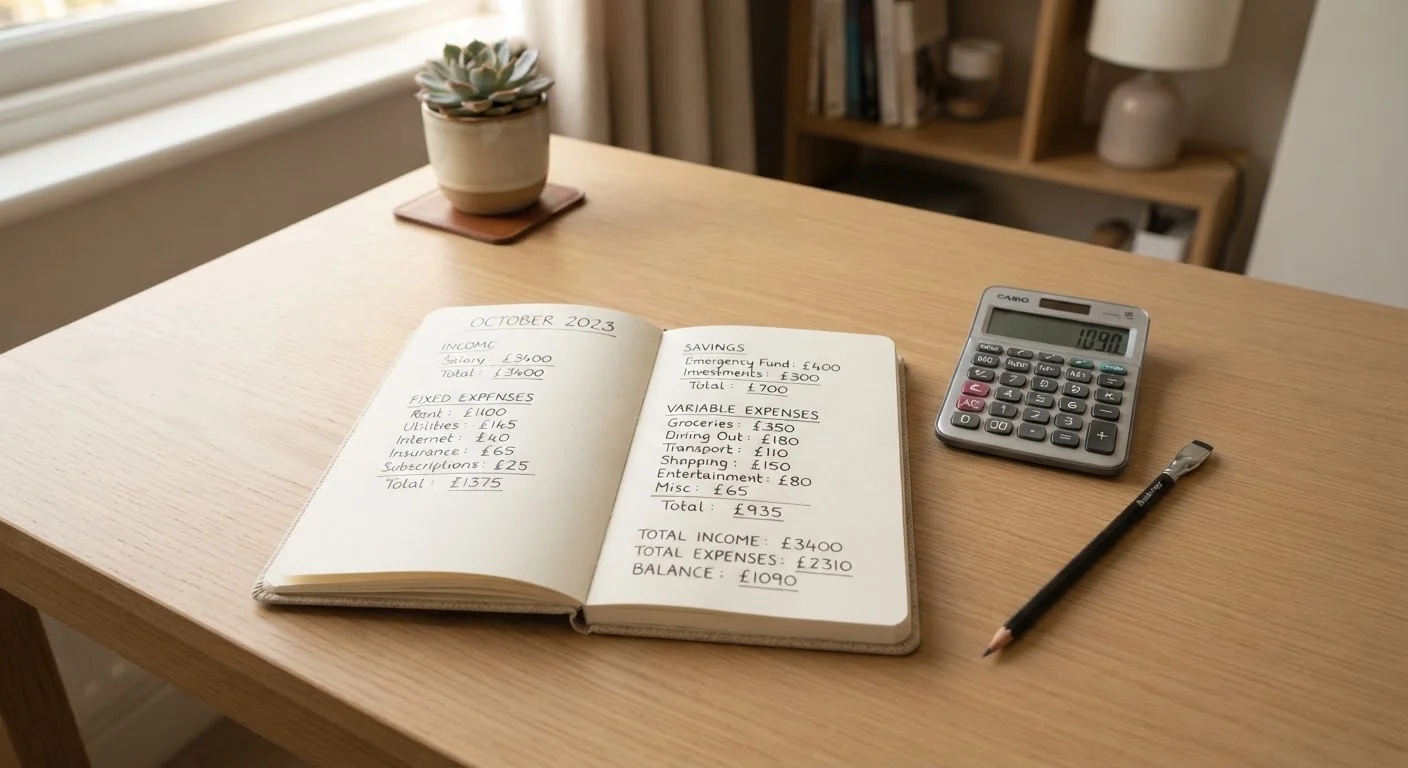
The mechanics of zero-based budgeting are straightforward. At the start of each month, you write down your expected total income. Then you list every category where money will go — rent or mortgage, groceries, utilities, transportation, dining out, subscriptions, savings contributions, debt payments, and so on. You keep assigning dollar amounts to categories until the total equals your income. The math: Income − All Allocations = $0.
This differs from how many people budget informally. Most households spend first and review later, if at all. Zero-based budgeting flips that sequence: decisions are made before spending begins, which makes overspending in any category a conscious choice rather than an accident.
If you're new to structured budgeting, building your first personal budget can help you get the foundational categories in place before applying the zero-based framework.
Start With Your Fixed Expenses First
When building your zero-based budget, list non-negotiable fixed costs first — rent, loan payments, insurance premiums, utilities. These don't change month to month and establish the floor for your available discretionary income. Once fixed costs are accounted for, you can allocate remaining dollars more flexibly across variable and savings categories.
Where the Method Adds the Most Value
Zero-based budgeting is particularly effective at surfacing "invisible" spending — recurring charges, subscriptions, and small daily purchases that collectively drain income without registering as significant line items. Because every dollar must be assigned, there's no category for money that quietly disappears.
The method also creates a direct link between your spending decisions and your financial goals. If you want to accelerate debt repayment or build an emergency fund, you can explicitly increase those allocations and reduce discretionary categories to compensate — making trade-offs visible and deliberate.
65%
Americans who don't follow a formal budget
According to a Gallup survey, nearly two-thirds of U.S. households do not maintain a detailed monthly budget, leaving spending largely untracked.
$1,000+
Average monthly untracked discretionary spending
Research from the Bureau of Labor Statistics Consumer Expenditure Survey suggests many households significantly underestimate their spending on food, entertainment, and personal care.
For readers focused on building savings or reducing debt, the zero-based approach pairs naturally with strategies covered in saving and debt management guidance.
Challenges to Anticipate
Zero-based budgeting demands more attention than simpler methods. You need to re-build the budget each month rather than relying on a standing template, and you need to track actual spending against your allocations throughout the month — otherwise the plan is just an exercise in arithmetic.
Variable income is another friction point. If your paycheck fluctuates — whether you're self-employed, paid hourly, or earn commissions — building a budget to zero requires estimating income in advance. A common workaround is budgeting to a conservative baseline and allocating surplus income as it arrives.
Irregular expenses (annual insurance premiums, car registration, holiday spending) are best handled through sinking funds — dedicated categories where you set aside a small amount each month so the cost doesn't disrupt your budget when it hits. Common budgeting terms like sinking funds are explained in our quick-reference glossary.
Month-to-Month Budgets Will Look Different
One realistic expectation with zero-based budgeting: no two months are identical. January may include holiday debt payoff; July might have a car registration fee. The point of rebuilding the budget each month is to match your allocations to actual life, not to maintain a rigid formula. Treat month-to-month variation as a feature, not a failure.
Deciding Whether It's Right for You
Zero-based budgeting suits people who want high visibility into their spending, are motivated by intentional money management, and have reasonably stable monthly income. It works especially well during periods of financial transition — paying down debt, saving for a major purchase, or rebuilding after an income disruption — when precision matters most.
It may feel burdensome for people with unpredictable income, very complex financial lives, or who find the monthly rebuild discouraging rather than motivating. In those cases, a less granular method may produce better real-world results simply because it's easier to maintain.
Comparing zero-based budgeting to other popular methods can help you identify the approach that fits your habits and goals. And once your budget is running, a monthly budget reset checklist helps you review what worked and refine allocations for the month ahead.
“A budget is telling your money where to go instead of wondering where it went.”
— Dave Ramsey, Personal finance author and radio host
This article is for general informational purposes only and does not constitute personalized financial advice. Consider consulting a qualified financial professional for guidance tailored to your individual circumstances.
Frequently Asked Questions
No. Zero-based budgeting means every dollar is assigned a purpose — including savings, emergency funds, or debt payments. Reaching "zero" means you've allocated all income intentionally, not that your bank account is empty.
The 50/30/20 rule uses fixed percentage categories (needs, wants, savings), making it simpler but less precise. Zero-based budgeting requires you to build your budget from scratch each month, category by category. See <a href="/finance/budgeting-basics/budgeting-methods-compared-zero-based-503020-pay-yourself-first-and-more">a full comparison of budgeting methods</a> for a side-by-side breakdown.
Budget based on your lowest expected monthly income to stay conservative. Allocate any extra income when it arrives, using the same zero-based logic. Many freelancers and gig workers add a "buffer" category to absorb income variability.
Your first zero-based budget typically takes 30–60 minutes to build. Subsequent months are faster — usually 15–20 minutes — because you're adjusting an existing framework rather than starting from scratch.
Several budgeting apps are designed around zero-based principles, allowing you to assign income to categories and track spending in real time. A simple spreadsheet works equally well if you prefer manual control.
The content on this site is for informational purposes only and is not a substitute for professional advice. Always consult a qualified professional for guidance specific to your situation.