

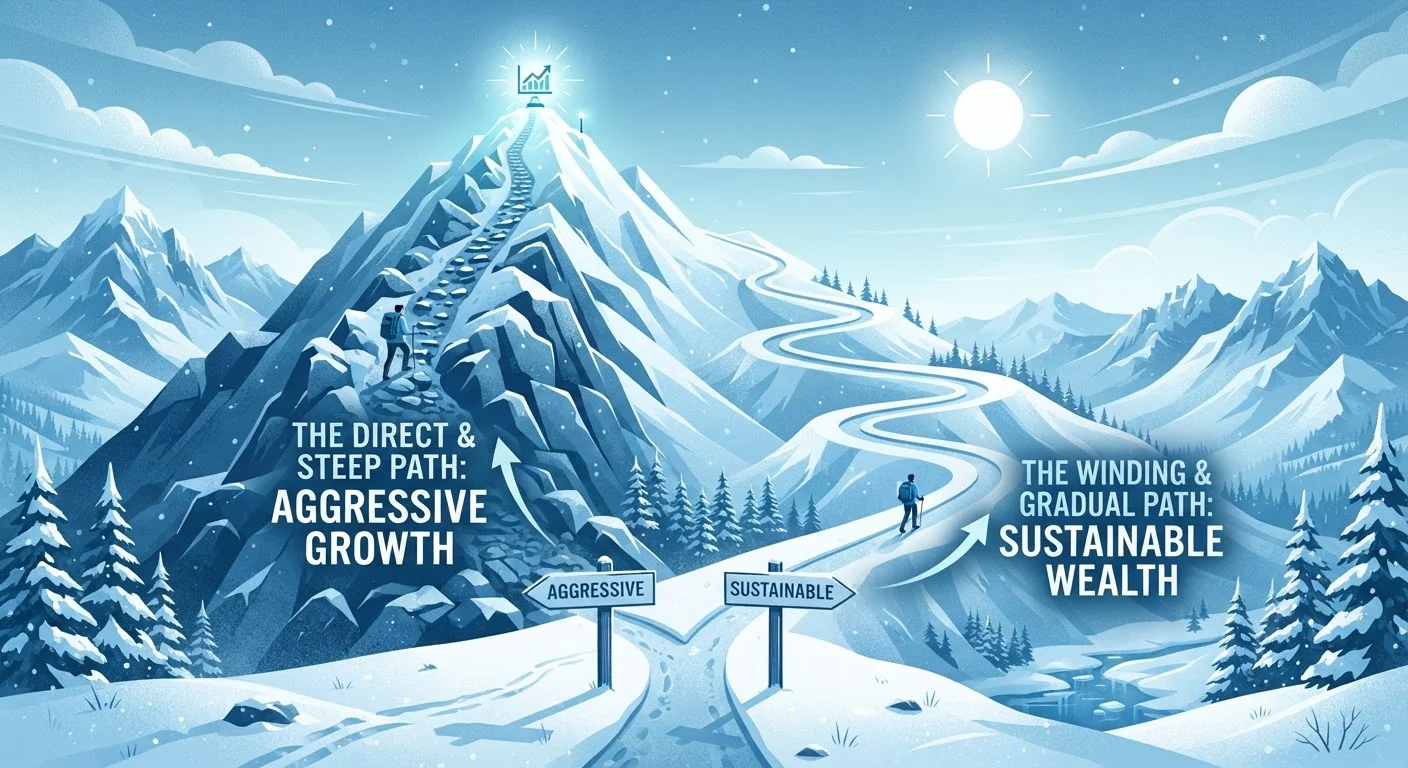
Option A
Avalanche Method
The mathematically optimal approach to debt elimination.
Best for: Borrowers focused on minimizing total interest paid over the life of their debts.
Option B
Snowball Method
The behaviorally driven approach built on early wins.
Best for: Borrowers who need motivational momentum to stay committed to a payoff plan.
How Each Method Works
Both the avalanche and snowball methods share the same core mechanic: you make minimum payments on all of your debts, then direct any additional available dollars toward one target debt each month. The methods differ entirely in how that target is chosen.
Avalanche method: You rank your debts by interest rate, from highest to lowest. Every extra dollar goes toward the debt with the highest rate first. Once that balance reaches zero, you roll that payment amount onto the next-highest-rate debt, and so on.
Snowball method: You rank your debts by outstanding balance, from smallest to largest, regardless of interest rate. Extra payments attack the smallest balance first. Once eliminated, you roll that payment to the next-smallest balance, building momentum as accounts close out.
Neither method requires a minimum income level or a specific number of accounts. Both can work whether you have two debts or ten. What separates them is the order in which accounts are paid off — and that order has real financial consequences. See common missteps that slow debt payoff to understand how sequencing errors can cost borrowers significantly more over time.
| Criterion | Avalanche Method | Snowball Method |
|---|---|---|
| Payoff order | Highest interest rate first | Smallest balance first |
| Total interest paid | Lower (mathematically optimal) | Potentially higher |
| Time to first account payoff | Varies; can be longer | Typically faster |
| Motivational structure | Interest savings as reward | Account closures as reward |
| Best when rates differ significantly | Yes — larger savings advantage | Less efficient in this scenario |
| Best when balances are similar | Similar outcome to snowball | Similar outcome to avalanche |
| Behavioral completion risk | Higher for some borrowers | Lower for many borrowers |
What the Math Actually Says
When interest rates across your debts vary meaningfully, the avalanche method will almost always produce a lower total repayment cost. Here is the logic: high-interest debt compounds continuously. Every month that a 24% APR credit card balance remains unpaid, a larger chunk of your minimum payment goes to interest rather than principal. By targeting that balance first, you shrink the principal that generates expensive interest charges.
The snowball method, by contrast, may leave high-rate balances untouched longer while you pay off smaller, cheaper debts. That delay allows more interest to accumulate on the costly accounts — meaning you pay more in aggregate, even though individual payoffs feel faster.
~$1,000+
Potential interest savings with avalanche over snowball
The gap varies widely by individual debt mix, but on a typical multi-card scenario with rate spreads of 10+ percentage points, the avalanche method can yield hundreds to over a thousand dollars in savings.
3.9
Average number of credit cards held per U.S. adult
According to Experian's consumer credit data, the average American carries multiple open credit card accounts, making payoff sequencing a meaningful decision for many households.
20%+
Average credit card APR in recent years
The Federal Reserve tracks average credit card interest rates, which have remained elevated in recent years — underscoring the real cost of leaving high-rate balances unaddressed.
The practical gap between the two methods depends on the spread of your interest rates and the mix of your balances. When your highest-rate debt happens to also be your smallest balance, the two methods produce virtually identical outcomes. When the highest-rate debt carries a large balance and your smallest balances carry low rates, the avalanche method can save a meaningful amount — potentially hundreds to thousands of dollars, depending on totals and rates.
A straightforward exercise: list all debts with their rates, balances, and minimum payments. Run both sequences in a spreadsheet or free online debt payoff calculator to see the projected total interest and payoff timeline under each approach. This comparison — using your own real numbers — is more informative than any general example.
The Behavioral Case for the Snowball
Pure math favors the avalanche method, but personal finance is not purely a math problem. A strategy you abandon after three months costs far more than a suboptimal strategy you follow for three years.
Research in behavioral economics consistently shows that people are motivated by progress markers — visible signs that effort is producing results. The snowball method is structured around this psychology. Eliminating a debt account entirely, even a small one, removes a line from your debt list, simplifies your monthly obligations, and creates a concrete sense of forward momentum.
For borrowers with many accounts, moderate rate differences between debts, or a history of starting and stopping payoff plans, the snowball method's behavioral advantages can outweigh its mathematical inefficiency. The key question is honest self-assessment: which approach are you realistically more likely to maintain?
If you are also trying to build savings while paying down debt — a real challenge for many households — see how to balance debt repayment and savings goals for a structured framework.
When the Two Methods Overlap
If your smallest-balance debt also carries your highest interest rate, both the avalanche and snowball methods point to the same account — eliminating the trade-off entirely. In practice, many borrowers find that one or two of their debts satisfy both criteria simultaneously. Reviewing your full debt list before committing to a method can reveal whether the choice matters as much as you think.
Choosing Your Strategy — and Staying with It
Neither method is universally superior. The right choice balances the mathematical cost of each approach against your own behavioral patterns and financial circumstances.
A few practical guidelines:
- If your highest-interest debt has a manageable balance and you can see yourself clearing it within a year, the avalanche method offers strong savings with relatively fast early progress.
- If your high-rate debt has a very large balance and you worry about staying motivated over a long payoff horizon, consider whether the snowball's early wins would keep you engaged — even at a higher total cost.
- If rates across your debts are similar (within two to three percentage points), the methods will produce comparable outcomes and the decision comes down almost entirely to personal preference.
Once you select a method, the most important variable is consistency. An annual debt and savings audit can help you track whether your chosen strategy is on pace and whether any changes — new debt, income shifts, rate changes — warrant revisiting your approach.
If your debt picture is complex — multiple high-balance accounts at varying rates — it may be worth exploring whether consolidation could simplify repayment before applying either method. Debt consolidation has its own trade-offs that are worth understanding before making that move.
This article is for general informational and educational purposes only and does not constitute personalized financial or legal advice. Readers should consult a qualified financial professional before making decisions about their own debt repayment strategy.
The content on this site is for informational purposes only and is not a substitute for professional advice. Always consult a qualified professional for guidance specific to your situation.