

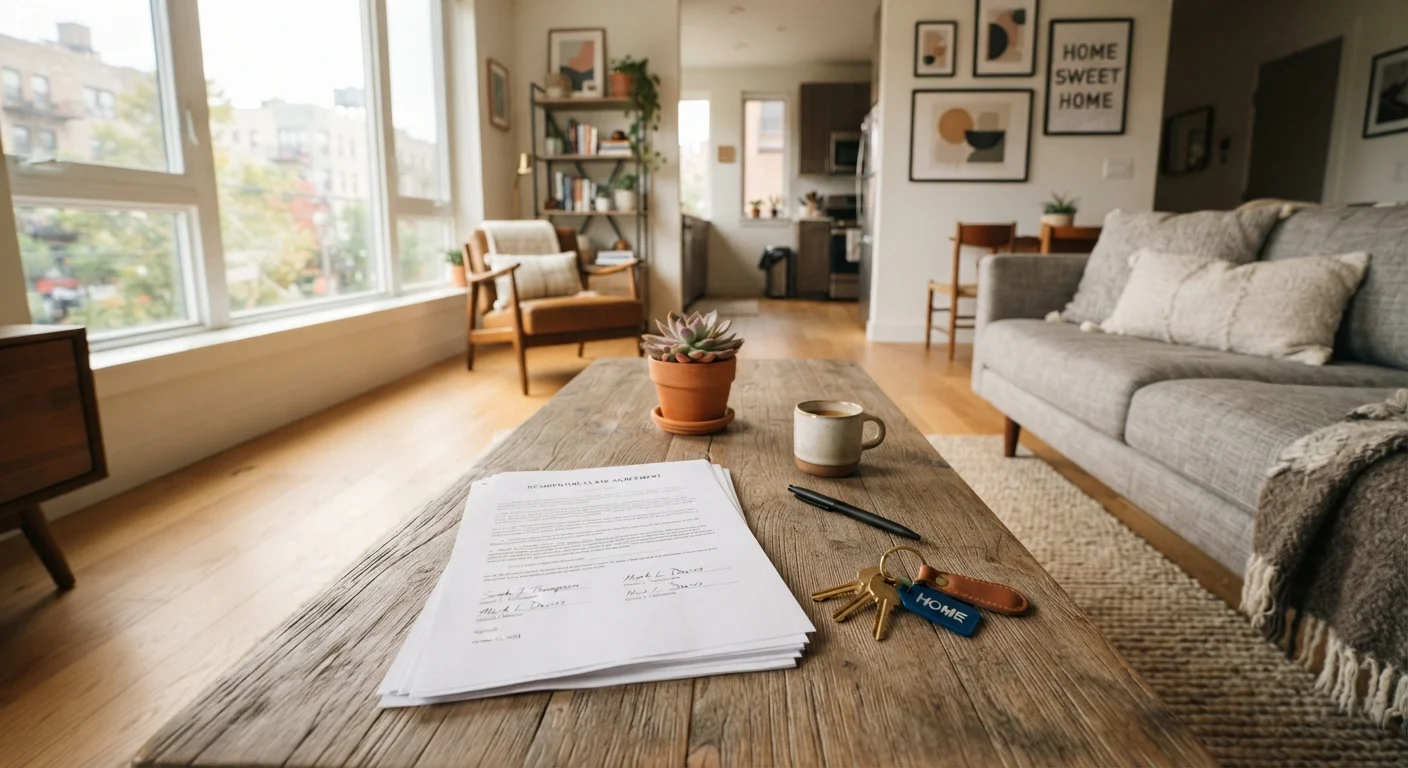
Reading and Signing Your Lease
A lease is a legally binding contract, and every clause you overlook before signing can become a costly surprise later. Before you put pen to paper, focus on these critical elements:
- Rent amount and due date — Confirm the monthly figure, the grace period, and any late fee structure.
- Lease term — Know whether you're committing to a fixed term or rolling month-to-month. See our comparison of fixed-term and month-to-month leases to understand which structure fits your situation.
- Renewal and rent increase terms — Some leases auto-renew at a higher rate unless you opt out in writing by a specific date.
- Pet, subletting, and guest policies — Violating these clauses is one of the most common grounds for eviction.
- Maintenance responsibilities — The lease should specify who handles lawn care, appliance repairs, pest control, and similar tasks.
If a clause is unclear, ask for written clarification before signing. Courts generally interpret ambiguous lease language against the drafter — but litigation is expensive and slow. Clarity upfront costs nothing.
Before signing, search your prospective landlord's name in local court records to check for prior eviction filings or habitability complaints. Many county clerks make this searchable online at no cost.
A landlord's litigation history is one of the clearest predictors of how disputes will be handled during your tenancy — and it's a signal most renters never check.
Take a timestamped video walkthrough of the entire unit on move-in day and email it to yourself and the landlord — that email timestamp is legally meaningful if a deposit dispute later reaches small claims court.
Video documentation is harder to dispute than a checklist alone, and the act of sending it to the landlord on day one establishes a shared record both parties acknowledged.
Security Deposits: What the Law Says
Security deposit rules vary by state, but several principles are nearly universal across U.S. jurisdictions:
~50%
Renters who lose part of their security deposit
Industry estimates suggest roughly half of renters do not receive their full deposit back, often due to inadequate move-in documentation.
14–30 days
Typical state deadline to return security deposit
Most U.S. states require landlords to return deposits and itemized deductions within this window after the tenant vacates.
- Caps: Most states limit deposits to one or two months' rent. Some cities impose stricter local caps.
- Return deadlines: States typically require landlords to return deposits — along with an itemized deduction list — within 14 to 30 days of move-out. Missing this deadline can forfeit the landlord's right to make deductions at all.
- Normal wear and tear: Landlords cannot deduct for ordinary wear — scuffed paint, minor carpet wear, small nail holes. They can deduct for damage beyond what normal use causes.
Keep your move-in checklist, dated photos, and all rent receipts in a dedicated folder throughout your tenancy. This documentation is your primary defense if a deduction dispute ends up in small claims court.
Never Pay a Deposit Without a Receipt
Always get a written receipt for any security deposit payment, including the amount, date, and the account or institution where it is held (required in many states). Paying cash without documentation leaves you with no evidence the deposit was paid if a dispute arises at move-out.
Your Rights as a Renter
Federal law and state statutes give renters a floor of protections that no lease clause can strip away. The most important include:
- Habitability: Your landlord must maintain heating, plumbing, weatherproofing, and structural integrity. A unit that fails these standards may allow you to withhold rent, repair-and-deduct, or terminate the lease — depending on your state's rules.
- Fair Housing Act protections: Landlords cannot discriminate based on race, color, national origin, religion, sex, disability, or familial status.
- Retaliation protection: Most states prohibit landlords from raising rent, cutting services, or pursuing eviction after a tenant exercises a legal right, such as filing a complaint with a housing authority.
- Notice before entry: In almost every state, landlords must give at least 24 hours' notice before entering — except in genuine emergencies.
Many renters never exercise these protections simply because they don't know they exist. Our guide to renter's rights that landlords rarely advertise covers these protections in full detail.
“The single biggest predictor of whether a tenant successfully recovers their security deposit is whether they documented the unit's condition at move-in. Courts want evidence, and photos are evidence.”
— National Housing Law Project, Nonprofit legal organization focused on housing rights for low-income Americans
Handling Repairs and Maintenance
When something breaks, the way you report it matters as much as the report itself. Follow these steps to protect yourself:
- Submit repair requests in writing. Email creates a date-stamped record. Avoid phone-only requests, which are difficult to prove.
- Keep copies of every communication. If the landlord fails to act within a reasonable timeframe — typically defined by state law — you have documented notice of the problem.
- Understand repair-and-deduct laws. Some states allow tenants to hire a licensed contractor for essential repairs (heat, hot water) and deduct the cost from rent, up to a statutory cap. This process has procedural requirements; research your state's rules or consult a tenant rights organization before proceeding.
- Document the damage. Photos with metadata timestamps are credible evidence if a dispute escalates.
Do not attempt to withhold rent without understanding your state's specific procedures. Improper rent withholding can expose you to eviction even when the underlying complaint is valid.
Repair-and-Deduct Laws Vary Widely
Not every state permits tenants to repair and deduct, and those that do often impose strict notice requirements and dollar caps. Using this remedy incorrectly can expose you to eviction proceedings. Always verify the law in your specific state before acting, or contact a local tenant rights organization for guidance.
Moving Out Without Losing Money
The move-out process is where many renters lose money unnecessarily. A disciplined approach significantly improves the odds of a full deposit return.
- Give proper written notice. Most leases require 30 to 60 days' written notice. Giving less notice — or giving it orally — can result in liability for extra rent.
- Clean thoroughly. Deep-clean appliances, bathrooms, and floors. Landlords frequently deduct for cleaning, and courts generally uphold reasonable cleaning charges.
- Restore minor alterations. Fill nail holes, remove any fixtures you installed, and repaint if your lease required you to restore original colors.
- Complete a move-out walkthrough. If your landlord offers one, attend it. If they do not offer one, request it in writing. A joint inspection lets you address issues before the landlord quantifies deductions.
- Provide a forwarding address in writing. This is legally required in many states and starts the deposit-return clock.
If deductions are taken and you believe they are improper, you can dispute them through your state's small claims court — typically the venue for deposit disputes up to a few thousand dollars.
When Renting Leads to Buying
Renting is often a stepping stone, not a permanent state. Many renters use the rental period to build savings, repair credit, and learn what they actually want in a home before committing to a mortgage.
If homeownership is your eventual goal, use your tenancy strategically:
- Pay rent on time — some lenders and credit reporting services now include rental payment history in credit assessments.
- Track your monthly housing costs and savings rate to estimate what mortgage payment you could realistically carry.
- Research the neighborhoods and housing types you're renting in — direct experience is invaluable before buying.
When you're ready to explore the purchase process, our guide to buying a home walks through the key steps and financial considerations involved in a purchase decision.
This article is for general informational purposes only and does not constitute legal or financial advice. Renter's rights and landlord obligations vary significantly by state and municipality. Consult a qualified attorney or local tenant rights organization for guidance specific to your situation.
Local Law Overrides Generic Advice
Tenant protections, notice requirements, deposit rules, and eviction procedures all vary significantly by state — and sometimes by city. What applies in California may be entirely different from what applies in Texas or Georgia. Before exercising any legal right or withholding any payment, verify the applicable rules in your specific jurisdiction through your state's official tenant rights resources or a licensed attorney.
The content on this site is for informational purposes only and is not a substitute for professional advice. Always consult a qualified professional for guidance specific to your situation.