

Why the Phrase Means Different Things to Different Landlords
When a listing advertises 'utilities included,' it signals that at least some portion of your monthly utility costs won't come out of your pocket separately. The problem is that the phrase stops there. No federal statute, and no uniform state law, defines which utilities must be covered for the term to apply. A landlord in one building might mean water, sewer, and trash removal. Another might include those plus heat. A third might stretch the phrase to cover electricity — and a fourth might mean all of the above except internet.
This ambiguity is one of the most common sources of financial surprise for renters, especially first-time renters. Our guide on what first-time renters often overlook before signing covers this and other hidden pitfalls in detail.
State Law Does Not Standardize the Term
No U.S. state has enacted legislation that formally defines what 'utilities included' must cover in a residential lease. Protections for renters in utility disputes generally fall under broader habitability and breach-of-contract provisions. This makes the written lease addendum your most important document.
What's Most Commonly Included — and What's Usually Not
Across the U.S. rental market, certain utilities appear in 'included' packages far more often than others.
Frequently Covered
- Water and sewer: The most commonly included utility, particularly in multi-unit buildings where plumbing is shared infrastructure.
- Trash and recycling removal: Often bundled with water because pickup is tied to the building address rather than individual usage.
- Heat (in older buildings): Some older apartment buildings use central boiler systems, making individual metering impractical.
Sometimes Covered
- Electricity: Included in some smaller or older units; rarely included in modern, individually metered buildings.
- Gas: May be covered if the building uses a central gas system for heating or hot water.
Rarely or Never Covered
- Internet and cable: Treated as amenities, not utilities, in most lease frameworks — even when the listing says 'all utilities.'
- Renter's insurance: Never part of a utility package; this is always the tenant's own responsibility. See what renters insurance actually covers for a full breakdown.
~35%
U.S. rentals advertising some utilities included
Industry rental market analyses consistently show roughly one-third of U.S. rental listings include at least one utility in the advertised rent, though the specific services vary widely.
$150–$300
Typical monthly utility cost for a one-bedroom apartment
The U.S. Energy Information Administration and consumer surveys estimate average monthly utility costs for a one-bedroom unit fall in this range, depending on climate, usage, and local rates.
The Fair-Use Clause: A Limit You May Not See Coming
Even when a landlord genuinely covers a utility, many leases include a fair-use or consumption cap clause. This language permits the landlord to bill the tenant for any usage that exceeds a set threshold — say, more than a defined monthly kilowatt-hour amount for electricity, or a fixed dollar cap on gas usage per billing cycle.
Fair-use clauses are not inherently unreasonable, but they are frequently buried in lease addenda that renters skim over. If you run a home office, charge an electric vehicle, or simply live in a climate with extreme seasonal temperature swings, a cap that looks generous on paper can translate to unexpected bills.
Request the Prior Month's Utility Bills
Before signing a lease with a usage cap, ask the landlord or property manager for the prior tenant's utility bills for the same unit — ideally across multiple seasons. This gives you a realistic baseline for typical consumption in that specific apartment and helps you gauge whether a usage cap will affect you.
How to Confirm Coverage Before You Sign
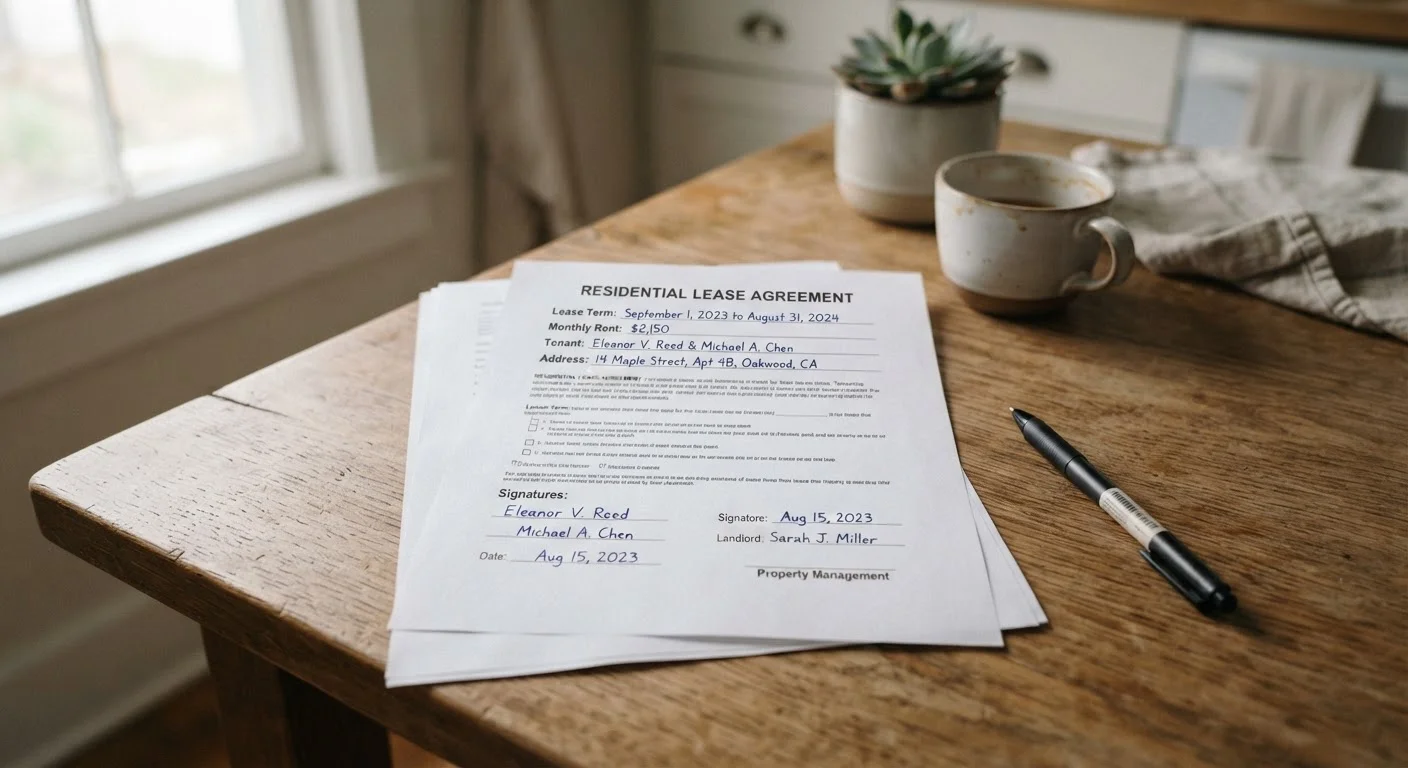
Verbal confirmation from a landlord or property manager is not enough. The only reliable protection is written documentation. Before signing any lease that advertises utilities included, take these steps:
- Request an itemized list of every utility the landlord agrees to cover, specified by service type and provider name.
- Ask about usage caps — the specific threshold and how overages are calculated and billed.
- Verify who the accounts are under — if a utility account is in your name, you are legally responsible for the bill regardless of what the landlord promised.
- Ask for a written utility addendum attached to the lease. This makes the coverage terms legally enforceable.
If a landlord is unwilling to put utility coverage in writing, treat that as a red flag. You may also have more room to negotiate the rent or terms than you expect — understanding what's actually on the table can help you approach that conversation with confidence.
And if a dispute does arise over utilities or services, knowing your baseline renter's rights is essential before you escalate the issue.
This article is for general informational purposes only and does not constitute legal or financial advice. Lease terms and landlord-tenant laws vary by state and locality. Consult a licensed attorney or local tenant rights organization for guidance specific to your situation.
Frequently Asked Questions
Not typically. Internet and cable are considered amenities rather than essential utilities in most lease contexts, and landlords rarely include them even when advertising 'all utilities.' Always ask specifically about internet service before assuming it is part of the rent.
Generally, no — lease terms are binding for the duration of the lease period. However, if your lease already contains a fair-use or consumption cap clause, the landlord may charge overages under those existing terms. Review your lease carefully before signing.
Ask for a written list of every utility covered, the name of each provider, whether there are usage caps, and how overages are billed. Request that this information be incorporated into a written lease addendum rather than relying on verbal assurances.
Often, yes — landlords typically price the convenience into the rent. Whether it represents good value depends on typical usage in your area, the local cost of utilities, and whether the included services match your actual needs.
If the landlord is contractually responsible for a utility under the lease and it is disconnected due to non-payment on their end, most states' habitability laws require that essential services be restored promptly. Renters should document the issue and consult their local tenant rights resources or a housing attorney.
The content on this site is for informational purposes only and is not a substitute for professional advice. Always consult a qualified professional for guidance specific to your situation.