

Why Everyday Style Matters (And Why It Doesn't Have to Be Hard)
Getting dressed is something most of us do on autopilot — but the choices we make each morning quietly shape how we feel, how others perceive us, and how confidently we move through the day. Research in psychology consistently links clothing choices to mood and self-perception, a phenomenon sometimes called enclothed cognition.
The good news? Dressing well doesn't require a designer budget, a Pinterest obsession, or a personal stylist. It requires a clear framework — one that starts with your actual life, not a fantasy version of it. This guide walks you through every step, from decluttering your closet to leaving the house feeling put-together without a second thought.
Start With What You Have
Before evaluating what's missing from your wardrobe, give yourself a week of dressing only from what you already own. This exercise often reveals that you have more to work with than you thought — and clarifies exactly what gaps are worth filling.
Auditing What You Already Own
Before you buy a single new piece, spend an hour with your closet. Pull everything out and sort it into three honest piles: wear regularly, wear occasionally, and haven't worn in over a year. That last pile is your starting data point.
Ask yourself why those unworn pieces have sat untouched. Common culprits include poor fit, uncomfortable fabric, a color that doesn't work with anything else you own, or items bought impulsively for a version of your life that doesn't quite match reality. Recognizing these patterns helps you avoid repeating the same purchases — and the same spending.
Donate, consign, or pass along what no longer serves you. A smaller, well-curated closet is dramatically easier to dress from each morning.
When auditing your closet, try the hanger trick: turn all hangers backward at the start of a season, then flip them forward as you wear each item. After three months, anything still backward is a strong candidate for removal.
Visual tracking removes the guesswork from deciding what to keep. Stylists and professional organizers frequently recommend this method because it works with real behavior rather than asking you to predict future use.
When building your foundation, prioritize fabric quality in pieces you wear closest to your skin — tees, underwear, socks. These affect comfort the most and are worth the upgrade even on a modest budget.
Comfort directly influences how confidently you wear something. Consumer research consistently shows that physical comfort is a top driver of how often an item gets worn after purchase.
Building Your Wardrobe Foundation
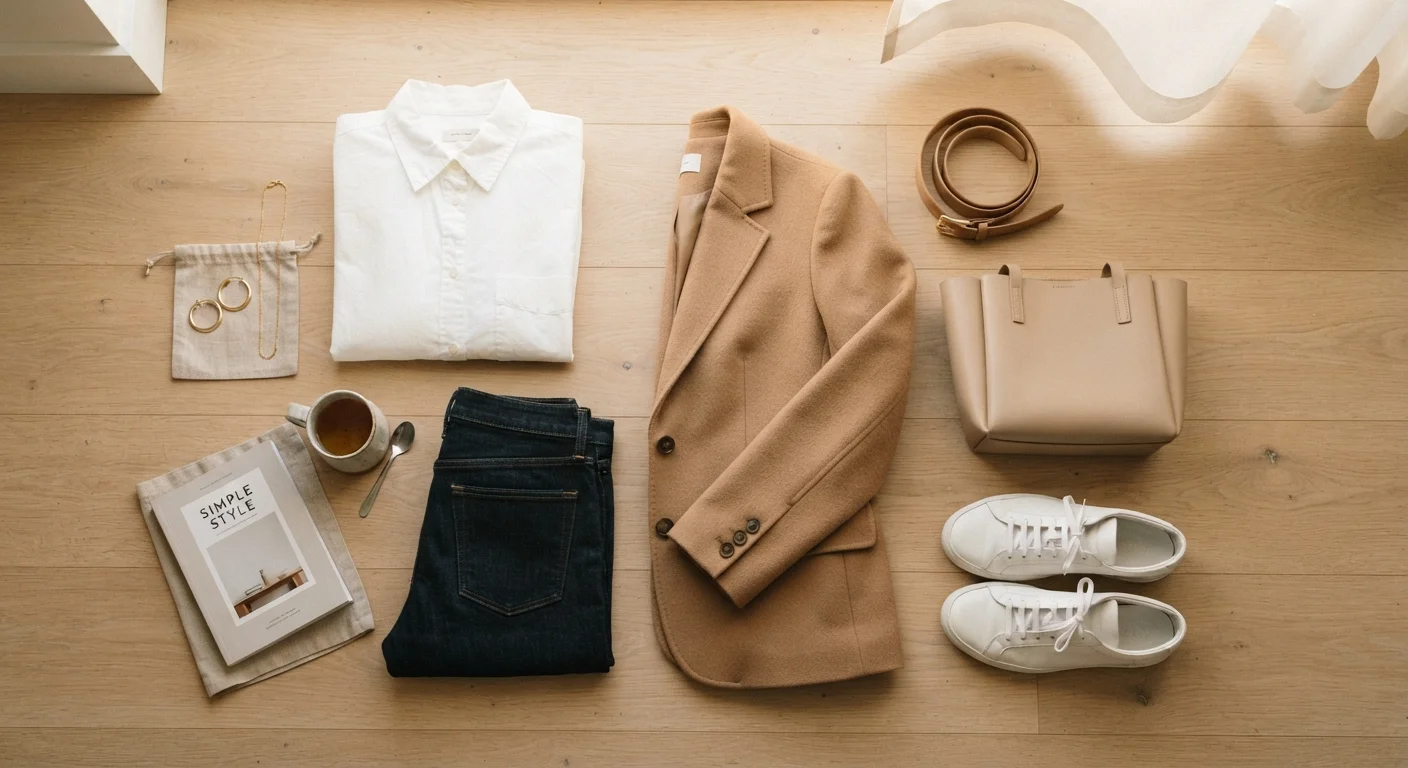
A wardrobe foundation — sometimes called a capsule — is a set of versatile core pieces that work together in multiple combinations. Think of it as the skeleton your outfits are built on. Stylists and fashion educators generally agree on a few categories worth prioritizing:
- Bottoms: Two or three pairs of well-fitting pants or jeans in neutral tones (navy, black, khaki, grey)
- Tops: A mix of plain tees, one crisp button-down, and at least one elevated knit or blouse
- Layers: A blazer or structured cardigan, a casual jacket or denim jacket
- Footwear: One clean casual sneaker, one versatile flat or low heel, one weather-appropriate boot
- Accessories: A simple belt, a neutral bag, and one or two understated pieces of jewelry
Neutrals anchor the foundation because they mix freely. Color, pattern, and personality come in through accent pieces — a printed scarf, a bold earring, a statement top — which can refresh an entire outfit without requiring a wardrobe overhaul.
80%
Of wardrobe worn only 20% of the time
Fashion industry analyses frequently cite the 80/20 rule: most people regularly wear roughly 20% of what they own, highlighting how targeted curation beats volume.
~$1,700
Average annual American apparel spend
According to U.S. Bureau of Labor Statistics Consumer Expenditure data, the average American household spends roughly this amount annually on apparel and related services.
Dressing for Your Body, Life, and Budget
The most stylish outfit is the one that fits your actual body right now, suits your real daily activities, and respects your financial situation. Each of these deserves a moment of honest reflection.
Fit First, Always
Professional stylists consistently emphasize that fit is the single most impactful element of any outfit. A $30 pair of trousers that fits well reads as polished; a $200 pair worn too large or too short does not. Basic alterations — hemming pants, taking in a waist — are often inexpensive and transformative.
Match Your Lifestyle
A wardrobe that doesn't reflect how you actually spend your days will always feel like it's missing something. A teacher's wardrobe looks different from a remote freelancer's, which looks different from a construction supervisor's. Inventory your week honestly: how many days require professional-leaning clothes? Casual? Active? Build proportionally.
Spend Thoughtfully
Just as a smart financial plan prioritizes where your money does the most work, a smart wardrobe concentrates spending on high-wear items — a great pair of jeans, a durable jacket — while keeping costs low on trend-driven or low-frequency pieces.
Avoid the 'Just in Case' Trap
Buying clothes for hypothetical occasions — a formal event that may never happen, a fitness routine you're planning to start — is one of the most common ways wardrobes become cluttered and budgets get stretched. Purchase for your life as it is today, not a future version of it.
Getting Dressed with Confidence Every Morning
Decision fatigue is real. Studies on cognitive load show that the more choices we make early in the day, the more mentally depleted we feel by afternoon. A streamlined morning routine is a genuine quality-of-life improvement, not just a style tip.
A few strategies that work well:
- Pre-plan outfits the night before. Takes two minutes, saves ten in the morning, and eliminates the panic of standing at an open closet.
- Create a few reliable outfit formulas. For example: dark jeans + tucked top + clean sneakers = casual polished. Blazer + simple tee + ankle pants = smart casual. Formulas reduce mental load without making you look like you wear a uniform.
- Keep your closet organized by category. Separate tops, bottoms, and layers so you can scan options quickly. Facing hangers the same direction and arranging by color within categories makes a real difference.
Style Formulas Are a Starting Point
Outfit formulas aren't meant to make you look robotic — they're a scaffold. Once a formula feels natural, you'll instinctively start experimenting with it, swapping in a bolder color or an unexpected texture. Think of them as training wheels you eventually forget you're using.
Maintaining Your Style Over Time
Style isn't a destination — it evolves as your life does. A few habits keep your wardrobe functional and fresh without constant spending.
Care for what you own. Washing clothes in cold water, air-drying delicates, and storing knits folded (not hung) extends garment life considerably. Good care is the most cost-effective style investment most people overlook.
Do a mini-audit seasonally. As you rotate clothes in and out for warmer or cooler weather, take five minutes to assess what still fits, still functions, and still reflects where your life is now. Swap out what doesn't serve you.
Your personal style is also worth nourishing beyond the closet. Developing a well-rounded sense of self — through interests, experiences, and even smart habits like eating well — tends to show up in how confidently you carry yourself, which is ultimately the best style asset of all.
Style works best when it's sustainable — financially and practically. Think of it as an ongoing relationship with your wardrobe rather than a one-time project, and it stays manageable, enjoyable, and genuinely yours.
The content on this site is for informational purposes only and is not a substitute for professional advice. Always consult a qualified professional for guidance specific to your situation.