

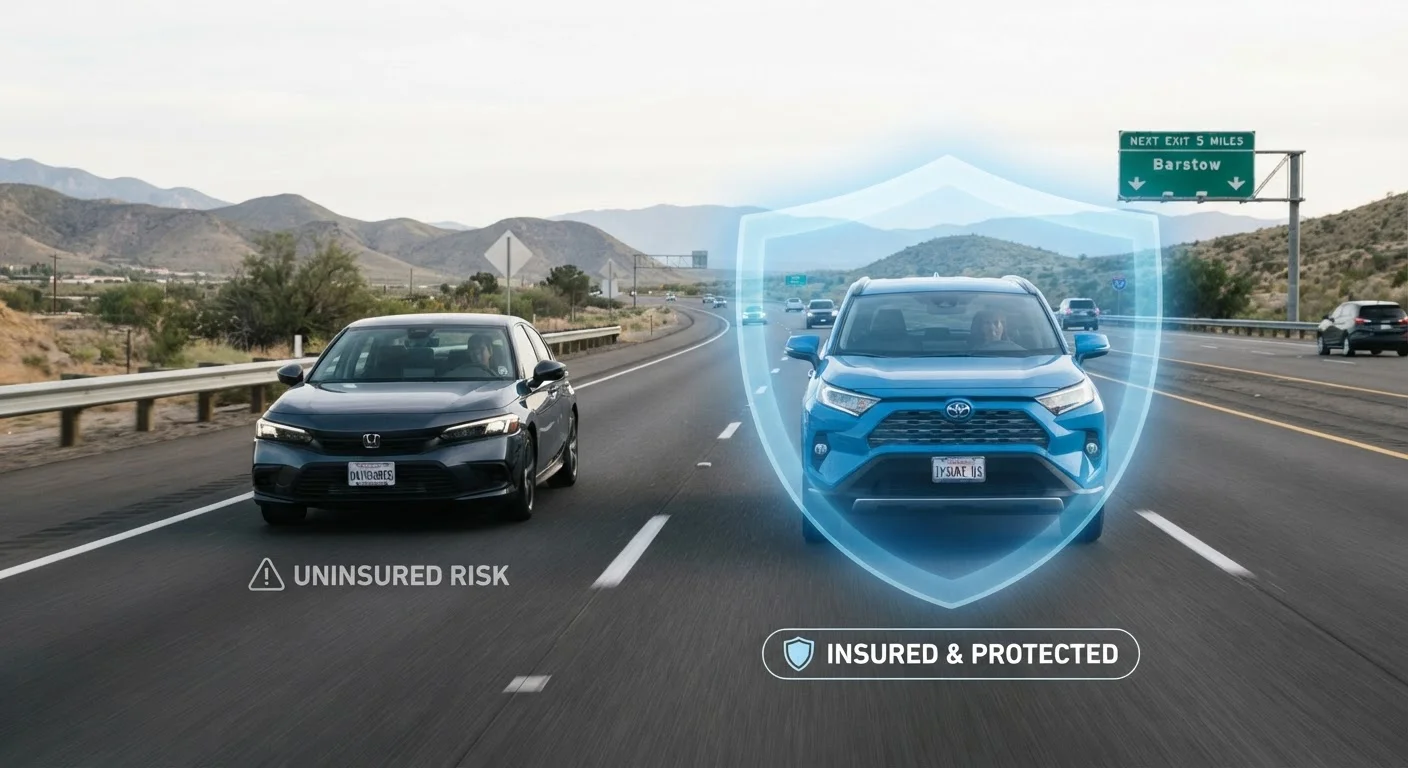
Option A
Liability-Only Coverage
The legal minimum — affordable but limited.
Best for: Drivers of older, fully paid-off vehicles whose market value is low relative to insurance costs.
Option B
Full Coverage
Broader protection for your vehicle and your wallet.
Best for: Drivers with financed or leased vehicles, newer cars, or anyone who couldn't absorb a large out-of-pocket repair bill.
What Each Type of Coverage Actually Includes
Auto insurance can feel like alphabet soup — but the core distinction between these two coverage types is straightforward.
Liability-only coverage pays for bodily injury and property damage that you cause to other people in an at-fault accident. Every state that requires auto insurance mandates at least a minimum level of liability coverage (a few states operate under different frameworks, so verify your state's requirements with your state's DMV or insurance commissioner). What liability does not do: it won't pay a cent toward repairing or replacing your own vehicle.
Full coverage is an industry shorthand — not an official term — for a policy that combines liability with two additional protections:
- Collision coverage: Pays to repair or replace your car after an accident with another vehicle or object, regardless of fault.
- Comprehensive coverage: Covers non-collision events — theft, vandalism, fire, falling objects, floods, and animal strikes.
Full coverage policies still carry deductibles (the amount you pay before insurance kicks in), so out-of-pocket costs don't disappear entirely. To understand how insurers price these layers of protection, see how auto insurance premiums are actually calculated.
| Criterion | Liability-Only | Full Coverage |
|---|---|---|
| Covers damage to others | Yes | Yes |
| Covers your own vehicle in accident | No | Yes (collision) |
| Covers theft, weather, fire | No | Yes (comprehensive) |
| Required by lenders/lessors | No | Yes |
| Typical monthly premium | Lower | Higher |
| Best for older paid-off cars | Often yes | Depends on value |
| Deductible applies | No | Yes (collision & comprehensive) |
How to Decide What's Right for Your Situation
There's no universal answer — the right coverage level depends on several factors unique to your circumstances.
~80%
U.S. drivers carrying some collision coverage
According to the Insurance Research Council, roughly four in five insured U.S. drivers carry collision coverage, reflecting how many Americans either choose or are required to hold full coverage.
~$700
Average annual cost difference: full vs. liability-only
Industry analyses suggest full coverage can cost several hundred dollars more per year than liability-only, though the exact gap varies widely by state, driving record, and vehicle type.
Your Car's Value
A common rule of thumb: if your annual collision and comprehensive premium exceeds 10% of your car's current market value, it may be worth reconsidering full coverage. You can check your vehicle's approximate market value through resources like Kelley Blue Book or the NADA Guides. Keep in mind that a lower deductible raises your premium, while a higher deductible lowers it — so adjusting the deductible is one lever you have.
Financing and Leasing Requirements
If you're making monthly payments on your car, full coverage isn't optional — it's contractually required. The lender or lessor has a financial stake in the vehicle and needs it protected. See how leasing vs. buying affects your insurance obligations for more on what changes with each ownership path.
Your Financial Safety Net
Consider what would happen if your car were totaled tomorrow. If you couldn't replace it without serious financial hardship, full coverage provides a meaningful safety net. If you have enough in savings to cover the loss, liability-only becomes a more defensible choice. This is ultimately a question about risk tolerance — the same logic that applies to other protective products. For a parallel look at personal property protection, renters insurance works similarly — you're weighing a known premium cost against the risk of an uncertain but potentially large loss.
State Minimums Are a Floor, Not a Recommendation
Every state sets its own minimum liability limits, and those minimums are often far lower than the cost of a serious accident. A multi-vehicle collision or significant injury can quickly exceed state-mandated minimums, leaving you personally responsible for the remainder. Many insurance professionals suggest carrying limits well above the legal minimum if your budget allows. Check your state insurance commissioner's website for the specific minimums in your state.
This article is for general informational purposes only and does not constitute insurance, legal, or financial advice. Coverage requirements and policy terms vary by state and insurer. Consult a licensed insurance professional for guidance specific to your situation.
The content on this site is for informational purposes only and is not a substitute for professional advice. Always consult a qualified professional for guidance specific to your situation.