

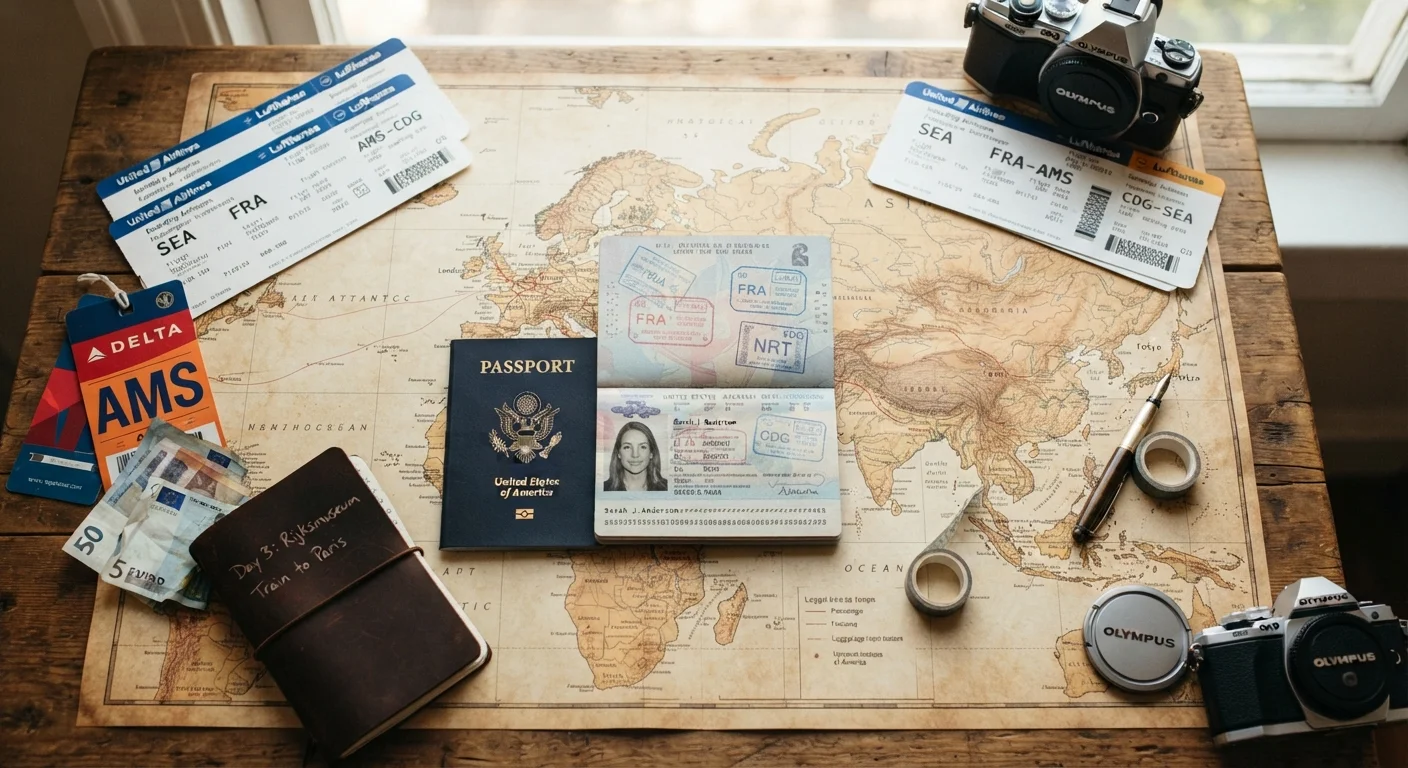
Your Passport: The Non-Negotiable Starting Point
Every American traveling internationally needs a valid U.S. passport — full stop. A passport book is required for air travel to any foreign country, while a passport card (wallet-sized) works only for land and sea crossings to Canada, Mexico, the Caribbean, and Bermuda.
One detail many travelers overlook: most countries require that your passport remain valid for at least six months beyond your planned departure date. Arriving with a passport that expires in two months could mean being denied boarding. Check expiration dates well in advance — standard renewal processing can take several weeks, and expedited service adds cost but reduces wait time. For the most current timelines, check the U.S. State Department's official passport website directly.
If you're heading abroad for the first time, see our ground-up planning guide for first-time international travelers for how passports fit into the bigger picture of trip preparation.
| Passport validity required | 6 months beyond travel dates (many countries) (U.S. State Department, travel.state.gov) |
| Passport card valid for | Land and sea crossings only (Canada, Mexico, Caribbean, Bermuda) (U.S. State Department) |
| Where to check visa requirements | Destination country's embassy website + travel.state.gov |
| Health vaccination record | ICVP ("yellow card") accepted internationally (World Health Organization) |
| Processing time (standard passport renewal) | Varies — check current estimates at travel.state.gov (U.S. State Department) |
Visas, Entry Requirements, and e-Travel Authorizations
A visa is an official authorization — stamped or digitally recorded — that permits you to enter a foreign country for a specific purpose and duration. Whether you need one depends on your destination and the nature of your visit.
Americans enjoy visa-free or visa-on-arrival access to many popular destinations through bilateral agreements, but that access isn't universal. Some countries require a visa obtained in advance through their embassy or consulate. Others have introduced electronic travel authorizations (ETAs) — a lighter-weight pre-approval you apply for online before departure. Canada, Australia, and several European countries within the Schengen Area each have their own version of this system.
The European Travel Information and Authorisation System (ETIAS), planned for Schengen Area countries, will require most non-EU travelers — including Americans — to obtain pre-travel authorization before visiting. Timelines for its rollout have shifted; verify current status through official EU sources before booking any European trip.
Entry Requirements Can Change Quickly
Visa policies, electronic authorization systems, and health entry requirements can shift with little public notice — especially following political changes or public health developments. The U.S. State Department's country information pages (travel.state.gov) and the destination country's official embassy site are your most reliable, up-to-date sources. Plan to check them again within a few weeks of your departure date, not just when you book.
Always verify entry requirements directly with the destination country's official embassy or consulate website, and cross-reference with the U.S. State Department's country information pages at travel.state.gov. Requirements change without notice.
Health Documentation and What to Have Ready
Health-related documentation has become an increasingly relevant part of international travel. While specific requirements vary widely by destination, there are a few categories worth understanding:
- Vaccination records: Some countries require proof of specific vaccinations — yellow fever being the most common — particularly for travelers arriving from regions where the disease is present. The ICVP, often called the "yellow card," is the internationally recognized document for this.
- Prescription medications: Carry medications in their original, labeled containers and bring documentation from your prescribing physician. Some medications legal in the U.S. are controlled or prohibited elsewhere. Check destination-specific rules through that country's health authority.
- Travel health insurance documentation: Many countries don't require it for entry, but some do — and even where it's optional, having proof of coverage can matter in an emergency. Consult a licensed insurance professional about your options.
For a broader framework on health planning before you travel, our article on planning a trip around health needs covers the key considerations to work through with your doctor well before departure.
This article provides general travel information only. Always consult official government sources and qualified healthcare and legal professionals for guidance specific to your destination and personal circumstances.
Passport Book
The standard U.S. travel document required for all international air travel. It includes a photo ID page and blank pages for entry stamps and visas.
Passport Card
A wallet-sized U.S. travel document valid only for land and sea border crossings to Canada, Mexico, the Caribbean, and Bermuda. Not accepted for international air travel.
Visa
An official authorization issued by a foreign government that permits entry for a defined purpose and period. Visas may be stamped into a passport or issued electronically.
Electronic Travel Authorization (ETA)
A lightweight pre-travel approval required by some countries in lieu of a traditional visa. It is typically applied for online and linked electronically to your passport.
ETIAS
The European Travel Information and Authorisation System — a planned pre-travel authorization for non-EU visitors (including Americans) to countries in the Schengen Area. Verify current implementation status before travel.
ICVP (Yellow Card)
The International Certificate of Vaccination or Prophylaxis — an internationally recognized document that records vaccinations such as yellow fever. Some countries require it for entry.
The content on this site is for informational purposes only and is not a substitute for professional advice. Always consult a qualified professional for guidance specific to your situation.