

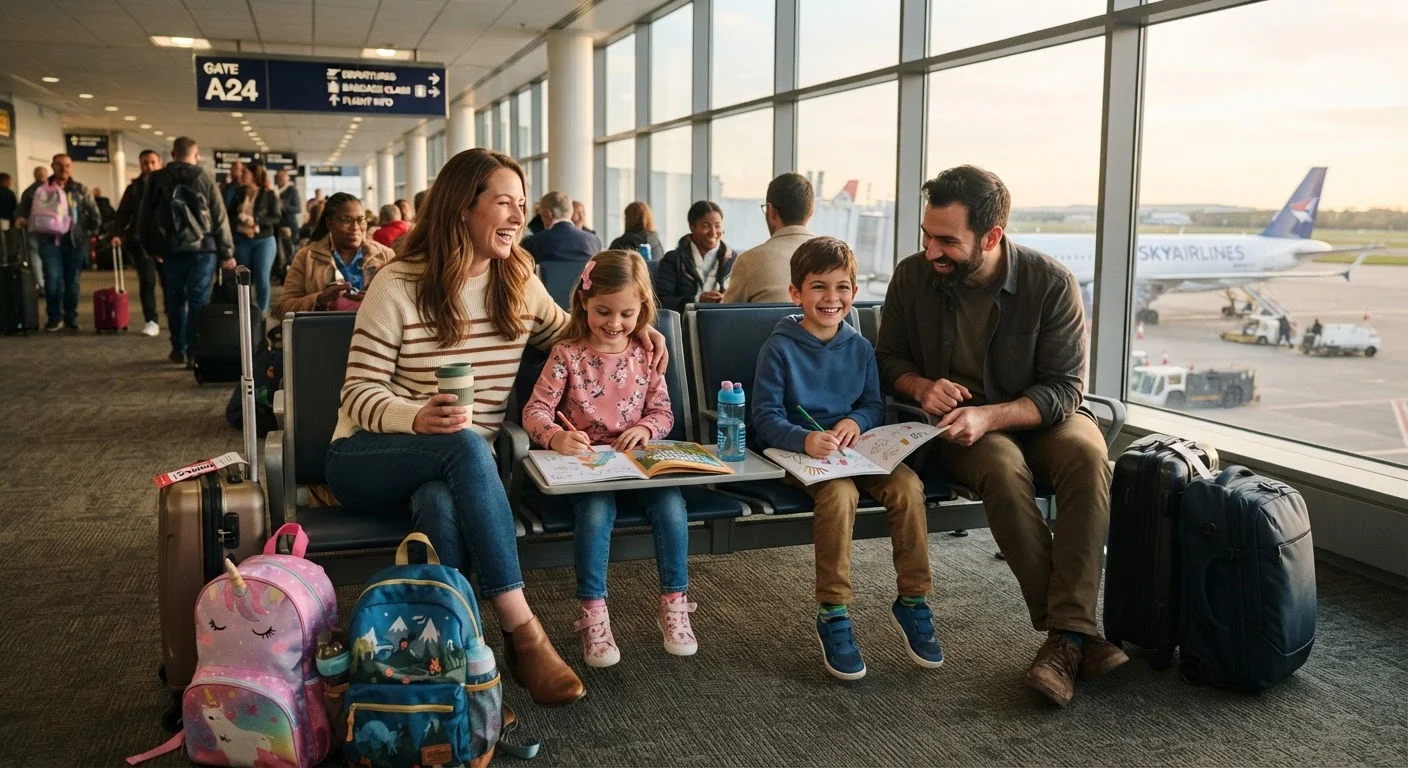
Why Long Travel Days Are Uniquely Challenging for Kids
Long flights, multi-leg road trips, and airport layovers test the patience of even the most seasoned adult traveler. For children, the challenge is compounded: disrupted routines, confined spaces, unfamiliar environments, and a hazy sense of how much longer until we get there. The result can be meltdowns, restlessness, and stress for the whole family.
The good news? A modest amount of planning — spread across the days before departure — can transform those marathon travel days from something to survive into something kids actually remember fondly. This list pulls together strategies that work across age groups, from toddlers through tweens, prioritizing engagement that doesn't rely on screens alone. (For context on what research actually says about screen use, see our article Screen Time and Children: Separating the Science from the Panic.)
Talk Through the Day Before You Leave
A five-minute walk-through of what the travel day will look like — departure time, how long the drive or flight is, what you'll eat, when you'll arrive — can significantly reduce in-the-moment resistance from kids. Predictability isn't boring for children; it's reassuring. Do this the night before, not at the airport.
These strategies pair naturally with a well-paced itinerary overall. If you're building out your full trip plan, The Anatomy of a Well-Built Travel Itinerary offers a practical framework for structuring days that actually feel restful.
Involve Kids in Pre-Trip Planning
Children who feel ownership over a trip tend to approach travel days with more patience and curiosity. In the week before departure, sit down as a family and talk through what the journey will look like — how long the flight is, what the airport might feel like, what you'll do when you land. Let kids pick one or two activities for the road or one meal stop on a road trip.
This isn't just about buy-in. Familiarity with what's coming reduces anxiety, particularly for younger children who struggle with uncertainty. You don't need a detailed itinerary — a simple verbal walkthrough or a hand-drawn map of stops is enough to make travel feel like something happening with them, not to them.
Kids who help plan the trip are more patient when travel days get hard.
Pack a "Mystery Bag" of Novelty Items
Familiarity breeds boredom, especially at 30,000 feet. Instead of packing toys kids already know well, pick up a handful of small, inexpensive items they've never seen before — a new puzzle, a mini watercolor set, a sticker book, a simple card game — and keep them hidden until you're deep into the journey.
Introduce one item every hour or so. The novelty alone buys engagement time that a familiar toy simply can't. Dollar stores, craft supply shops, and travel sections of general retailers are good sources. Aim for activities that don't require many loose pieces and can be contained in a lap tray or seatback pocket.
Novelty buys more engagement time than familiarity ever will.
Build in Physical Movement Wherever Possible
Children's bodies are not designed for hours of stillness, and expecting sustained seated calm is a setup for frustration. Wherever the format allows, prioritize movement. On road trips, schedule stops every 90 minutes to two hours — even a ten-minute sprint around a rest-stop lawn helps reset the nervous system. At airports, walk the terminal before boarding rather than sitting at the gate.
On planes, aisle seats make a real difference. A short walk to the galley and back, done a couple of times during a long flight, can noticeably reduce restlessness. For toddlers especially, a few minutes of standing and stretching at the back of the plane can prevent a full meltdown better than almost anything else.
Ten minutes of movement at a rest stop can reset the whole mood of a road trip.
Use Audiobooks and Podcasts Strategically
Audio entertainment is one of the most underused tools in the family travel toolkit. A gripping audiobook or a story-driven kids' podcast engages imagination without demanding eye contact with a screen — useful for reducing car sickness and keeping tired eyes rested. Many public library systems offer free access to audiobook apps, so it's worth exploring what's available before you travel.
Age-appropriate adventure stories tend to work best for longer stretches. For younger children, narrated picture books or audio versions of familiar stories provide comfort alongside engagement. Pre-download everything; don't rely on in-flight or cellular streaming.
A great audiobook can hold a child's attention for an entire flight leg.
Treat Snacks as an Activity, Not Just Fuel
Strategic snacking does double duty on long travel days: it regulates blood sugar (and mood) while also giving kids something to anticipate and look forward to. Pack snacks that require a little interaction — crackers with individual portions of nut butter to spread, trail mix they can sort, or a fruit-and-cheese combo that doubles as a "plane picnic."
Avoid heavy, sugary snacks that spike energy and lead to crashes. Protein-rich options — cheese sticks, roasted chickpeas, nut butter — tend to sustain attention spans better. Timed well, a special snack introduced at the hardest part of a long stretch can reset a child's mood almost instantly.
A well-timed snack, treated like a small event, can shift a child's entire mood mid-journey.
Keep Comfort Items Accessible and Intentional
Travel disrupts sensory routines that children depend on. A favorite stuffed animal, a familiar-smelling blanket, or a well-worn hoodie can provide genuine comfort in an overwhelming environment — and that comfort translates directly into easier transitions and lower baseline anxiety throughout the day.
Don't bury comfort items in checked luggage. Keep them in the top of a carry-on or a child's own backpack where they can reach them independently. For sensitive or younger children especially, the ability to self-soothe with a familiar object is a meaningful tool — not a crutch.
Familiar sensory items help children self-regulate in unfamiliar, overstimulating travel environments.
Save Screens for the Hardest Stretch
Screen time isn't the enemy of good travel — but using it too early burns your best resource. Reserve downloaded shows, games, or movies for the final leg of a long day, when kids are tired, reserves are low, and arrival is close enough to feel real. This creates an incentive structure that gives screens meaning beyond just "something to do."
Download content in advance — assume no reliable Wi-Fi — and consider noise-canceling headphones to minimize how much other passengers hear. A single great movie saved for the last two hours of a red-eye can be the difference between a miserable arrival and a manageable one.
Saving screens for the hardest stretch turns them into a powerful, well-timed tool.
Making the Most of Every Mile
The strategies above work best when they're layered — not deployed one at a time in desperation. Think of your travel day as a loose schedule: movement breaks at predictable intervals, a new activity introduced every hour or so, snacks timed to natural lulls, and screen time saved for the final stretch when energy is lowest and reserves are depleted.
Every Child Responds Differently
These strategies are general approaches that many families find helpful — not a guaranteed formula. Children vary widely in temperament, sensory needs, and developmental stage. What works brilliantly for a six-year-old on one trip may not land at all on the next. Build flexibility into your plans and give yourself permission to adjust mid-journey without treating it as a failure.
For road trips specifically, building in intentional stops isn't just about kids — it makes the journey more enjoyable for everyone. Road Trip Planning from Start to Finish covers how to map out rest stops, scenic detours, and backup plans before you leave the driveway.
Every family finds its own rhythm. The goal isn't a perfectly controlled travel day — it's one where kids feel included, curious, and capable of handling the unexpected. That's a skill that pays off well beyond the airport.
The content on this site is for informational purposes only and is not a substitute for professional advice. Always consult a qualified professional for guidance specific to your situation.