

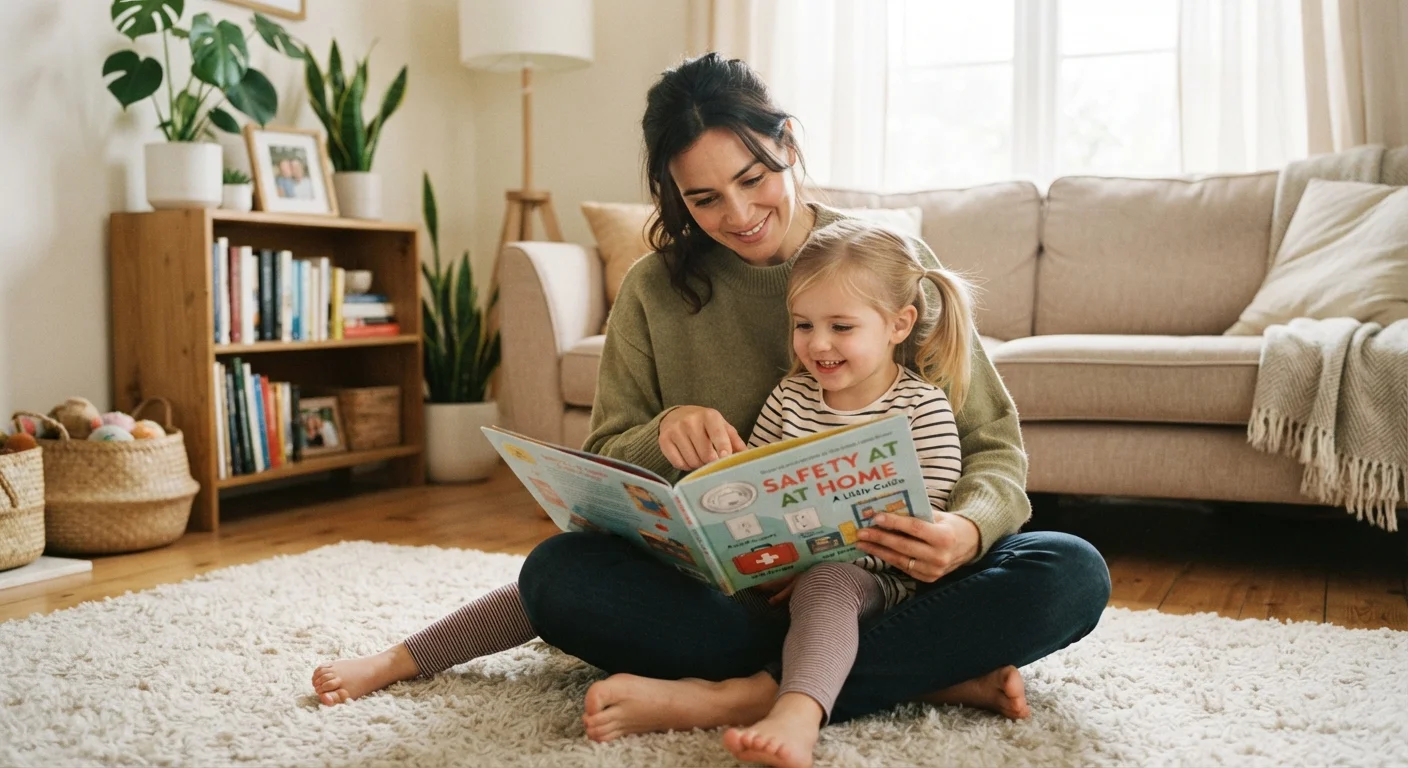
Why Fear-Free Safety Education Matters
Home safety talks have a tricky reputation: done carelessly, they can leave a young child afraid of the stove, the stairs, or even their own bedroom. Done thoughtfully, they produce something far more valuable - a child who recognizes hazards, knows what to do, and stays calm rather than panicking.
Research in child development consistently shows that children learn and retain information better when they feel emotionally safe. Anxiety narrows a child's attention and makes it harder to store new rules in long-term memory. That's why the goal isn't to scare kids into caution - it's to give them competence they can actually use.
The good news is that young children are naturally curious and eager to understand how their world works. That curiosity is the foundation you build on. For a broader look at physical hazards you can address alongside these conversations, see our room-by-room childproofing guide.
Best Practices for Teaching Home Safety to Young Children
The following practices reflect guidance from early childhood educators, pediatric safety organizations, and developmental specialists. Use them as a flexible framework, adapting language and examples to your child's age and temperament.
Use simple, concrete language matched to your child's developmental stage.
Young children think in literal, concrete terms. Abstract concepts like 'danger' mean little without a clear, specific explanation. Matching vocabulary to developmental level ensures the message actually lands and isn't distorted by a child's imagination.
Pair every hazard with a clear, empowering action the child can take.
Telling a child only what not to do leaves them without a script when something goes wrong. Providing a concrete 'what to do instead' gives them a sense of agency and reduces the helplessness that fuels fear.
Use role-play and practiced scenarios rather than lectures.
Young children learn through doing and pretending. A brief, low-stakes role-play scenario activates procedural memory - the same mental pathway used when habits become automatic - making recall far more reliable in a real situation.
Model the safety behavior you want children to adopt.
Children are keen observers of adult behavior, and they quickly notice when rules apply only to them. When parents visibly follow the same safety habits - buckling up first, checking temperatures before touching, storing medicines out of reach - the lesson is reinforced without a word.
Revisit safety rules regularly in brief, casual conversations.
A single comprehensive safety talk is rarely enough for young children. Short, repeated touchpoints over weeks and months are far more effective at building lasting understanding than one intense session that risks overwhelming or alarming a child.
Acknowledge the child's feelings without amplifying fear.
Dismissing a child's worry ('Don't be silly, it's fine') or over-validating it ('You're right to be really scared') both work against you. A calm, validating response builds emotional resilience and keeps the child open to learning rather than shutting down.
Make It Real With Practice and Routine
Information alone rarely sticks with young children - action does. Walking through your home together, pointing to the smoke detector and explaining its sound, or practicing the family meeting spot outside are far more effective than a single serious conversation at the kitchen table.
Short, repeated practice sessions - even just a few minutes during a normal weekend - build what safety educators call automaticity: the ability to respond correctly without stopping to think. This is especially important for emergencies, when stress can overwhelm a child's reasoning. Our fire escape planning guide offers specific drill ideas tailored to families with young children.
You can also weave safety awareness into everyday moments. Noticing a wet floor together, talking through why you check a car seat buckle, or explaining medication storage as you open the cabinet are all low-stakes opportunities that add up over time. For guidance on safe medication storage specifically, see safe storage of medications in homes with children and pets.
A Note on Special Circumstances
Children with anxiety disorders, sensory sensitivities, or prior exposure to household accidents may need a more carefully paced approach. If your child shows signs of significant distress around safety topics - nightmares, persistent avoidance, or physical symptoms of worry - consult their pediatrician or a licensed child therapist before continuing these conversations independently. General guidance like this article's cannot substitute for personalized professional support.
When Children Push Back or Seem Anxious
Some children respond to safety discussions with heightened worry - especially those who are naturally sensitive or who have experienced a scary event. If your child begins to seem anxious rather than curious, shift your approach: keep conversations brief, end on a confident note, and emphasize what they can do rather than dwelling on what could go wrong.
It can also help to normalize your own calm. Children read adult emotional cues closely, so a matter-of-fact tone signals that the topic is manageable, not terrifying. The same principle applies across many challenging parent-child conversations - our piece on talking to children about death explores how developmental experts frame difficult topics with care and age-appropriate honesty.
“Children are not afraid of learning about the world - they're afraid of not knowing what to do. Give them a plan and you give them confidence.”
— Bruce D. Perry, Child psychiatrist and author specializing in childhood trauma and development
If anxiety persists or significantly disrupts daily life, consult your child's pediatrician or a qualified child mental health professional. This article provides general educational guidance and is not a substitute for professional advice.
This article is for general informational and educational purposes only. It is not a substitute for professional safety, medical, or mental health advice. Always consult qualified professionals for guidance specific to your child's needs and your home's circumstances.
The content on this site is for informational purposes only and is not a substitute for professional advice. Always consult a qualified professional for guidance specific to your situation.