

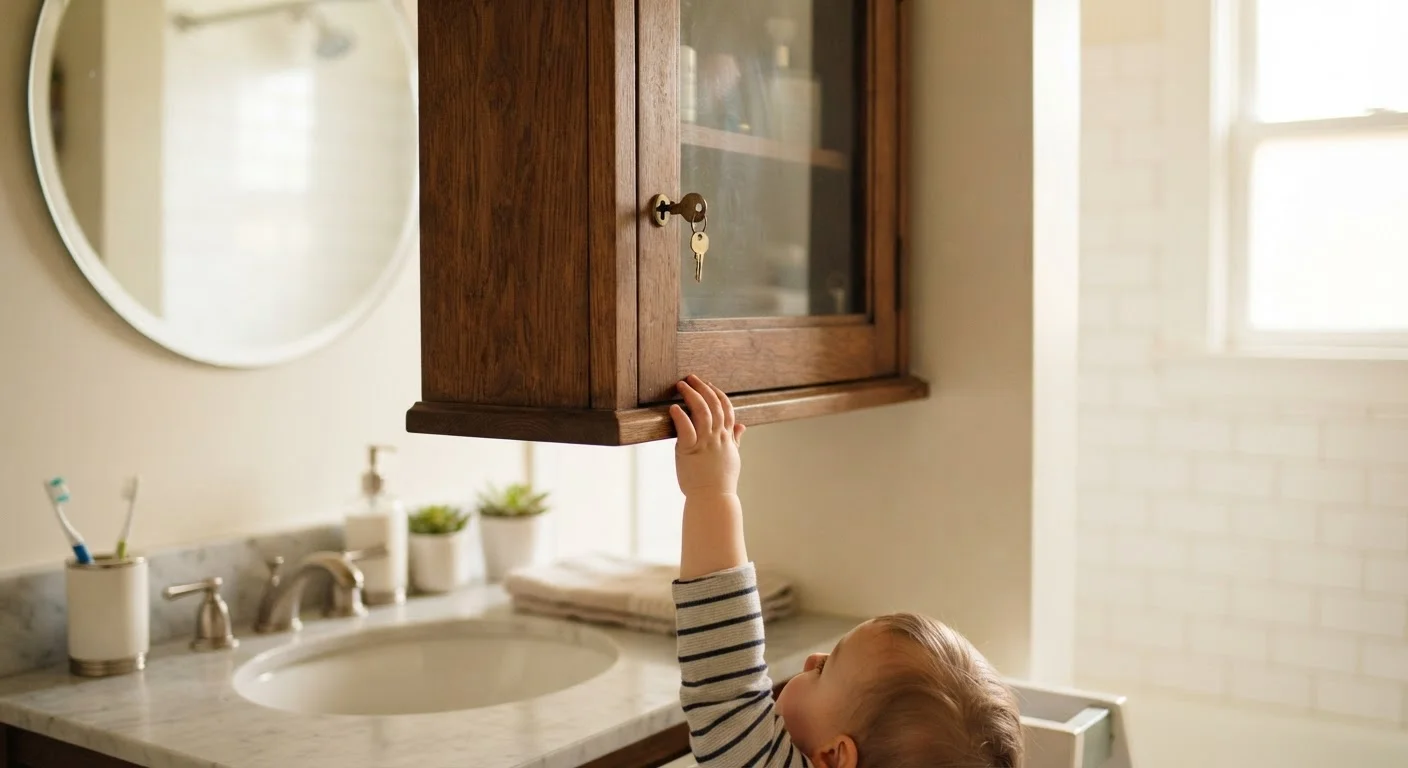
Why Medication Storage Is a Household Safety Priority
Every year, U.S. poison control centers field hundreds of thousands of calls related to accidental medication exposure - and children under six account for a significant share of those cases. Pets, particularly dogs, are also frequent victims, as many medications smell appealing or resemble food. The good news is that most exposures are preventable through deliberate, consistent storage habits.
It's worth understanding that child-resistant caps - the kind that require pressing and turning simultaneously - were designed to slow access, not eliminate it. A determined toddler or a dog with strong jaws can breach them. Relying on packaging alone creates a false sense of security. True protection means keeping medications out of reach and out of sight entirely.
For families navigating these risks across life stages, our guide to home safety at every developmental stage shows how priorities shift as children grow.
~300,000
Annual ER visits for pediatric medication poisoning
The CDC has reported approximately 300,000 emergency department visits annually in the U.S. involving children and medication exposure.
1 in 150
Children treated for medication poisoning each year
According to the CDC, roughly 1 in every 150 children in the U.S. is treated in an emergency department each year due to medication ingestion.
Best Practices for Storing Medications Safely
The following practices represent widely recommended approaches from pediatric health and poison prevention experts. Implementing even a few of them meaningfully reduces household risk.
Store all medications in a locked cabinet, out of sight and out of reach.
High shelves alone are not sufficient - children climb, and pets can knock items down. A locked cabinet eliminates opportunistic access and removes temptation entirely. Out of sight also means out of mind for curious toddlers.
Return medications to their storage location immediately after every use.
The most common point of exposure is when a medication is left on a countertop, nightstand, or purse after use. A brief distraction is all it takes for a child or pet to access it. Building a 'close and store' habit after every single dose eliminates this window.
Never refer to medications as candy or use language that makes them seem desirable.
Well-meaning efforts to reduce a child's reluctance to take medicine can backfire by making the medicine seem like a treat worth seeking out. This framing is associated with children attempting to self-administer medications unsupervised.
Audit your medications regularly and dispose of expired or unused drugs promptly.
Expired medications accumulate quickly, increasing clutter that makes secure storage harder. Reducing the total volume of medications in the home directly reduces exposure risk. Prompt disposal also prevents degraded medications from causing unintended effects.
Apply the same storage rules to vitamins, supplements, and topical treatments.
Many families store vitamins and topical creams casually - on windowsills, open shelves, or in unlocked drawers - because they don't feel like 'real' medicine. Iron supplements, for example, are a leading cause of pediatric poisoning. Topical pain creams containing lidocaine or salicylates can also harm pets who lick them.
Don't Forget Veterinary Medications and Supplements
Many families store their pet's medications separately - or not at all - without realizing those drugs pose the same risks. Flea and tick preventatives, antiparasitic tablets, and even pet vitamins can cause serious harm if a child or another animal ingests them. Flavored chewable tablets designed to appeal to dogs are especially dangerous because they are just as attractive to toddlers.
Human medications also work in reverse: common over-the-counter drugs like acetaminophen, ibuprofen, and certain antidepressants are acutely toxic to cats and dogs even in small amounts. Keep all medications - human and veterinary - stored together in one locked location so nothing slips through the cracks. For a broader look at household dangers to animals, see our pet-proofing guide for hidden hazards.
Guests Bring Medications Too
When family or friends visit overnight, ask them to keep their medications - including those in purses or toiletry bags - stored in a location inaccessible to children and pets. Visitors may not be aware of household safety rules, and loose pills in a guest bag are a common but overlooked exposure risk. A friendly heads-up before arrival is all it takes.
Safe Disposal and Emergency Preparedness
Unused or expired medications sitting in a drawer are just as dangerous as actively used ones. The U.S. Food and Drug Administration recommends using authorized drug take-back programs - typically available at pharmacies and law enforcement locations - as the safest disposal method. When no take-back option is available, mixing medications with an undesirable substance (such as coffee grounds or dirt) in a sealed bag before placing them in household trash reduces the chance of accidental ingestion or misuse.
Despite every precaution, exposures can still happen. Every household should have the Poison Control number - 1-800-222-1222 - saved in their phone and posted somewhere accessible. If you suspect a child or pet has ingested a medication, call immediately rather than waiting for symptoms to appear. Time matters.
For broader home safety planning, including which household chemicals should never share a cabinet, building layered protective habits across your home gives every family member the best possible protection.
The content on this site is for informational purposes only and is not a substitute for professional advice. Always consult a qualified professional for guidance specific to your situation.