

Why Storage Proximity Matters
Most people know not to mix bleach with ammonia - but the danger doesn't always require deliberate mixing. A spill, a leak, or fumes from two open containers stored side by side can create the same hazardous reaction. This is why where you store household chemicals matters just as much as how you use them.
The U.S. Poison Control Centers handle hundreds of thousands of calls each year related to household chemical exposures, many involving cleaning products. Understanding the most dangerous incompatible pairs - and keeping them physically separated - is one of the simplest, most effective safety habits a household can adopt.
If you also store medications alongside cleaning supplies, the safe medication storage guide offers additional guidance on protecting children and pets from accidental exposures.
| U.S. Poison Control number | 1-800-222-1222 (American Association of Poison Control Centers) |
| Most common hazardous pairing | Bleach + Ammonia (CDC household chemical safety resources) |
| "Natural" doesn't mean combinable | Vinegar + H₂O₂ forms peracetic acid (General chemistry reference) |
| Storage temperature guidance | Cool, dry, well-ventilated spaces only (Consumer Product Safety Commission) |
| Key rule for drain cleaners | Never mix brands; flush thoroughly between uses |
The Most Dangerous Chemical Pairings
The following combinations are among the most commonly encountered - and most hazardous - in American homes:
- Bleach + Ammonia: Produces chloramine vapors, which can cause coughing, shortness of breath, chest pain, and in confined spaces, serious lung damage. Many glass cleaners contain ammonia, making this combination easy to stumble into accidentally.
- Bleach + Rubbing Alcohol: Creates chloroform and other toxic compounds. Rubbing alcohol is a common medicine cabinet staple - never combine it with bleach-based cleaners during disinfecting tasks.
- Bleach + Acidic Cleaners (Vinegar, Certain Bathroom Cleaners, or Products Containing Acids): Releases chlorine gas, which irritates the eyes, nose, and respiratory tract and can be dangerous even in small amounts.
- Hydrogen Peroxide + Vinegar: When combined directly, these form peracetic acid, which can irritate the skin, eyes, and airways. Using them sequentially on the same surface without rinsing in between is enough to cause a reaction.
- Different Drain Cleaners: Some are acid-based; others are alkaline. Mixing brands - or using one after another without thoroughly flushing - can cause violent reactions, spattering caustic material.
A common misconception is that "natural" products like vinegar are inherently safe to combine with other cleaners. The truth behind home maintenance myths addresses this and other widely repeated misunderstandings.
Chloramine vapor
A toxic gas produced when bleach reacts with ammonia-containing substances. Even brief exposure can irritate the respiratory tract; high concentrations can cause serious lung injury.
Oxidizer
A chemical that releases oxygen and can intensify combustion or cause reactions with other substances. Bleach and hydrogen peroxide are common household oxidizers.
Peracetic acid
A corrosive compound formed when hydrogen peroxide and acetic acid (vinegar) are combined directly. It can irritate skin, eyes, and airways on contact.
Chlorine gas
A toxic yellow-green gas released when bleach is combined with acidic cleaners. It irritates mucous membranes and the respiratory system and can be dangerous even at low concentrations.
Off-gassing
The slow release of chemical vapors from a substance, which can occur even without a spill or open container. Heat and poor ventilation accelerate the process.
Safe Storage Principles Every Household Should Follow
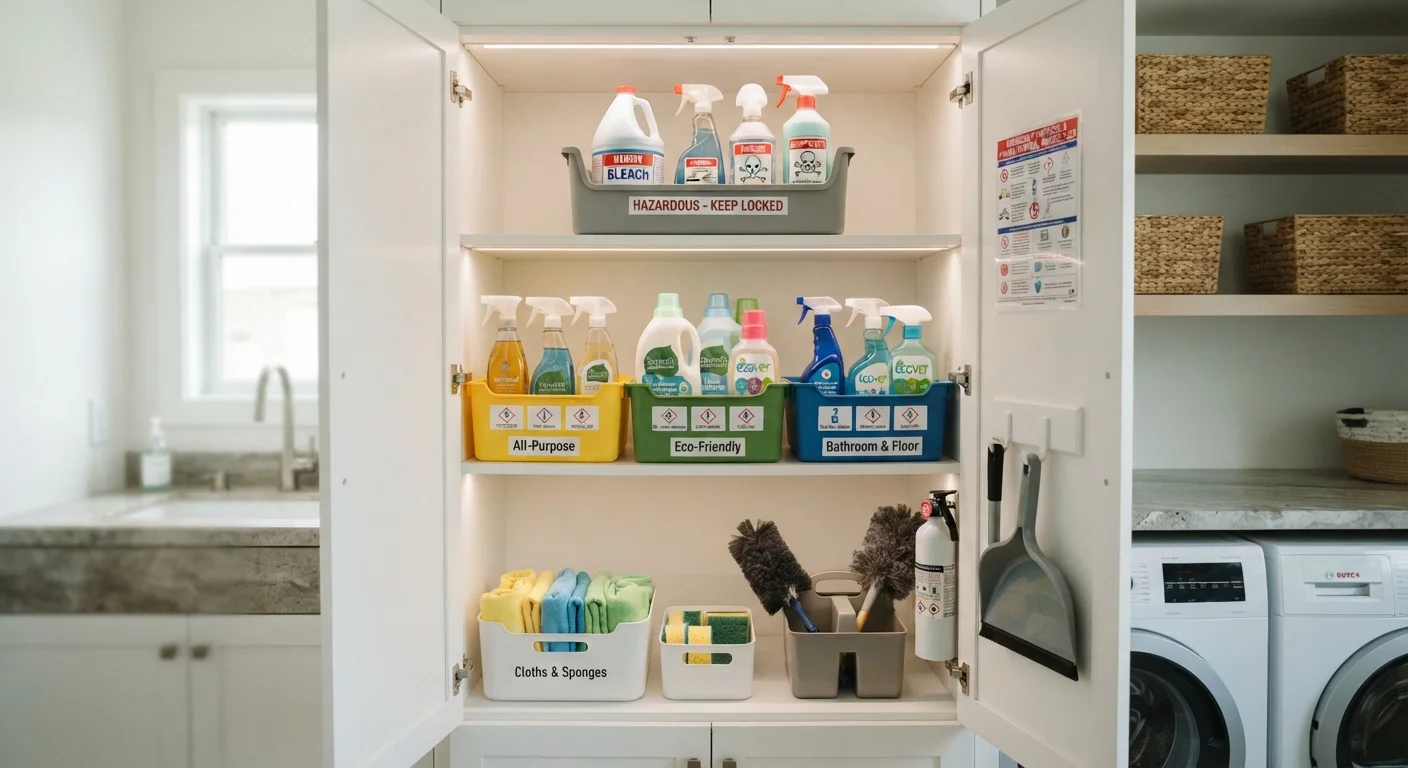
Separation is the core principle. Keep acids away from bases, oxidizers away from flammables, and never store incompatible chemicals in adjacent cabinets where a spill from one could reach the other.
- Read labels first. Most products list incompatible substances under warnings. This is manufacturer-tested information - take it seriously.
- Use original containers. Transferring chemicals to unmarked or repurposed bottles makes it easy to forget what's inside and removes critical safety information.
- Store in cool, dry, well-ventilated areas. Heat and humidity can degrade containers and accelerate off-gassing, even without direct mixing.
- Keep pet areas in mind. Animals explore low cabinets and utility rooms freely. The pet-proofing guide covers additional chemical hazards that are easy to overlook around dogs and cats.
- Don't rely on locks alone. Hardware helps, but child safety latches have real limitations that parents should understand before depending on them exclusively.
When in Doubt, Don't Mix - Ventilate First
If you accidentally combine chemicals and notice an unusual smell, leave the area immediately and get fresh air. Open windows and doors before returning, and call Poison Control if anyone experiences symptoms. Never assume a small amount is harmless - some reactions are rapid and potent even in brief exposures.
This article provides general home safety information and is not a substitute for professional guidance. If you suspect a chemical exposure or poisoning, call Poison Control (1-800-222-1222 in the U.S.) or emergency services immediately.
The content on this site is for informational purposes only and is not a substitute for professional advice. Always consult a qualified professional for guidance specific to your situation.