

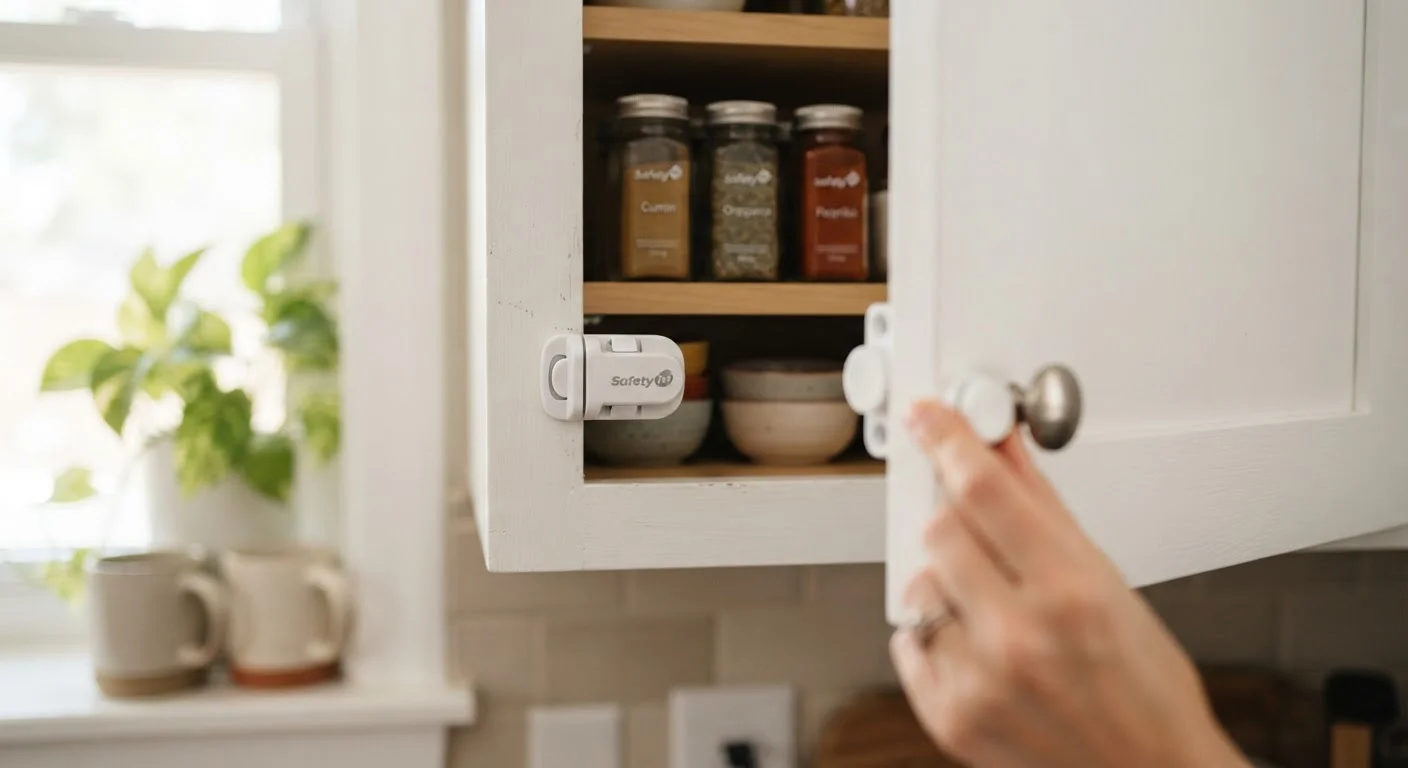
Why These Myths Persist - and Why They Matter
Safety hardware is marketed with reassuring imagery and confident packaging, and that framing can quietly shape unrealistic expectations. Parents install a latch, feel relief, and move on - which is entirely understandable given the relentless demands of caregiving. The problem arises when that relief substitutes for ongoing attention rather than supplementing it.
The myths below are common precisely because they feel plausible. Correcting them isn't about alarm - it's about channeling parental effort toward the practices that genuinely reduce risk. Hardware plays a real and valuable role; it just doesn't play the role many parents assume.
Locks Are Not a Substitute for Supervision
Child safety locks reduce risk but cannot eliminate it. No mechanical barrier is guaranteed against a determined or dexterous child. Poisoning and injury risks remain real even in latched homes, which is why poison control resources and attentive supervision remain essential components of household safety.
The Myths - and What's Actually True
Each of the following misconceptions is widespread enough that pediatric safety organizations routinely address them in parent education materials. Understanding where the logic breaks down is the first step toward a more reliable home environment.
Myth
Once a cabinet latch is installed, that cabinet is secure - parents don't need to worry about it anymore.
Fact
Latches degrade, loosen, and can be defeated. They require routine checks and are only one part of a layered safety approach.
Hardware wears down over time. Springs fatigue, adhesive mounts peel, and screws loosen with repeated use. A latch that held firm in month one may open with minimal force by month six. Pediatric safety experts consistently recommend inspecting safety hardware monthly, testing each latch with the same pulling force a young child might apply. Relying on a "set it and forget it" mindset is one of the most common ways a false sense of security develops in otherwise careful households.
Myth
Any child safety lock will work on any cabinet - they're all essentially the same.
Fact
Lock types vary dramatically in mechanism, strength, and compatibility; the wrong type for a given cabinet can fail quickly or even go unlatched without the caregiver noticing.
Magnetic locks, spring-loaded latches, sliding locks, and adhesive strap locks each suit different cabinet configurations. A magnetic lock needs proper door alignment and a dedicated magnet key stored accessibly by adults but not children. Adhesive-mounted locks may not bond well to textured or painted surfaces. Choosing a lock based on cabinet type, door gap width, and the age of the child in the home improves reliability meaningfully. Our room-by-room childproofing guide walks through which solutions tend to perform well in specific spaces.
Myth
Toddlers can't figure out safety latches - the mechanisms are too complex for young children.
Fact
Many toddlers learn to defeat basic spring-loaded or pull-tab latches within weeks through trial and error.
Young children are remarkably persistent and observant. They watch caregivers open cabinets and replicate the motion. Simple spring latches that require only a modest upward push or pull are frequently mastered by children between 18 and 30 months. This is why layered strategies - combining a harder-to-defeat lock type with storing the most dangerous items out of reach entirely - are more reliable than any single mechanism. Safety priorities also shift as children develop; see how hazards change across ages in our article on home safety across developmental stages.
Myth
Cabinet locks only matter in the kitchen - other rooms don't need them.
Fact
Bathrooms, home offices, laundry rooms, and garages often contain equally or more dangerous items than kitchen cabinets.
Medications stored in bathroom vanities, cleaning solvents under laundry sinks, and tools in garage cabinets represent serious hazards. According to the U.S. Consumer Product Safety Commission, a significant proportion of childhood poisoning incidents involve products stored outside the kitchen. A thorough childproofing audit covers every room where a child has access, not just the spaces adults most associate with hazard. Pairing this with age-appropriate safety conversations - without causing anxiety - can also reinforce protective behavior; our piece on teaching young children about home safety offers practical guidance.
Myth
Magnetic cabinet locks are always more secure than other types because they have no visible mechanism.
Fact
Magnetic locks are among the more reliable options, but they fail when the magnet is misplaced, the door warps, or the mounting hardware loosens.
Magnetic locks operate by holding a small internal latch in place until a paired magnet is held near the exterior of the door. Their security depends entirely on keeping the magnet out of a child's reach and ensuring the cabinet door hasn't shifted enough to misalign the lock mechanism. If the magnet is left on a countertop, an older child or sibling can use it. Regular door-frame inspection and keeping the release magnet stored high up are practices that preserve the system's effectiveness.
Hazardous Cabinets Deserve Extra Measures
Cabinets storing cleaning products, medications, or sharp objects carry higher stakes if a lock fails. Consider storing these items on high shelves entirely out of reach, rather than relying solely on a latch. Our guide on household chemicals that should never share a cabinet explains which products pose the greatest risk when accessed by children.
Building a More Reliable Safety Strategy
The most protective approach treats cabinet locks as one layer among several, not a standalone solution. That means selecting hardware matched to the specific cabinet and age of the child, inspecting it monthly, storing the most hazardous items out of reach regardless of any lock, and pairing physical barriers with age-appropriate education.
~74,000
Annual ER visits for child poisoning under age 5
The U.S. Centers for Disease Control and Prevention has reported tens of thousands of emergency department visits annually for young children due to unintentional poisoning, often from household products.
Over 50%
Childproofing hardware installed incorrectly
Consumer safety research has found that a majority of child safety devices are not installed according to manufacturer instructions, undermining their protective value.
Furniture anchoring is another frequently overlooked dimension of the same challenge - unsecured dressers and bookshelves pose independent risks in rooms where cabinet locks are already in place. Our article on furniture tip-over risks and anchoring covers that territory in depth.
Similarly, stair gates share many of the same installation pitfalls as cabinet locks; the mechanics differ but the principle - proper fit, correct mounting, routine inspection - applies equally. See our piece on why stair gates fail for a parallel look at that hardware category.
This article is for general informational purposes only and does not constitute professional safety, medical, or legal advice. Always consult qualified professionals and follow manufacturer instructions when installing safety hardware in your home.
The content on this site is for informational purposes only and is not a substitute for professional advice. Always consult a qualified professional for guidance specific to your situation.