

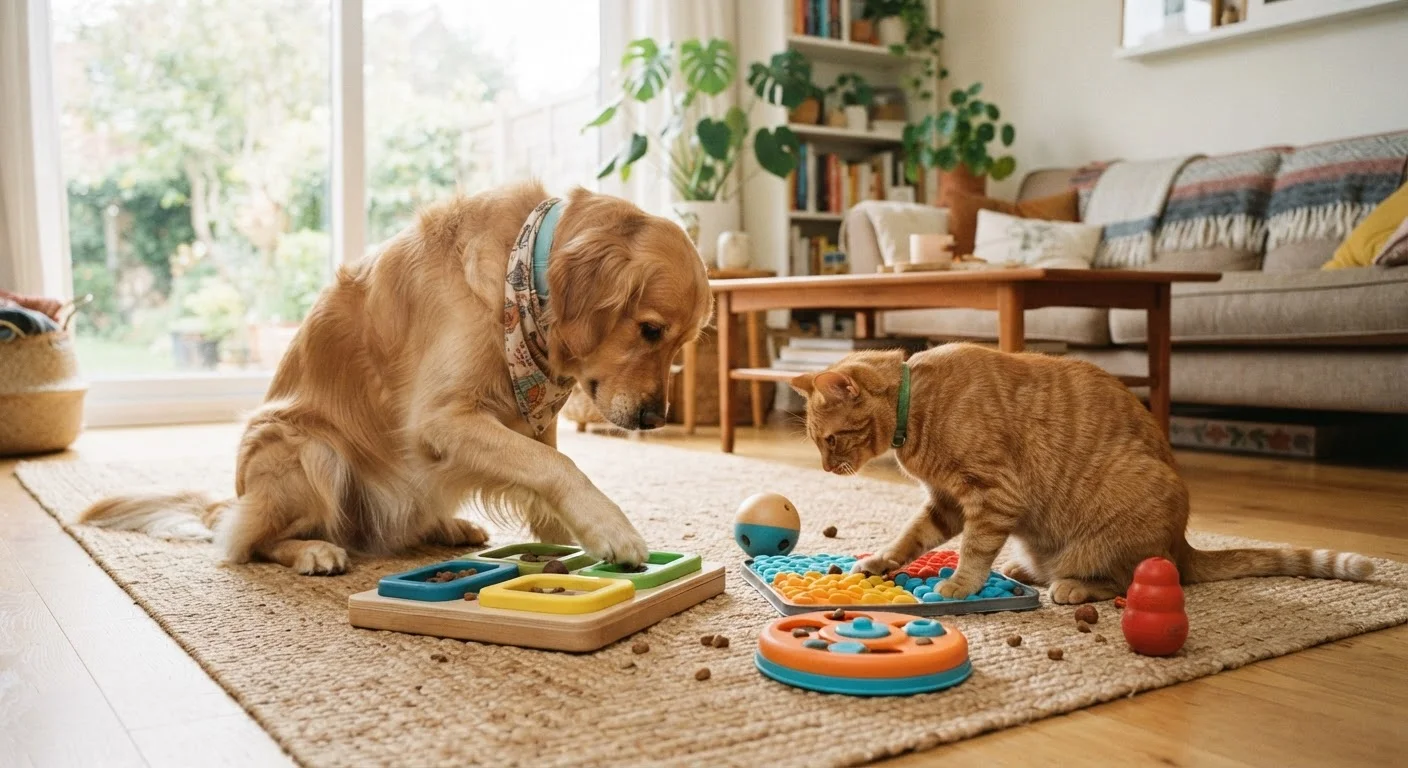
Why Mental Stimulation Matters for Pets
When a dog chews through a couch cushion or a cat knocks every object off the counter, the instinct is to label it mischief. Animal behaviorists, however, generally point to something more fundamental: under-stimulation. Like humans, dogs and cats have cognitive needs that, when unmet, manifest as restlessness, anxiety, or destructive habits.
Research in animal welfare science consistently links environmental enrichment - activities that engage a pet's natural instincts - to reduced stress hormones and improved behavioral health. Sniffing, hunting, problem-solving, and social interaction aren't optional extras; they're biological necessities. Interestingly, studies suggest that a 15-minute nose-work session can tire a dog as effectively as a 30-minute walk, because mental effort draws on real neurological resources.
If you've noticed your pet pacing, over-grooming, vocalizing excessively, or engaging in repetitive behaviors, those may be signals worth taking seriously. You can also cross-reference subtle clues in our guide on signs your pet may be in pain, since stress and discomfort sometimes look alike.
One Size Doesn't Fit All Pets
Enrichment needs vary considerably by species, breed, age, and individual personality. A high-energy herding dog has very different requirements from a senior indoor cat. If your pet has a chronic health condition or has recently shown significant behavioral changes, speak with your veterinarian before introducing new activities - some enrichment approaches may need to be modified for safety or comfort.
Proven Enrichment Practices for Everyday Homes
The good news: effective mental enrichment rarely requires specialist equipment or a large home. The practices below are drawn from animal behavior science and are adaptable for both dogs and cats across most living situations.
Use feeding time as a foraging opportunity rather than a bowl drop.
In the wild, dogs and cats spend significant energy locating food. Replicating that search behavior activates problem-solving circuits and delays eating to a healthier pace. This single habit change can reduce anxiety and food-guarding behaviors in some pets.
Rotate toys on a weekly schedule instead of leaving all toys out permanently.
Novelty drives engagement. When the same toys sit in a pile indefinitely, pets habituate to them and stop interacting. A simple rotation schedule maintains the perception of newness without buying anything new.
Teach one new cue or trick each week using reward-based training.
Training sessions are among the most cognitively demanding activities available to domestic pets. They also build the human-animal bond and give pets a clear, rewarding way to interact with their environment. Even five minutes of focused training per day produces measurable behavioral benefits.
Provide safe outdoor sensory experiences, even for indoor-only cats.
Exposure to varying sounds, smells, and visual stimuli counters the monotony of a static indoor environment. Cats in particular are strongly motivated by sensory input, and even passive access to outdoor sights can reduce boredom-related behaviors.
Introduce species-appropriate social play on a predictable daily schedule.
Predictability reduces background anxiety, while interactive play fulfills prey-sequence instincts. For cats this means wand toys that mimic prey movement; for dogs, tug or fetch games that include clear start and stop signals maintain impulse control alongside stimulation.
Keep in mind that a pet's enrichment needs shift across their lifetime. Puppies and kittens often need shorter, more frequent bursts of stimulation, while senior pets may prefer lower-intensity, sensory-focused activities. Our article on how pets age walks through what changes at each life stage.
Getting Started: Quick Wins You Can Try Today
You don't need to overhaul your pet's routine overnight. Small, consistent changes compound over time and often produce meaningful improvements in your pet's mood and behavior within days. Before expanding your pet's access to new areas or objects, it's worth reviewing pet-proofing hazards that catch owners off guard to make sure enrichment activities are introduced safely.
“Enrichment isn't a luxury - it's a core component of an animal's physical and psychological welfare. An under-stimulated pet is often a stressed pet, and chronic stress has real health consequences over time.”
— Dr. Karen Overall, Veterinary behaviorist and applied animal behavior researcher
This article is for general informational purposes only and does not constitute veterinary advice. If your pet is showing sudden or significant behavioral changes, consult a licensed veterinarian or a certified animal behaviorist.
The content on this site is for informational purposes only and is not a substitute for professional advice. Always consult a qualified professional for guidance specific to your situation.