

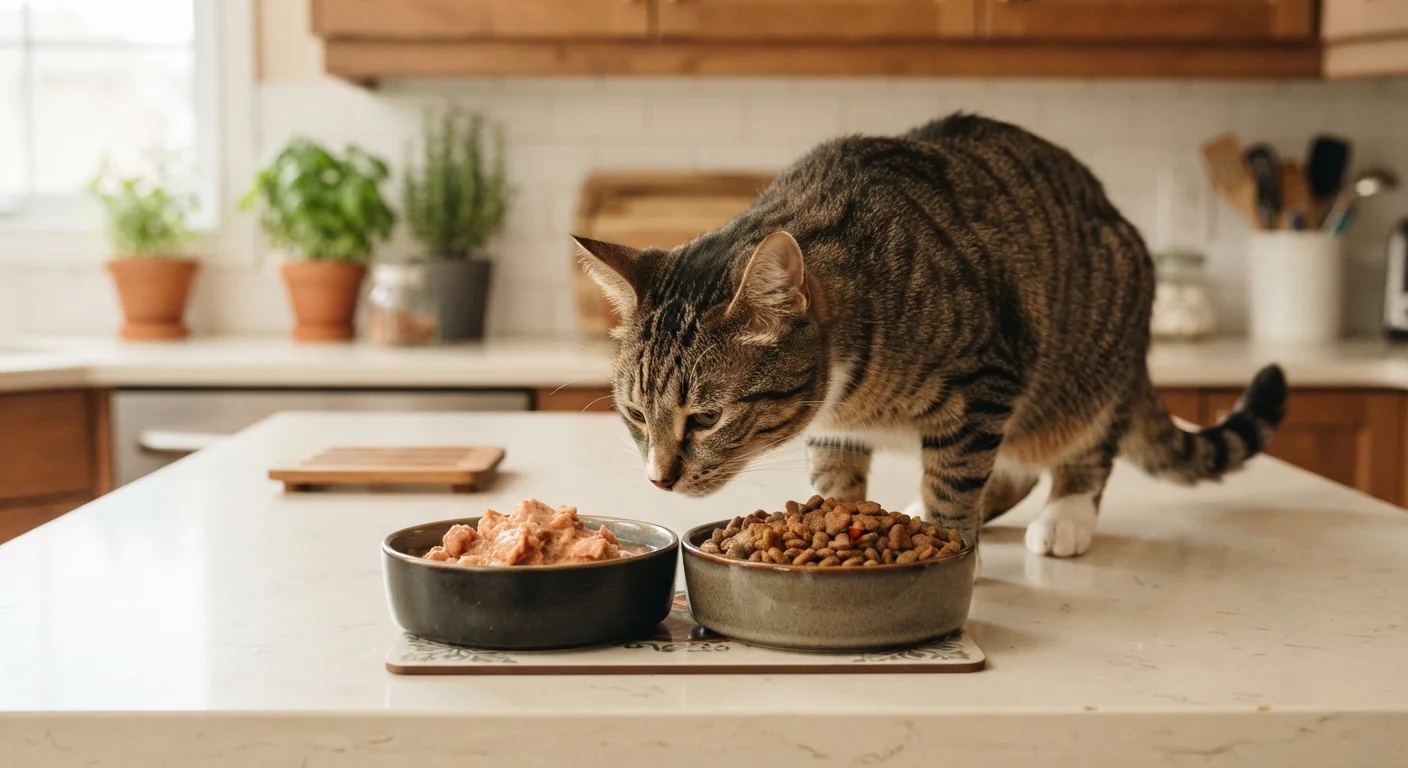
Option A
Wet Cat Food
The moisture-rich, palatable option cats instinctively favor.
Best for: Cats needing extra hydration, picky eaters, seniors, or those with urinary or kidney concerns.
Option B
Dry Cat Food (Kibble)
The convenient, budget-friendly everyday staple.
Best for: Busy households looking for easy storage, portion control, and a longer shelf life.
Why This Choice Matters More Than Most Owners Realize
Cats are obligate carnivores with a biology shaped by prey-based diets - which means what goes in their bowl every day has real, measurable effects on their long-term health. Unlike dogs, cats have a naturally low thirst drive; in the wild, they obtain most of their hydration through the moisture in prey animals. Domestic cats often don't compensate adequately by drinking from a water bowl, which makes the water content of their food an important health consideration.
Choosing between wet and dry food isn't simply a matter of preference or convenience. It touches on hydration, dental health, caloric density, cost, and - for cats with specific medical conditions - therapeutic management. Understanding the genuine trade-offs helps you have a more productive conversation with your veterinarian and make a more confident choice for your individual cat.
For a deeper look at how life stage shapes nutritional needs, see our guide to pet life stages - because a kitten's dietary needs differ considerably from a senior cat's.
Head-to-Head: How Wet and Dry Food Compare
The differences between wet and dry food go beyond texture. Here's a structured look at how they stack up across the factors that matter most to cat owners and veterinary professionals alike.
| Criterion | Wet Cat Food | Dry Cat Food (Kibble) |
|---|---|---|
| Moisture content | ~70-80% | ~10% |
| Hydration support | High - integral to diet | Low - relies on separate drinking |
| Typical cost per serving | Higher | Lower |
| Shelf life (opened) | 24-48 hours refrigerated | Weeks in an airtight container |
| Palatability | Generally higher aroma appeal | Variable; some cats prefer crunch |
| Dental benefit | Minimal | Modest (dental formulas only) |
| Caloric density | Lower per gram (high water) | Higher per gram |
| Ease of portion control | Moderate - comes in set can sizes | Easy - measurable by cup or scale |
One detail worth noting: protein and fat percentages on a label reflect the food as fed. Because wet food contains so much water, comparing the two formats requires calculating nutrients on a "dry matter basis" - stripping out moisture to compare like-for-like. Our pet food label guide walks through exactly how to do this.
The Hydration Argument - and Why It's Significant
Chronic low-level dehydration is associated with a higher risk of urinary tract disease, feline idiopathic cystitis, and kidney disease - all of which are common in domestic cats. Wet food, with roughly 70-80% moisture content, delivers a meaningful amount of daily fluid intake with every meal. Dry kibble, by contrast, contains only about 10% moisture.
70-80%
Moisture content in wet cat food
Compared to roughly 10% in dry kibble, making wet food a meaningful daily fluid source for cats.
~60%
Of cats' illnesses linked to urinary issues
Urinary tract disease is one of the most common reasons cats visit the vet, and hydration plays a recognized role in risk.
Cats fed primarily dry food can meet their hydration needs - but they must actively drink enough water. Many don't. Providing multiple fresh water sources, using a pet water fountain, or adding water to dry food are strategies some owners use to help bridge the gap. That said, these are general approaches; your vet is the best person to assess whether your specific cat is getting adequate hydration.
For cats prone to litter box avoidance - sometimes a sign of urinary discomfort - diet and hydration can be part of the picture. See our article on why cats stop using the litter box for more context.
Dental Health, Cost, and Practical Feeding Considerations
The claim that dry food cleans cats' teeth is often overstated. Most cats swallow kibble without much chewing, limiting any mechanical scrubbing effect. Some specially formulated dental kibble - with a specific fiber matrix - has more evidence behind it, but no food entirely substitutes for active dental care. Our pet dental health guide covers what actually works.
On cost, dry food generally wins: it costs less per calorie, keeps well once opened, and doesn't require refrigeration. Wet food costs more per serving and must be stored and used carefully to prevent spoilage - an opened can should be refrigerated and used within 24-48 hours.
When to Involve Your Vet in Food Decisions
Cats with diabetes, kidney disease, hyperthyroidism, food allergies, or obesity often need therapeutic or prescription diets rather than standard commercial options. If your cat has any chronic health condition, don't change their food without veterinary guidance - the wrong diet can complicate management. Your vet may also recommend reassessing nutrition at different life stages.
Many veterinarians advocate a mixed feeding approach: wet food as the primary diet for its hydration benefits, supplemented with some dry kibble for convenience and variety. This isn't universally right for every cat, but it's a useful framework for healthy adult cats without specific dietary restrictions.
This article is for general informational purposes and is not a substitute for personalized veterinary advice. Always consult a qualified veterinarian before making significant changes to your cat's diet, especially if your cat has an existing health condition.
The content on this site is for informational purposes only and is not a substitute for professional advice. Always consult a qualified professional for guidance specific to your situation.