

Why Pet Dental Health Deserves More Attention
According to the American Veterinary Medical Association, periodontal (gum) disease is the most common clinical condition in adult dogs and cats - and it's almost entirely preventable. Yet it remains one of the most underprioritized aspects of pet care in American households. Unlike a limp or a skin rash, dental disease develops quietly beneath the gumline, often causing significant discomfort before an owner notices anything is wrong.
Pets are also expert at masking pain. Your dog may still run to the food bowl and eat enthusiastically even with a cracked tooth or infected gums. That's why understanding the most common mistakes owners make - and why they make them - is the first step toward genuinely protecting your pet's health. See our guide to recognizing pain in pets for the subtle behavioral cues that are easy to miss.
Assuming bad breath is just a normal part of having a pet.
Why it happens: Many owners grow accustomed to their pet's breath over time and don't realize that persistent odor is a clinical sign, not a quirk of animal ownership.
Relying exclusively on dental treats or chews instead of brushing.
Why it happens: Dental chews are heavily marketed, convenient, and pets love them, which makes it easy to treat them as a complete solution rather than a supplement.
Skipping professional cleanings because anesthesia feels too risky.
Why it happens: Concerns about anesthesia are understandable and stem from genuine care, but owners often overestimate the risk relative to the harm of untreated dental disease.
Waiting for visible symptoms before acting on dental health.
Why it happens: Pets rarely show obvious distress from dental pain, so owners reasonably assume there is no problem until something dramatic appears - by which point disease is often advanced.
Using human toothpaste or improvised cleaning products on pets.
Why it happens: Owners want to do the right thing and may assume their own toothpaste is safe, or reach for what's already in the bathroom cabinet.
Building a Dental Care Routine That Actually Works
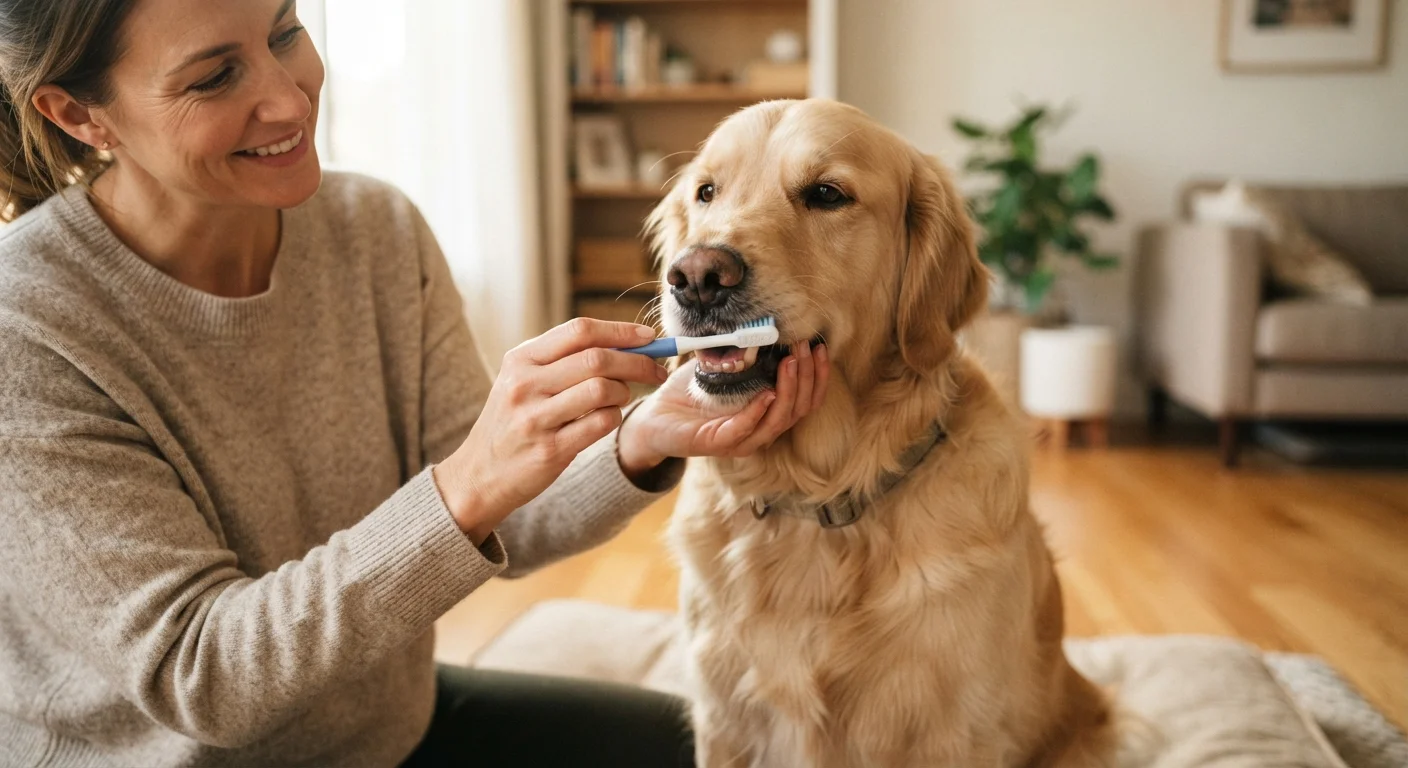
The good news is that meaningful progress doesn't require perfection. Even brushing your pet's teeth three to four times per week delivers measurable benefits compared to doing nothing at all. Start by letting your pet get comfortable with having their mouth touched - use a finger wrapped in a soft cloth with a small amount of pet-safe toothpaste (never human toothpaste, which contains ingredients toxic to animals). Gradually introduce a pet toothbrush over one to two weeks.
Your pet's diet also plays a supporting role. Some dry kibble formulations are designed to provide mild mechanical abrasion as your pet chews, and certain dental chews carry the Veterinary Oral Health Council (VOHC) seal - a useful indicator that a product has met independent standards for plaque or tartar control. For cats especially, the conversation around wet versus dry food and its dental implications is worth discussing with your vet; our article on wet food vs. dry food for cats explores those trade-offs in detail.
"Anesthesia-Free" Dental Cleanings Are Not the Same
Some grooming and pet wellness facilities offer dental cleanings performed without anesthesia. Major veterinary organizations, including the American Animal Hospital Association, do not endorse this practice. Without anesthesia, it is not possible to safely clean below the gumline - where most disease originates - or take diagnostic X-rays. These procedures may make teeth look cleaner on the surface while leaving the underlying condition untreated. Speak with a licensed veterinarian before pursuing this option.
Finally, dental health belongs on the agenda at every annual exam. Our annual vet visit checklist can help you prepare the right questions so you and your vet can assess your pet's oral health together and decide when a professional cleaning makes sense.
This article is for general informational and educational purposes only and does not constitute veterinary advice. Always consult a licensed veterinarian for guidance specific to your pet's health needs.
The content on this site is for informational purposes only and is not a substitute for professional advice. Always consult a qualified professional for guidance specific to your situation.