

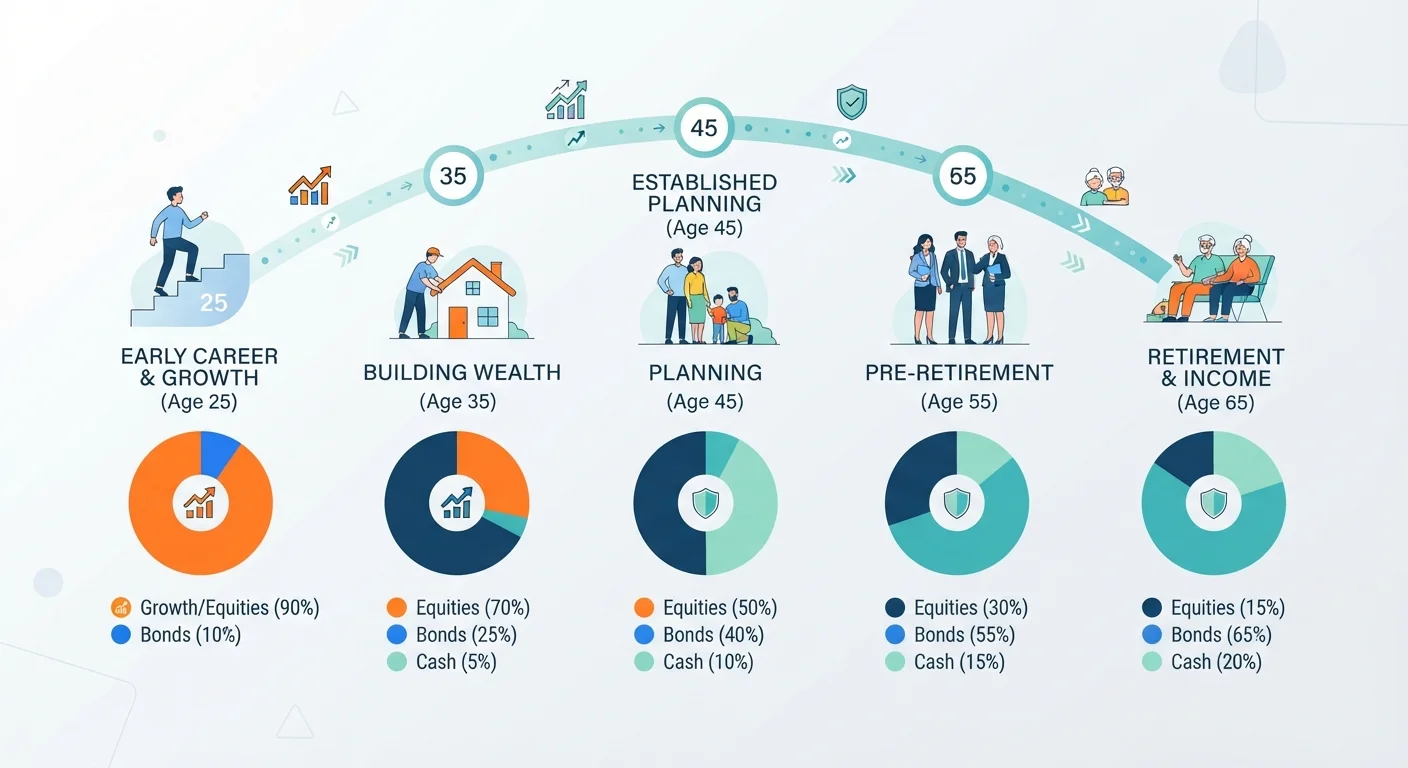
Why Allocation Thinking Changes Over Time
Investing is not a single decision made once - it is an ongoing process shaped by where you are in life, what you own, and what you still need to accomplish financially. The core reason allocation shifts over time is straightforward: the consequences of a major market loss change significantly depending on how many years you have to recover.
A 25-year-old whose portfolio drops 30% in a downturn has decades ahead for markets to recover before retirement. A 62-year-old facing the same loss, and planning to retire in three years, has far less time and may need to delay retirement or significantly change spending plans. This asymmetry - not a fixed formula - is the logic behind gradually shifting allocations over time.
It also helps to have a solid financial foundation before investing aggressively. If you are still building an emergency fund or managing high-interest debt, those priorities generally come before adding investment risk. See our resources on budgeting basics and saving and debt management if either applies to your situation.
This Is Education, Not Personal Advice
The information in this article is general financial education, not personalized investment advice. Asset allocation decisions depend on your individual financial situation, goals, risk tolerance, and tax circumstances. Please consult a licensed financial adviser before making investment decisions.
Understanding index funds vs. actively managed funds can also help you decide how to implement whichever allocation you choose - the vehicle matters, as does the cost.
Net Worth Snapshot
Knowing your current assets and liabilities helps establish a baseline before adjusting your investment mix.
Risk Tolerance Questionnaire
Many brokerage platforms and financial advisers offer these to help clarify how much volatility you can realistically accept.
Retirement Goal Estimate
A rough target retirement date and income need helps determine how aggressively you need to grow versus preserve wealth.
Licensed Financial Adviser
A qualified professional can translate your personal situation into a specific, documented allocation strategy.
Common Pitfalls to Avoid
Even investors who understand allocation principles in theory can run into trouble in practice. A few patterns are worth watching for:
- Setting and forgetting indefinitely: Markets drift your allocation over time. An annual review keeps things on track.
- Letting emotion drive changes: Selling equities during a sharp downturn locks in losses and often means missing the recovery. An allocation you can hold through volatility is better than an optimal one you abandon under pressure.
- Treating rules of thumb as prescriptions: Formulas like "110 minus your age in stocks" are illustrative starting points, not financial advice tailored to your situation.
- Ignoring sequence-of-returns risk: Poor returns in the years immediately before and after retirement can have an outsized impact on long-term outcomes, even if average returns over the full period are acceptable. This is one reason pre-retirees often shift toward more conservative allocations.
What you will need
This article is for general informational and educational purposes only. It does not constitute personalized investment, tax, or financial advice. Past performance of any asset class does not guarantee future results. Consult a licensed financial adviser, accountant, or other qualified professional for guidance specific to your circumstances.
The content on this site is for informational purposes only and is not a substitute for professional advice. Always consult a qualified professional for guidance specific to your situation.