

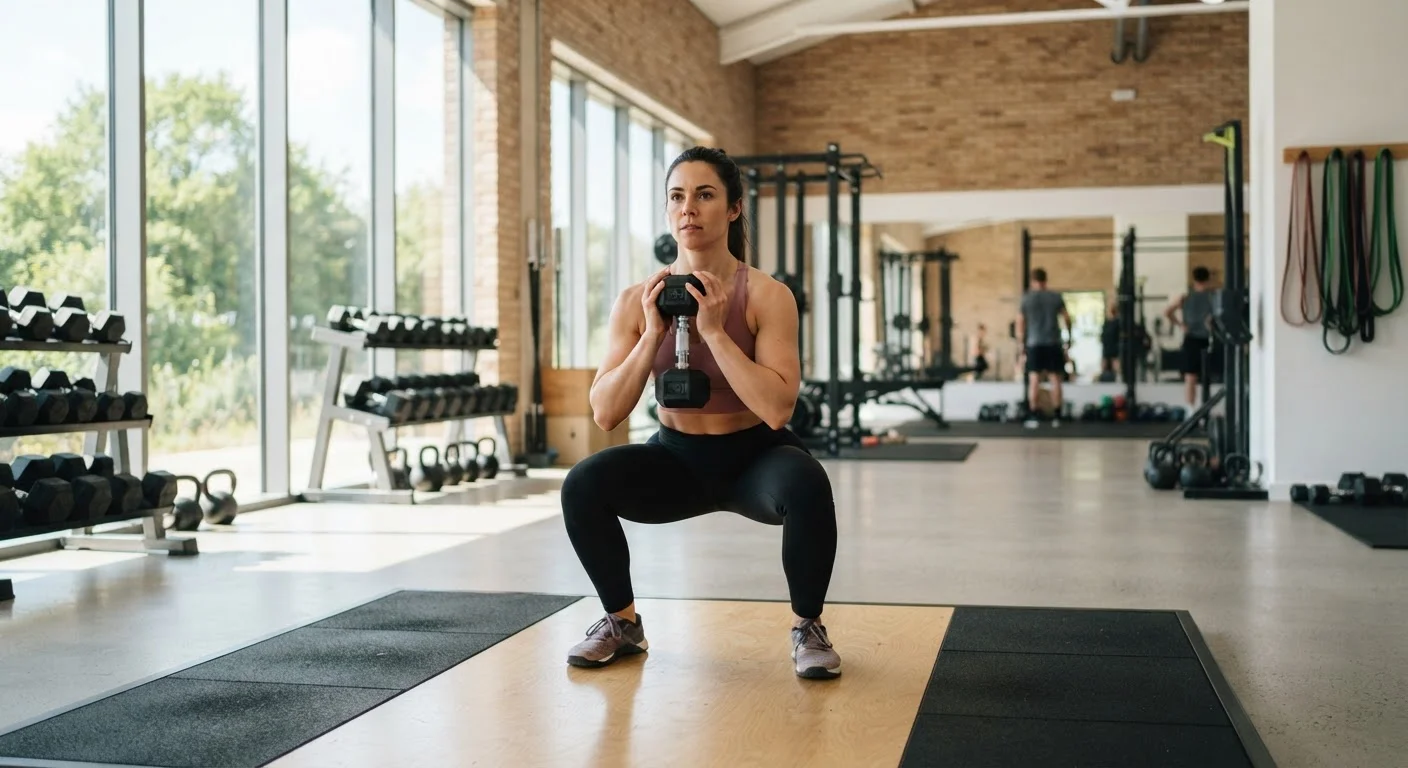
Start here
Why Strength Training Matters for Beginners
Learn the language
Key Concepts to Understand Before You Lift
Train safely
Safety Basics: Protecting Yourself from Injury
Get started
Your First Workouts: What to Expect
Stay consistent
Building a Habit That Sticks
Why Strength Training Matters for Beginners
Resistance training — often called strength or weight training — involves working muscles against an opposing force, whether that's a barbell, a resistance band, or your own bodyweight. Research consistently links regular strength training to benefits including increased muscle mass, improved bone density, better insulin sensitivity, and enhanced functional movement as we age, according to the American College of Sports Medicine.
Despite this evidence, many beginners feel uncertain about where to start. Concerns about injury, confusion over technique, or simply not knowing what a realistic program looks like can delay a first step indefinitely. The good news: the barrier to entry is much lower than most people assume. For comparison purposes, see how resistance training stacks up against other exercise types in our overview of cardio vs. strength training.
This article is for general informational purposes only and is not a substitute for professional medical or fitness advice. Consult a qualified healthcare provider before beginning any new exercise program, especially if you have existing health conditions.
Key Concepts to Understand Before You Lift
Learning the vocabulary of strength training helps you follow programs, communicate with trainers, and make informed choices about your workouts.
Rep (repetition)
One complete performance of an exercise movement — for example, one squat from standing to the bottom position and back up.
Set
A group of consecutive repetitions performed without rest. A workout might call for three sets of ten reps of an exercise.
Progressive overload
Gradually increasing the challenge of your workouts over time — by adding weight, more reps, or more sets — so your muscles continue to adapt and grow stronger.
Compound movement
An exercise that works multiple muscle groups at once, such as a squat or deadlift. These are typically the most efficient exercises for building overall strength.
Rest interval
The recovery time between sets. For strength-focused training, rest intervals commonly range from 60 seconds to three minutes depending on the load and exercise.
DOMS
Delayed onset muscle soreness — the muscle tenderness and stiffness that typically appears 24–72 hours after exercise, especially after new or intense activity.
Understanding these terms lets you read workout plans accurately and track your progress meaningfully. Most beginner programs use relatively simple structures — often 2–4 sets of 8–15 reps per exercise — so the terminology quickly becomes second nature.
Safety Basics: Protecting Yourself from Injury
The most important skill a beginner can develop is sound technique. Poor movement patterns under load are the primary driver of training-related injuries — not the weights themselves. Before adding significant resistance, invest time in learning proper form for foundational movements: the squat, hinge (such as a deadlift), push, pull, and carry.
Never Sacrifice Form for Heavier Weight
Adding load before mastering the movement is one of the leading causes of preventable training injuries. Signs that you're lifting more than you can handle with good form include a rounded lower back during deadlifts, knees caving inward during squats, or using momentum rather than muscle to complete a rep. When form breaks down, reduce the weight — not as a sign of failure, but as the correct decision.
A qualified personal trainer or certified strength coach can identify form breakdowns that are hard to self-diagnose. Even two or three introductory sessions with a professional can set you on a much safer path. Video feedback — recording yourself from the side — is another low-cost tool for identifying obvious issues.
Warm-up is not optional. A 5–10 minute general warm-up (light cardio and dynamic stretching) followed by lighter sets of the exercise you're about to perform prepares joints and muscles and reduces injury risk. Our pre-workout checklist covers exactly what to address before each session.
Your First Workouts: What to Expect
Effective beginner programs typically focus on full-body compound movements — exercises that work multiple muscle groups simultaneously — performed two or three times per week. Squats, deadlifts, rows, presses, and lunges cover most of the body efficiently and deliver strong adaptation signals for new trainees.
Start Lighter Than You Think You Should
One of the most common beginner mistakes is using too much weight before movement patterns are grooved. Starting lighter lets you focus on technique and build a base safely. You'll still make measurable strength gains in the early weeks, even with modest loads, because much of the initial progress comes from your nervous system learning to coordinate the movement.
Start with loads that feel manageable, not maximal. A useful guideline: choose a weight where the last two reps of a set are challenging but your form doesn't break down. This approach — sometimes called "leaving reps in reserve" — builds a foundation safely and still produces meaningful strength gains.
Expect some muscle soreness, particularly after the first few sessions. Delayed onset muscle soreness (DOMS) typically peaks 24–48 hours after a workout and fades as your body adapts. Consistent hydration, adequate protein intake (general dietary guidance, not a specific prescription), and sufficient sleep all support recovery. For a structured approach to fitting these sessions into a schedule, see our guide on building a weekly exercise routine from scratch.
Building a Habit That Sticks
Consistency over months and years produces far greater results than intensity in any single session. Beginners who start conservatively and progress gradually are significantly less likely to burn out or get injured than those who push too hard early.
Track your workouts in a simple log — even a notes app works. Recording the exercises, sets, reps, and weights you completed gives you objective data, makes progress visible, and helps you avoid the common trap of doing the same thing indefinitely. Gradual, progressive overload (slowly increasing volume or load over time) is the core mechanism by which strength is built.
It's also worth examining common misconceptions that may distort expectations. Our article on fitness myths that keep people from making progress addresses popular beliefs — like "no pain, no gain" — that can push beginners in the wrong direction. The goal in your first months isn't perfection; it's showing up consistently and learning to move well.
Free Weights vs. Machines: A Practical Comparison
Understand the practical difference between machine-based and free-weight training so you can make informed choices about your gym setup or home equipment.
Building a Weekly Exercise Routine From Scratch
A step-by-step framework for structuring your training week in a way that balances effort, recovery, and real-life scheduling constraints.
The Pre-Workout Checklist
A practical reference covering hydration, sleep, warm-up, and readiness — everything worth reviewing before each training session.
Frequently Asked Questions
Most beginners do well with two to three sessions per week, allowing at least one rest day between sessions. This frequency provides enough stimulus for adaptation while giving muscles time to recover. As your body adjusts over weeks or months, you can gradually increase volume.
No — bodyweight exercises like squats, push-ups, and lunges are effective starting points that require no equipment. Resistance bands and a set of adjustable dumbbells can also provide a solid home setup. A gym offers more variety and heavier options as you progress, but it isn't required at the start.
Building significant muscle mass requires consistent, high-volume training over months or years, along with specific nutrition strategies. Most beginners will experience improved muscle tone and strength without dramatic size increases. Significant hypertrophy doesn't happen accidentally.
Yes — delayed onset muscle soreness (DOMS) is common in the 24–72 hours following unfamiliar exercise. It's a normal response to new physical stress, not a sign of injury. Mild soreness typically diminishes as your body adapts over the first few weeks.
If you have existing health conditions, haven't been physically active, are pregnant, or are older and sedentary, consulting a healthcare provider before starting is a sensible step. For generally healthy adults, a gradual start with light loads is typically safe, but a qualified professional can offer personalized guidance.
Machines guide your movement along a fixed path, which can be helpful for learning muscle isolation with less coordination demand. Free weights require more balance and coordination but better mimic real-world movements. Our <a href="/health/fitness-exercise/free-weights-vs-machines-understanding-the-difference-in-practice">guide to free weights vs. machines</a> covers when each tends to be useful.
The content on this site is for informational purposes only and is not a substitute for professional advice. Always consult a qualified professional for guidance specific to your situation.