

Summary
18 items · 15–30 minutes
Why Pre-Workout Preparation Matters
Most people think about fitness as what happens during a workout. In reality, how you prepare in the minutes and hours beforehand has a measurable effect on both performance and safety. Walking into a session under-slept, dehydrated, or mentally scattered increases the likelihood of poor form, unnecessary fatigue, and preventable injury.
This checklist is designed for everyday Americans who want to get more out of their exercise time — whether they're lifting weights, running, attending a fitness class, or working out at home. It draws on broadly accepted exercise science principles to help you build a reliable pre-session routine. Think of it as the foundation that makes every workout more intentional.
If you're just getting started with exercise, our guide to building a weekly exercise routine offers a practical framework for structuring your week. If strength training is your focus, see our primer for absolute beginners before diving in.
This article is for general informational and educational purposes only and is not a substitute for professional medical advice. Consult a qualified healthcare provider before beginning any new exercise program, particularly if you have an existing health condition.
What You'll Need
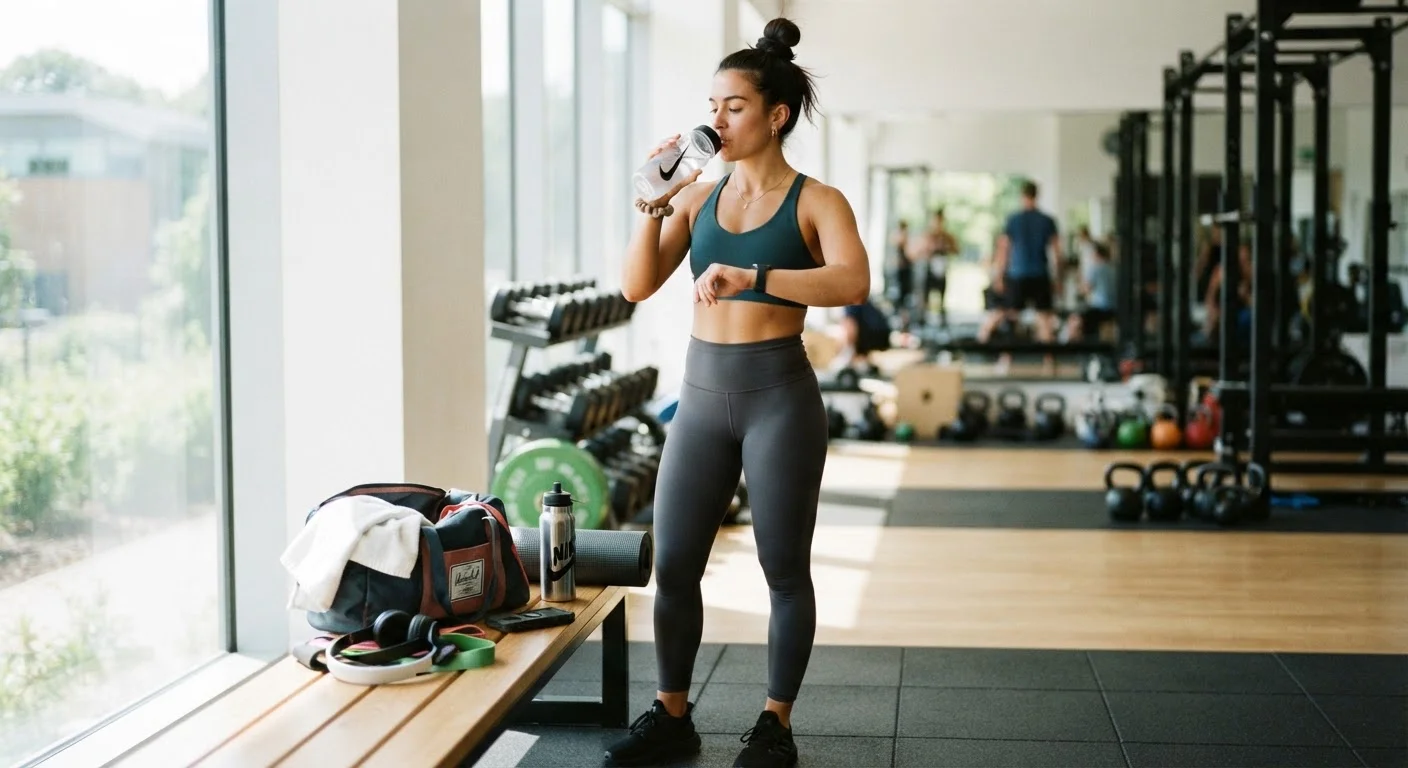
Before working through the checklist, gather the tools and resources that support a safe, effective session. You don't need expensive equipment — most of what matters is already available to you.
Water bottle
Keeps you hydrated before, during, and after your session.
Supportive athletic footwear
Provides appropriate cushioning and stability for your exercise type.
Workout plan or log
A written or digital record of today's planned exercises keeps your session focused and trackable.
Foam roller or resistance band
Useful for pre-session mobility work and dynamic warm-up movements.
Heart rate monitor or fitness tracker
Helps you gauge warm-up effort level and stay within an appropriate intensity range.
The Pre-Workout Checklist
Work through these items before every session. Some take seconds; others require planning ahead. Over time, they become habitual — and that consistency is what compounds into lasting results.
Sleep & Recovery Status
Hydration
Nutrition & Fueling
Gear & Environment
Session Plan & Mindset
Warm-Up
Pain Is Not the Same as Discomfort
Mild muscular fatigue during exercise is normal. Sharp, sudden, or joint-specific pain is not — it is a signal to stop immediately. Continuing to train through genuine pain increases the risk of serious injury. If pain persists after rest, consult a healthcare professional before returning to exercise.
Putting It All Together
Pre-workout habits don't need to be elaborate to be effective. Even 10–15 minutes of intentional preparation — drinking water, eating a light snack at the right time, reviewing your plan, and completing a proper warm-up — can shift the quality of a session significantly. For a deeper look at the physiology behind warm-ups specifically, see our article on what warming up and cooling down actually do.
Recovery is equally important. What you do after a workout shapes your readiness for the next one. Our article on muscle recovery between workouts explains the physiological process in plain terms. And if stress or sleep is affecting your fitness consistency, the Mental Well-Being hub offers approachable, evidence-informed strategies.
Consult a Professional Before Starting
If you are new to exercise, returning after a long break, pregnant, or managing a chronic health condition such as heart disease, diabetes, or joint problems, speak with your doctor or a qualified healthcare provider before beginning or intensifying a workout routine. A brief medical consultation can help ensure your plan is appropriate for your individual circumstances.
Use this checklist as a living reference — revisit it as your fitness level changes, your goals shift, or your schedule evolves. The goal isn't perfection before every session; it's building enough awareness to make each workout safer, more focused, and ultimately more sustainable.
The content on this site is for informational purposes only and is not a substitute for professional advice. Always consult a qualified professional for guidance specific to your situation.