

Our Verdict
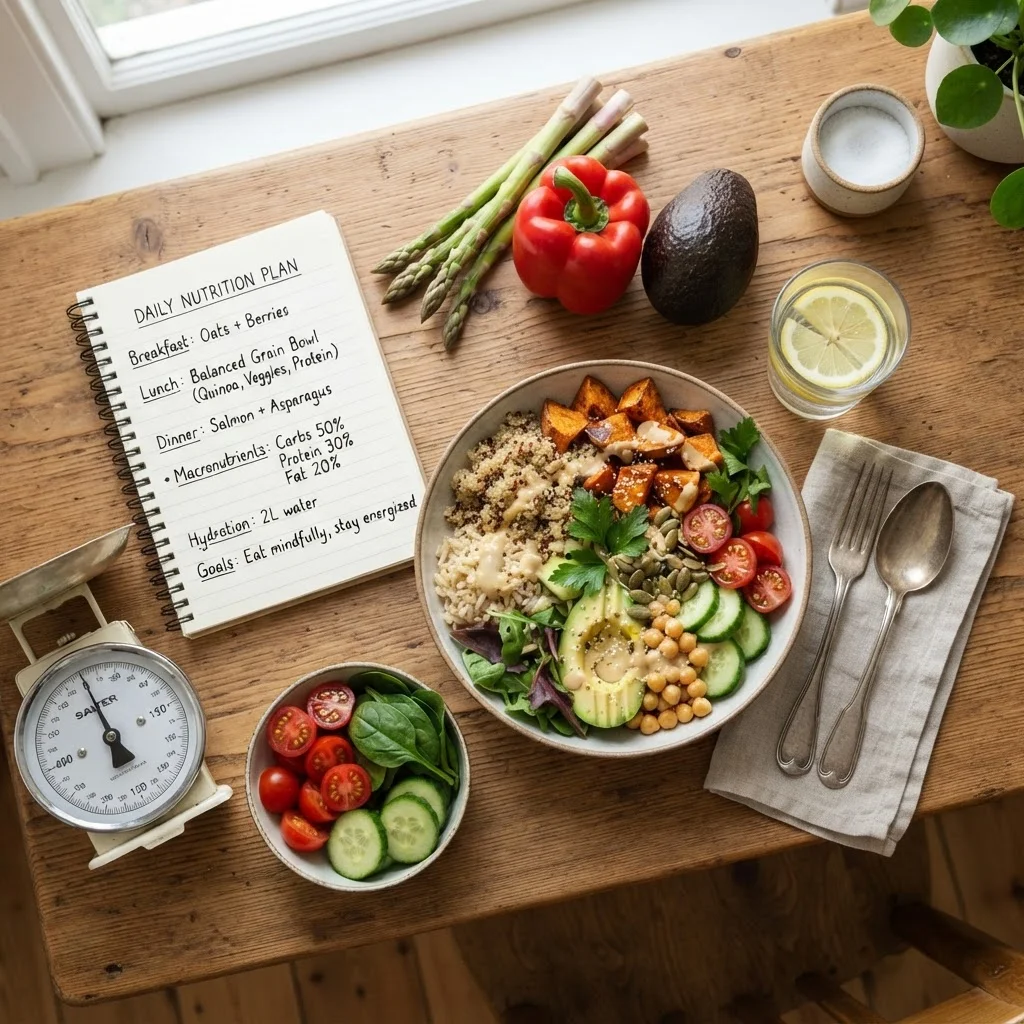
Calorie counting offers quantifiable structure that suits those who respond well to data and clear targets. Food quality approaches tend to be more intuitive and sustainable for people who find rigid tracking burdensome. Emerging evidence suggests that combining both principles — eating mostly whole, nutrient-dense foods while remaining broadly aware of portions — may offer the most durable results for many people.
| Best for | Recommended |
|---|---|
| Those who prefer data-driven structure and measurable targets | Calorie Counting |
| Those seeking a sustainable, flexible long-term eating pattern | Food Quality Focus |
| Those managing specific medical or weight-related health goals | Guidance from a registered dietitian combining both approaches |
How Each Approach Works
Calorie counting is rooted in the principle that body weight is influenced by energy balance — the relationship between calories consumed and calories expended. Practitioners typically use apps, labels, or food databases to log daily intake against a personalized target, usually derived from estimated metabolic rate and activity level.
Food quality approaches, by contrast, shift attention away from numbers toward the nutritional character of what's eaten. This framework prioritizes whole foods — vegetables, fruits, legumes, whole grains, lean proteins, and healthy fats — while limiting ultra-processed products high in refined sugars, sodium, and industrial additives. Portion awareness may still exist, but it's guided by hunger and satiety cues rather than precise counts.
Both frameworks are widely referenced in public health guidance, including dietary recommendations from the USDA and the CDC, which acknowledge energy balance and dietary pattern quality as complementary dimensions of healthy eating.
What the Evidence Shows
Studies examining calorie-restriction approaches consistently show they can support weight loss when adherence is maintained. However, research also highlights that long-term adherence is a significant challenge — calorie tracking can be time-consuming, and some studies associate it with heightened dietary preoccupation in certain individuals.
Research on dietary quality paints a similarly nuanced picture. A notable clinical trial published in JAMA (Gardner et al., 2018) found that participants following a healthy low-fat or healthy low-carbohydrate diet — both emphasizing whole, minimally processed foods — achieved meaningful weight loss over 12 months without explicit calorie counting. The findings suggest that improving food quality can naturally moderate energy intake for some people.
~20%
Allowable error in FDA food label calorie counts
FDA regulations permit up to a 20% margin of error on Nutrition Facts panel calorie declarations, which can affect tracking accuracy.
58%
Of U.S. daily calories from ultra-processed foods
A study published in BMJ Open (Martínez Steele et al., 2017) estimated that ultra-processed foods account for more than half of daily caloric intake among American adults.
12 months
Duration of landmark healthy-diet quality trial
The DIETFITS trial (Gardner et al., JAMA, 2018) tracked over 600 adults following quality-focused low-fat or low-carb diets without explicit calorie targets.
It's worth noting that these studies reflect group-level averages. Individual responses to both approaches vary considerably based on metabolism, lifestyle, food access, and psychological factors. For a broader look at eating principles that hold across dietary patterns, see our guide on building a balanced plate.
Practical Strengths and Limitations
| Calorie Counting | Food Quality Focus | |
|---|---|---|
| Core principle | Energy balance via measured intake | Nutrient density over quantity |
| Tracking required | Yes — apps, labels, databases | Minimal — guided by food choices |
| Flexibility | Low to moderate | Moderate to high |
| Ease of long-term adherence | Challenging for many | Generally more sustainable |
| Precision | High (with accurate logging) | Lower — portions less defined |
| Psychological considerations | Can increase food preoccupation | More intuitive for most people |
| Suits best | Data-oriented, goal-driven individuals | Those seeking flexible, whole-food habits |
Calorie counting's primary strength is precision — it creates accountability and can surface hidden sources of excess intake. Its limitations include the cognitive load of continuous tracking, the margin of error in food labels (the FDA permits up to a 20% discrepancy), and the risk of treating all calories as equivalent regardless of nutritional value.
Food quality approaches are generally more flexible and can reduce the mental burden associated with strict tracking. Their limitation is that without any portion awareness, high-calorie whole foods — nuts, avocados, oils — can still contribute to energy surplus. The approach also requires access to and familiarity with whole-food cooking, which isn't equally available to all households.
A Practical Middle Ground
If you're unsure where to start, many registered dietitians suggest beginning with food quality improvements — crowding out ultra-processed foods with whole-food alternatives — before layering in any calorie awareness. This sequence tends to feel less restrictive and builds sustainable habits first. If you later want more precision, tracking can be introduced gradually rather than all at once.
Choosing the Right Fit — and When to Combine Both
Neither approach functions as a universal solution. People with a history of disordered eating or an anxious relationship with food numbers may find calorie-focused tracking counterproductive and should speak with a healthcare provider before adopting it. Conversely, those with specific clinical targets — such as managing diabetes or recovering from a metabolic condition — may benefit from the structure counting provides, ideally under professional supervision.
Many nutrition researchers and dietitians now advocate for a hybrid perspective: anchoring dietary choices in high-quality whole foods while maintaining a general, non-obsessive awareness of portions. This aligns with how dietary guidelines in the U.S. are increasingly framed — less about precise macronutrient arithmetic, more about overall eating patterns over time.
For practical support navigating food choices, our grocery shopping nutrition framework offers an aisle-by-aisle guide to building a higher-quality cart. And if you're also thinking about physical activity alongside nutrition, the Fitness & Exercise hub covers complementary strategies for an active lifestyle.
This article is for general informational and educational purposes only and does not constitute medical or nutritional advice. Consult a qualified healthcare professional or registered dietitian before making significant changes to your diet, particularly if you have an existing health condition.
The content on this site is for informational purposes only and is not a substitute for professional advice. Always consult a qualified professional for guidance specific to your situation.