

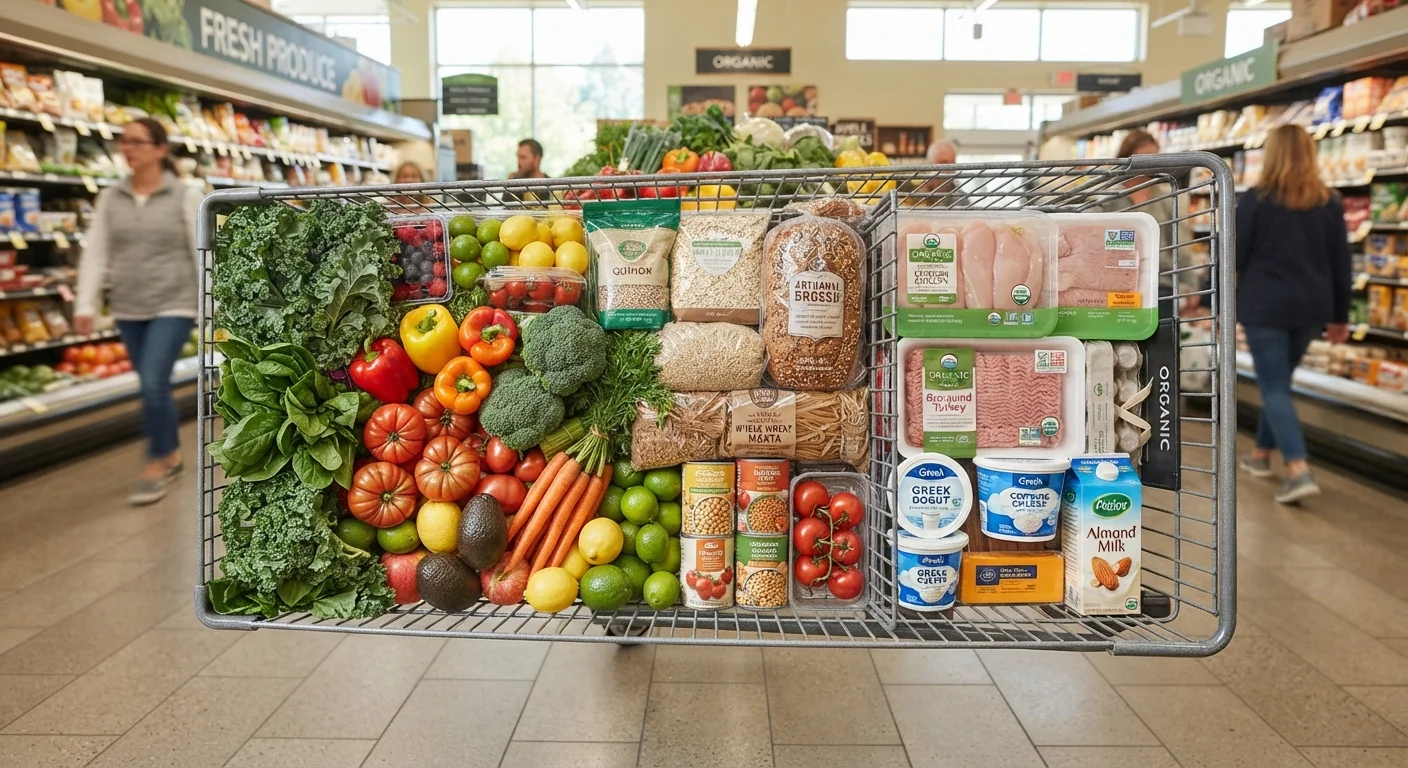
Summary
22 items · 20–35 minutes
Why a Framework Beats Willpower at the Store
Most people don't struggle with nutrition because of a lack of knowledge — they struggle because the grocery store is engineered to pull attention toward high-margin, heavily processed items. Endcap displays, eye-level placement, and large package sizing all influence what ends up in the cart before conscious decision-making kicks in.
A structured, aisle-by-aisle framework shifts that dynamic. Rather than reacting to what's in front of you, you arrive with a clear map of what to look for, what to evaluate on labels, and what to pass by. This checklist is organized by store section, so it works whether you're shopping at a large supermarket or a smaller neighborhood store.
Keep in mind that nutritional needs vary by age, health status, and lifestyle. For personalized guidance, consult a registered dietitian or your healthcare provider. This checklist reflects general, evidence-based principles — not a prescription for any individual. If you're exploring how dietary needs shift over time, our article on nutritional needs across life stages covers that territory in depth.
Tools to Bring Before You Shop
Preparation before you enter the store is where most of the nutritional work actually happens. The items below aren't gear — they're habits and reference points that make the checklist actionable.
Written or digital grocery list
Organizes purchases by food group before entering the store, reducing reactive buying.
Weekly meal rough plan
Helps you estimate quantities and avoid buying items that won't get used before spoiling.
Nutrition Facts label familiarity
Knowing which label fields to prioritize (sodium, added sugars, fiber) speeds up in-aisle decisions.
Pantry inventory check
A quick review of what you already have prevents duplicate purchases and fills actual gaps.
Reusable bags
Practical for carrying produce and reducing plastic use — a minor logistical note worth including.
Your Aisle-by-Aisle Nutrition Checklist
Work through each section of the store using the groups below. Not every item will apply to every shopping trip, but reviewing the "must" items for each section ensures your cart reflects your nutritional intentions. For a broader look at how to structure what ends up on your plate, see our guide to building a balanced plate.
Produce Section
Proteins (Meat, Seafood, Eggs, Legumes)
Grains and Bread Aisle
Dairy and Dairy Alternatives
Frozen and Canned Foods
Beverages and Snacks
Front-of-Package Claims Are Not Regulated the Same Way
Terms like "natural," "clean," "wholesome," or "superfood" on packaging are largely marketing language and carry no standardized legal definition from the FDA. Always flip the package and review the Nutrition Facts label and ingredient list — those are the regulated, standardized sources of information. A product can display health-forward language on the front while being high in sodium, added sugars, or refined ingredients.
Reading Labels Without Getting Lost
Nutrition labels are the most reliable tool available in the store, but they're only useful if you know what to prioritize. The FDA's standardized Nutrition Facts panel lists serving size, calories, total fat, sodium, total carbohydrates (including dietary fiber and added sugars), protein, and key micronutrients.
For most shoppers, the most actionable figures are added sugars, sodium, and dietary fiber. The Dietary Guidelines for Americans recommend limiting added sugars to less than 10% of daily calories and keeping sodium under 2,300 mg per day for most adults. Dietary fiber — linked to digestive health, satiety, and cardiovascular support — is something most Americans fall short on, according to data from the National Institutes of Health.
The ingredients list is also worth a scan: ingredients are listed in descending order by weight, so the first few entries tell you what the product is primarily made of. If refined grains or added sugars appear in the first two or three spots on a product marketed as a health food, that's a useful signal.
Certain Populations Have Distinct Nutritional Needs
This checklist reflects general guidance for healthy adults. People who are pregnant, breastfeeding, managing chronic conditions such as diabetes or kidney disease, or older adults with evolving nutrient requirements should not rely solely on general frameworks. Please consult a registered dietitian or physician for guidance that accounts for your specific health circumstances.
If you're weighing whether to focus on calorie tracking or food quality more broadly, our comparison of calorie counting vs. food quality lays out what the research suggests about both approaches.
This article is for general informational and educational purposes only and does not constitute medical or dietary advice. Consult a qualified healthcare professional or registered dietitian for guidance tailored to your individual health needs.
The content on this site is for informational purposes only and is not a substitute for professional advice. Always consult a qualified professional for guidance specific to your situation.