

Why Nutritional Needs Change With Age
Human metabolism, hormone levels, organ function, and gut health all shift across the decades. These biological changes directly influence how the body absorbs, uses, and excretes nutrients. A nutrient intake that was adequate at 25 may be insufficient — or excessive — at 55. Understanding why needs shift is just as important as knowing what to eat.
Basal metabolic rate (the energy the body burns at rest) tends to decline gradually after early adulthood, partly due to reductions in lean muscle mass. Meanwhile, the gastrointestinal tract's ability to absorb certain vitamins and minerals — particularly B12, calcium, and vitamin D — often decreases. Hormonal changes, including those surrounding menopause and andropause, further alter how the body processes fat, glucose, and protein.
Just as exercise requirements evolve across the lifespan, so too do dietary ones — and the two are deeply interconnected. What you eat fuels how you move, and how you move shapes how your body responds to food.
~30
Age when bone density typically peaks
According to the NIH, bone mass reaches its maximum around age 30, making early-adult calcium intake a long-term investment.
0.8 g/kg
Baseline daily protein recommendation for adults
The Dietary Reference Intake established by the National Academy of Medicine; emerging evidence suggests higher intakes may benefit older adults.
~40%
U.S. adults estimated to be vitamin D insufficient
Analysis of NHANES data has found widespread vitamin D insufficiency across U.S. adults, with older adults at particular risk.
Young Adulthood (Ages 18–35): Building a Strong Foundation
The late teens and twenties are a window of opportunity. Bone density reaches its peak around age 30, making adequate calcium and vitamin D intake during this period genuinely consequential for long-term skeletal health. The National Institutes of Health (NIH) notes that most adults need around 1,000 mg of calcium daily, with dietary sources such as dairy, fortified plant milks, and leafy greens being preferable to supplements for most people.
Iron is another priority, particularly for people who menstruate, as monthly losses elevate the risk of deficiency. Folate (vitamin B9) matters as well — not only for anyone who may become pregnant, but for general cellular health. Whole grains, beans, and dark leafy vegetables are reliable sources.
Energy demands tend to be higher during this stage, but that doesn't license nutritional complacency. Relying heavily on ultra-processed foods — which are calorie-dense but micronutrient-poor — can create deficiencies that go undetected for years. Building a balanced plate using whole foods sets habits that compound positively with age.
Treat your twenties as a nutritional investment period — prioritize calcium, iron, and folate from whole food sources before deficiencies have a chance to take root.
Bone density and micronutrient stores built in early adulthood provide a buffer against age-related decline decades later, making early habits disproportionately valuable.
In midlife, distribute protein intake across all three meals rather than concentrating it at dinner — emerging research suggests muscle protein synthesis responds better to spread intake.
Studies on muscle protein synthesis indicate that meal distribution, not just total daily protein, influences how effectively the body builds and maintains muscle tissue.
Midlife (Ages 35–55): Managing Shifting Metabolism and Risk
Midlife is when many people first notice that eating habits that once felt sustainable no longer produce the same results. Metabolic rate continues its gradual decline, and without adjustments to caloric intake or physical activity, gradual weight gain becomes more common. More importantly, the composition of body weight often shifts — less muscle, more fat — even when the scale holds steady.
Protein intake deserves attention here. Research published in journals such as the American Journal of Clinical Nutrition suggests that adults over 40 may benefit from protein intakes at the higher end of the recommended range (0.8 g per kg of body weight is the baseline, but emerging evidence supports higher intakes for active or aging adults — consult your healthcare provider for personalized guidance). Adequate protein supports muscle maintenance and satiety.
Cardiovascular risk factors also become more relevant in midlife. Dietary patterns emphasizing fiber-rich foods, healthy fats (such as those found in fish, nuts, and olive oil), and reduced sodium align with guidance from the American Heart Association for supporting heart health. This is also a stage when blood glucose regulation may start to shift — making the quality and distribution of carbohydrate intake more significant.
Midlife Is Not the Time to Self-Prescribe Supplements
As awareness of nutritional gaps grows in midlife, many adults reach for supplements without testing or professional guidance. High doses of certain nutrients — including fat-soluble vitamins A, D, E, and K — can accumulate to harmful levels. Iron supplementation without confirmed deficiency can also cause harm. A blood panel interpreted by a healthcare provider is a more reliable starting point than self-directed supplementation.
Older Adulthood (Ages 55+): Protecting Muscle, Bone, and Brain
After 55, several nutritional challenges intensify. Sarcopenia — the gradual loss of muscle mass and strength — accelerates if protein intake is insufficient and resistance exercise is absent. The combination of adequate dietary protein and regular physical activity is among the most evidence-supported strategies for preserving functional independence.
Vitamin B12 absorption becomes less efficient with age as the stomach produces less acid and intrinsic factor. The CDC and NIH recognize that older adults are at elevated risk for B12 deficiency, which can affect neurological function and red blood cell production. Fortified foods and supplements become more relevant for this group, though individual needs should be assessed by a healthcare provider.
Calcium needs remain at 1,000–1,200 mg daily (varying by sex and age group), while vitamin D recommendations increase — adequate D is essential for calcium absorption and immune function. Hydration also warrants explicit attention: the sensation of thirst becomes less reliable with age, increasing dehydration risk. Learn more about how hydration interacts with nutrient absorption at every stage.
“Nutrition is not a static prescription. The dietary pattern that supports health at one stage of life must be revisited and refined as the body's needs evolve — and that is a normal, expected part of healthy aging.”
— Walter Willett, Professor of Epidemiology and Nutrition, Harvard T.H. Chan School of Public Health
Key Nutrients to Monitor at Every Stage
While individual needs vary, certain micronutrients are consistently underconsumed across the adult population. A working knowledge of these can help frame smarter food choices. For a comprehensive reference, see our overview of key vitamins and minerals every adult should know.
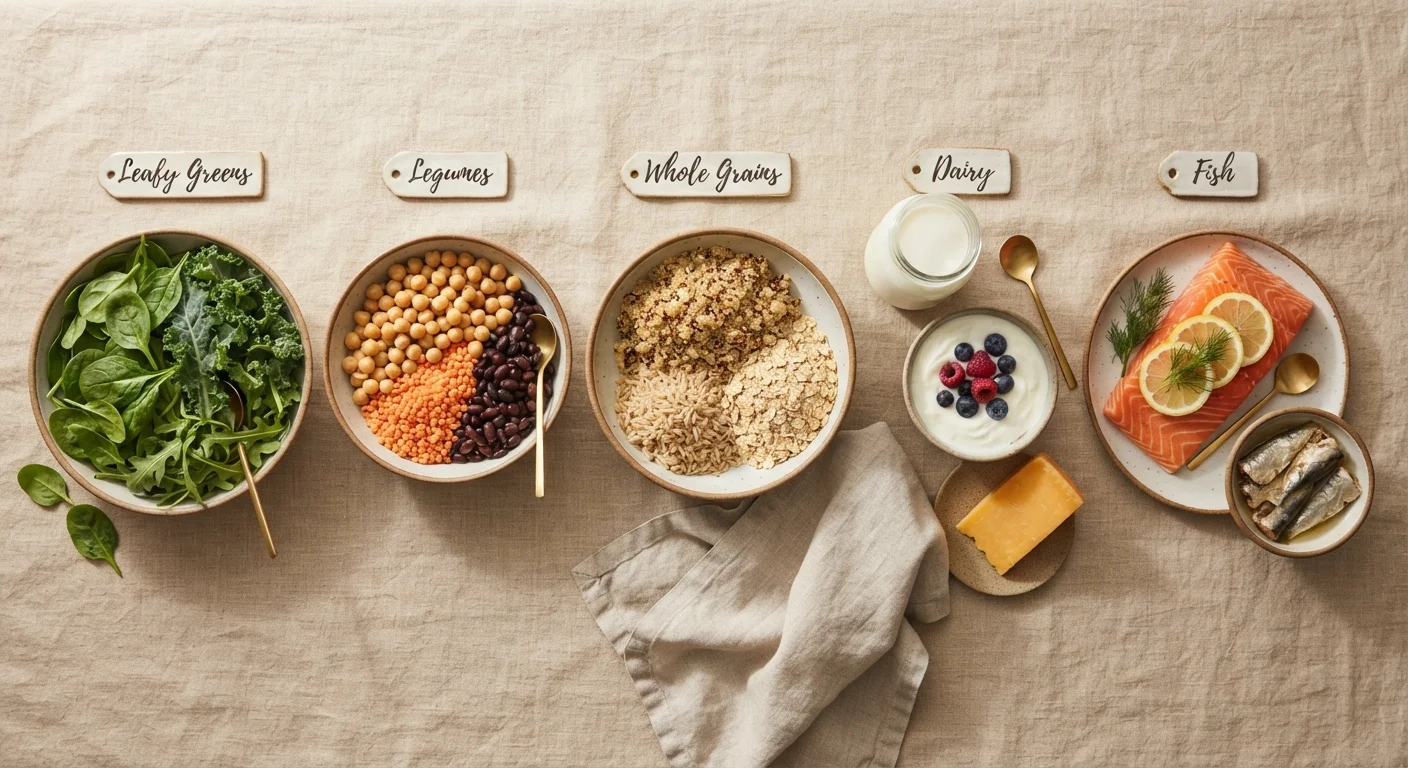
- Calcium: Critical for bone density across all adult stages; found in dairy, fortified alternatives, tofu, and leafy greens.
- Vitamin D: Supports calcium absorption and immune function; limited in most diets, making sun exposure and supplementation relevant for many adults.
- Vitamin B12: Essential for nerve and blood cell health; absorption declines with age; found in animal products and fortified foods.
- Magnesium: Involved in hundreds of enzymatic reactions; widely underconsumed; found in nuts, seeds, legumes, and whole grains.
- Potassium: Supports blood pressure regulation; found in fruits, vegetables, and legumes — foods most Americans eat in insufficient quantities.
- Omega-3 fatty acids: Support cardiovascular and brain health; found in fatty fish, walnuts, and flaxseed.
Supplements Do Not Replace a Varied Diet
Whole foods contain thousands of bioactive compounds — fiber, phytonutrients, antioxidants — that supplements cannot replicate. While targeted supplementation may be appropriate for specific deficiencies (particularly B12 and vitamin D in older adults), it should complement rather than substitute a varied, nutrient-dense diet. Always discuss supplementation with a healthcare provider before starting.
Practical Strategies for Eating Well Across the Lifespan
Evidence-based nutrition guidance does not require wholesale dietary overhauls or expensive interventions. Incremental, sustainable adjustments tend to produce more durable results than dramatic short-term changes.
When grocery shopping, use structured approaches to stay focused on nutrient density. Our aisle-by-aisle grocery framework can help translate nutritional principles into practical purchasing decisions without overhauling your routine.
Consider scheduling periodic nutrition check-ins with a registered dietitian, especially during life transitions — entering midlife, approaching menopause or andropause, managing a new chronic condition, or navigating significant changes in physical activity. These are moments when dietary recalibration is most impactful.
Finally, recognize that nutrition does not operate in isolation. Sleep, stress, mental well-being, and physical activity all influence how the body processes food. Addressing these dimensions together — rather than fixating on single nutrients or foods — is consistent with how leading health organizations frame optimal long-term health.
This article is for general informational and educational purposes only and is not a substitute for personalized medical or dietary advice. Consult a qualified healthcare provider or registered dietitian before making significant changes to your diet, especially if you have existing health conditions or take medications.
The content on this site is for informational purposes only and is not a substitute for professional advice. Always consult a qualified professional for guidance specific to your situation.