

Why Micronutrients Matter
Unlike macronutrients — carbohydrates, proteins, and fats — micronutrients are needed in smaller amounts, but their impact on the body is enormous. Vitamins and minerals drive hundreds of biochemical processes: converting food into energy, synthesizing hormones, building bone, maintaining immune defenses, and repairing DNA. A shortfall in even one can quietly undermine health over time.
Most healthy adults can meet their micronutrient needs through a varied diet, yet national surveys consistently show that many Americans fall short of adequate intakes of vitamin D, calcium, potassium, and dietary fiber. Understanding what each nutrient does — and where it comes from — is a practical first step toward a more intentional eating pattern. See also: how macronutrients work for the full picture of dietary building blocks.
Micronutrient
Vitamins and minerals required by the body in relatively small amounts, but essential for normal growth, metabolism, and physiological function.
Fat-Soluble Vitamin
Vitamins (A, D, E, K) that dissolve in fat and are stored in the liver and fatty tissues. Because they accumulate, excessive supplemental intake can reach toxic levels.
Water-Soluble Vitamin
Vitamins (C and B-complex) that dissolve in water and are not stored in significant quantities. Excess is generally excreted in urine, requiring regular dietary replenishment.
Bioavailability
The proportion of a nutrient that is absorbed and used by the body. Bioavailability varies by food source, preparation method, and other nutrients consumed at the same time.
Dietary Reference Intake (DRI)
A set of reference values established by the National Academies of Sciences used to plan and assess nutrient intakes of healthy people in the U.S. and Canada.
Trace Mineral
A mineral required in very small quantities (typically micrograms to low milligrams per day), such as iron, zinc, iodine, and selenium, that is nonetheless essential for health.
Key Vitamins: Functions and Food Sources
Vitamins fall into two categories: fat-soluble (A, D, E, K), which are stored in body tissues, and water-soluble (C and the B-complex group), which are not stored in significant quantities and must be replenished regularly through food.
| Number of recognized essential vitamins | 13 (National Institutes of Health, Office of Dietary Supplements) |
| Minerals classified as essential | ~16 (Linus Pauling Institute, Oregon State University) |
| Adults with inadequate vitamin D intake | Nearly 1 in 3 (National Health and Nutrition Examination Survey (NHANES)) |
| Most common nutrient deficiency worldwide | Iron deficiency (World Health Organization) |
| B12 sources for plant-based diets | Fortified foods or supplements required (American Dietetic Association) |
Fat-Soluble Vitamins
- Vitamin A — Supports vision, immune function, and skin cell turnover. Found in liver, dairy, eggs, and as beta-carotene in orange and dark-green produce.
- Vitamin D — Critical for calcium absorption, bone mineralization, and immune regulation. Produced by the skin in response to UV-B sunlight; dietary sources include fatty fish, egg yolks, and fortified foods. Deficiency is widespread in northern latitudes.
- Vitamin E — Acts as an antioxidant protecting cell membranes. Found in nuts, seeds, wheat germ oil, and leafy greens.
- Vitamin K — Essential for blood clotting (K1) and bone protein activation (K2). K1 is abundant in leafy greens; K2 is found in fermented foods and some animal products.
Water-Soluble Vitamins
- Vitamin C — Supports collagen synthesis, immune response, and iron absorption. Highest concentrations in bell peppers, citrus, kiwi, and broccoli.
- B Vitamins (B1, B2, B3, B5, B6, B7, B9, B12) — This family drives energy metabolism, red blood cell formation, and neurological function. Whole grains, legumes, eggs, meat, and dairy cover most bases. Vitamin B12 is found almost exclusively in animal products — a critical consideration for plant-based eaters. Plant-based diets require special attention to this nutrient.
Essential Minerals: What They Do and Where to Find Them
Minerals are inorganic elements the body cannot synthesize. They are divided into macrominerals (needed in larger amounts) and trace minerals (needed in tiny quantities but still essential).
Macrominerals
- Calcium — Structural component of bone and teeth; also regulates muscle contractions and nerve signaling. Dairy products, fortified plant milks, tofu set with calcium, and leafy greens are primary sources.
- Magnesium — Involved in over 300 enzyme reactions, including blood pressure regulation and blood sugar control. Found in nuts, seeds, whole grains, and dark leafy greens.
- Potassium — Helps maintain fluid balance and supports normal heart rhythm. Beans, lentils, potatoes, bananas, and dairy are rich sources.
Trace Minerals
- Iron — Central to oxygen transport via hemoglobin. Heme iron (meat, poultry, fish) is more readily absorbed than non-heme iron (legumes, fortified cereals). Pairing plant iron with vitamin C improves absorption.
- Zinc — Supports immune function, wound healing, and DNA synthesis. Oysters, red meat, poultry, beans, and pumpkin seeds are good sources.
- Iodine — Necessary for thyroid hormone production. Iodized table salt, dairy, and seafood are the primary dietary sources in the U.S.
- Selenium — Functions as an antioxidant and supports thyroid health. Brazil nuts, seafood, and whole grains supply meaningful amounts.
90%
Americans not meeting potassium recommendations
According to NHANES data analyzed by the Dietary Guidelines Advisory Committee, potassium is one of the most underconsumed nutrients in the U.S. adult diet.
42%
U.S. adults with vitamin D insufficiency
Research published in Nutrition Research estimated that over 40% of American adults have insufficient vitamin D levels based on serum testing.
Nutritional requirements also shift throughout life — consult how dietary needs evolve with age to understand which nutrients warrant closer attention at different life stages.
Putting It Into Practice
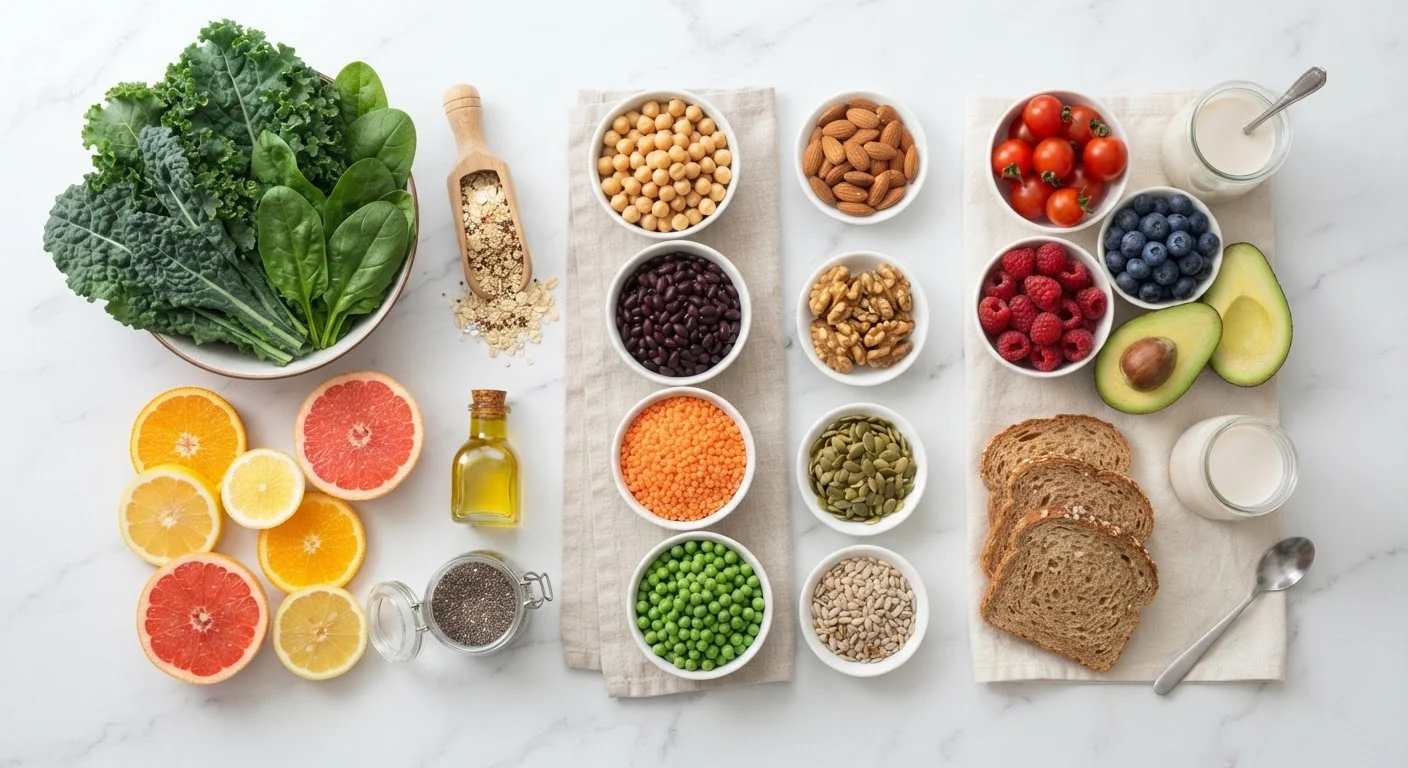
No single food contains every micronutrient, which is why dietary variety is the cornerstone of evidence-based nutrition guidance. A practical rule of thumb: eating across multiple food groups and choosing a wide range of colors in produce helps cover most vitamin and mineral bases naturally.
When reading packaged foods, the Percent Daily Value (%DV) on the Nutrition Facts label can help you gauge a product's micronutrient contribution. Understanding how to read a Nutrition Facts label makes these figures more actionable.
Supplementation may be appropriate for specific groups — older adults, pregnant individuals, those with absorption conditions, or those following restrictive diets — but supplements are not a substitute for a varied diet and cannot replicate the complex interplay of compounds found in whole foods. Always consult a registered dietitian or healthcare provider before adding supplements, particularly at high doses, as fat-soluble vitamins and certain minerals can accumulate to harmful levels.
NIH Office of Dietary Supplements – Fact Sheets
The National Institutes of Health publishes detailed, evidence-based fact sheets on individual vitamins and minerals, including tolerable upper intake levels and research summaries.
USDA FoodData Central
A searchable database from the U.S. Department of Agriculture that allows you to look up the nutrient content of thousands of foods — useful for identifying dietary sources of specific micronutrients.
Dietary Guidelines for Americans
Published jointly by the USDA and HHS, this evidence-based resource outlines recommended nutrient intakes and eating patterns for Americans aged two and older.
This article is for general informational and educational purposes only and does not constitute medical or nutritional advice. Individual needs vary. Consult a qualified healthcare provider or registered dietitian for guidance specific to your health situation.
The content on this site is for informational purposes only and is not a substitute for professional advice. Always consult a qualified professional for guidance specific to your situation.