

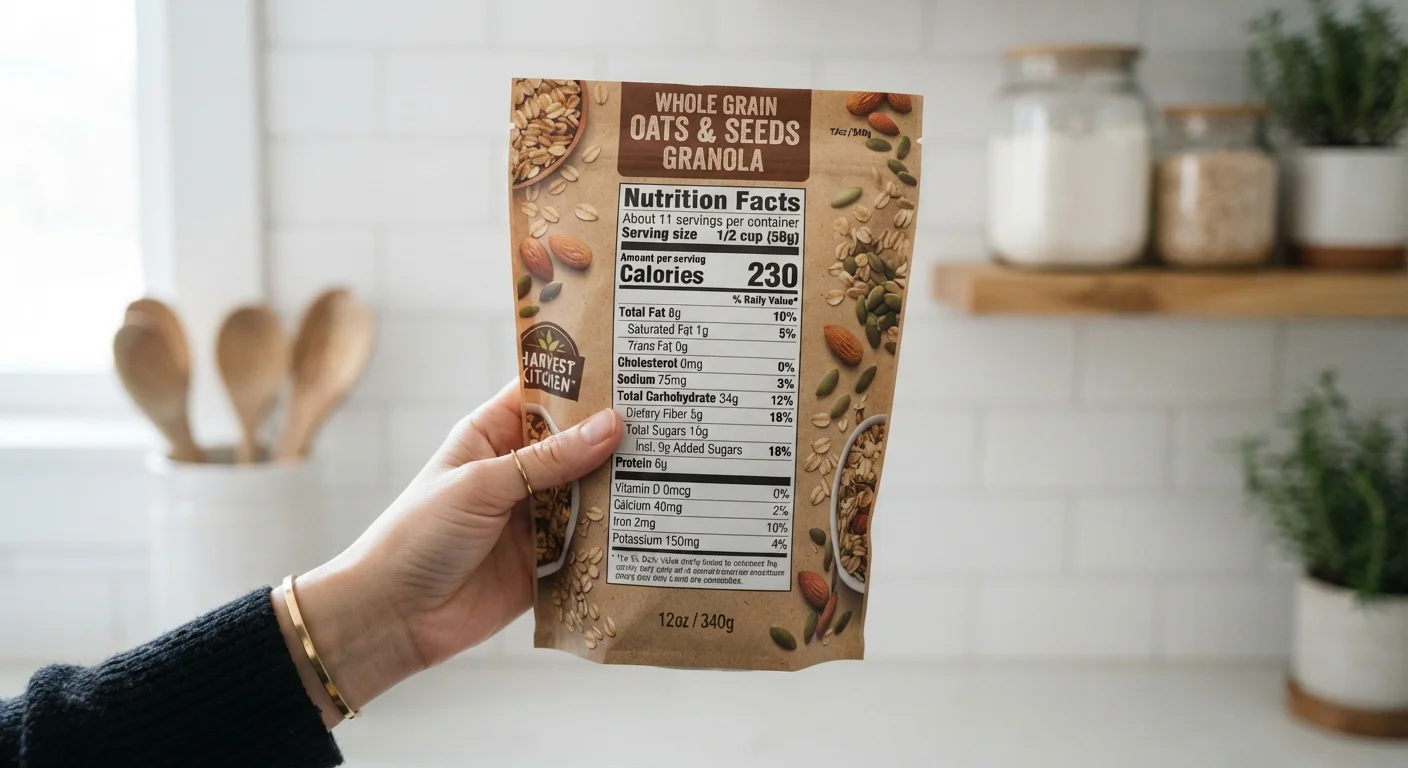
Why the Nutrition Facts Label Exists
The Nutrition Facts label is a federally mandated panel regulated by the U.S. Food and Drug Administration (FDA). Its purpose is straightforward: to give consumers standardized, comparable information about what is in their food. The format was significantly updated in 2016 and phased in through 2020, with changes including a larger calorie display, a mandatory line for added sugars, and revised serving sizes designed to better match real-world eating habits.
Despite being familiar, the label is frequently misread. Common stumbling points include ignoring serving sizes, misunderstanding what Percent Daily Value actually represents, and conflating total sugars with added sugars. The steps below address each section in the order it appears on the panel, from top to bottom.
What you will need
Step-by-Step: Reading the Label
This Is General Nutrition Information
The information in this article is educational and does not constitute personalized medical or dietary advice. Individual nutritional needs vary based on age, health status, medications, and other factors. Consult a registered dietitian or your healthcare provider before making significant changes to your diet, especially if you manage a chronic health condition.
Locate the serving size and servings per container
The very first line of any Nutrition Facts label lists the serving size — a standardized amount set by the FDA to reflect how much people typically eat at one time. Directly below it is servings per container. Every single number on the rest of the label refers to one serving only, not the whole package.
Before reading anything else, note both figures. If a chip bag shows a 1-oz serving and contains 3 servings, eating the whole bag triples every calorie, fat, and sodium value listed.
Read the calorie count in context
Calories are displayed prominently in large print immediately below the serving size. Calories measure the total energy one serving provides from fat, carbohydrate, and protein combined.
Rather than judging a food solely on its calorie count, consider it alongside the nutrients it delivers. A 200-calorie serving of lentils and a 200-calorie serving of a sweetened snack cake carry very different nutritional profiles. Context matters.
Review the 'nutrients to limit' section
The next block covers nutrients that research links to increased risk of certain chronic conditions when consumed in excess: saturated fat, trans fat, cholesterol, and sodium. The Dietary Guidelines for Americans recommend most people limit these.
Added sugars appear as a sub-line under total sugars. This distinction matters: added sugars are those introduced during processing, separate from sugars occurring naturally in fruit or dairy. For a deeper look at why this difference is nutritionally significant, see added sugar vs. natural sugar.
Identify the 'nutrients to get enough of' section
Below the nutrients to limit, the label highlights nutrients many Americans under-consume: dietary fiber, vitamin D, calcium, iron, and potassium. Adequate intake of these is associated with reduced risk of certain chronic diseases and supports general physiological function.
Dietary fiber, in particular, plays a broader role in health than many people realize. Learn more about dietary fiber and why most Americans fall short of recommended amounts.
Interpret the Percent Daily Value (%DV) column
The right-hand column lists %DV for most nutrients. This percentage tells you how much of a nutrient one serving contributes toward a standard daily reference intake based on a 2,000-calorie diet. It is a benchmark, not a personal target — your actual needs may differ depending on age, sex, activity level, or health status.
Use %DV to quickly gauge whether a food is a meaningful source of a nutrient or contributes significantly to a nutrient you are trying to limit. For an overview of how vitamins and minerals factor into daily nutrition, see micronutrients every adult should know.
Glance at the ingredient list
While technically separate from the Nutrition Facts panel, the ingredient list is printed on the same package and adds crucial context. Ingredients are listed in descending order by weight, so the first few ingredients make up the bulk of the product.
A short ingredient list with recognizable items is generally a signal of less processing. Spotting added sugars under multiple names — corn syrup, dextrose, cane juice — or seeing sodium listed early can prompt you to cross-reference the Nutrition Facts numbers you already reviewed.
Use %DV as a Quick Comparison Tool
When choosing between two similar products, scan the %DV column rather than the raw gram figures. A %DV of 5% or less is generally considered low for a nutrient; 20% or more is considered high. This shortcut, established by the FDA, lets you make faster, more confident comparisons without doing mental math.
Putting It All Together
No single food needs to be nutritionally perfect. The Nutrition Facts label is most useful as a comparison tool and a way to identify patterns across your overall diet rather than as a pass/fail score for individual items. Using %DV to compare similar products, checking serving sizes before eating from a package, and noting the ingredient list alongside the numbers will give you a well-rounded picture.
Packages Often Contain Multiple Servings
A single bottle, bag, or container frequently holds two, three, or more servings. If you consume the entire package, multiply every nutrient number by the serving count. Overlooking this is one of the most common ways people underestimate their calorie and sodium intake.
Label literacy is one component of a broader approach to nutrition. If you are interested in extending these skills beyond the label itself, a structured grocery-shopping framework offers a practical next step for applying this knowledge throughout the store.
This article is for general informational and educational purposes only and does not constitute medical or dietary advice. Consult a qualified healthcare provider or registered dietitian for guidance specific to your health needs.
The content on this site is for informational purposes only and is not a substitute for professional advice. Always consult a qualified professional for guidance specific to your situation.