

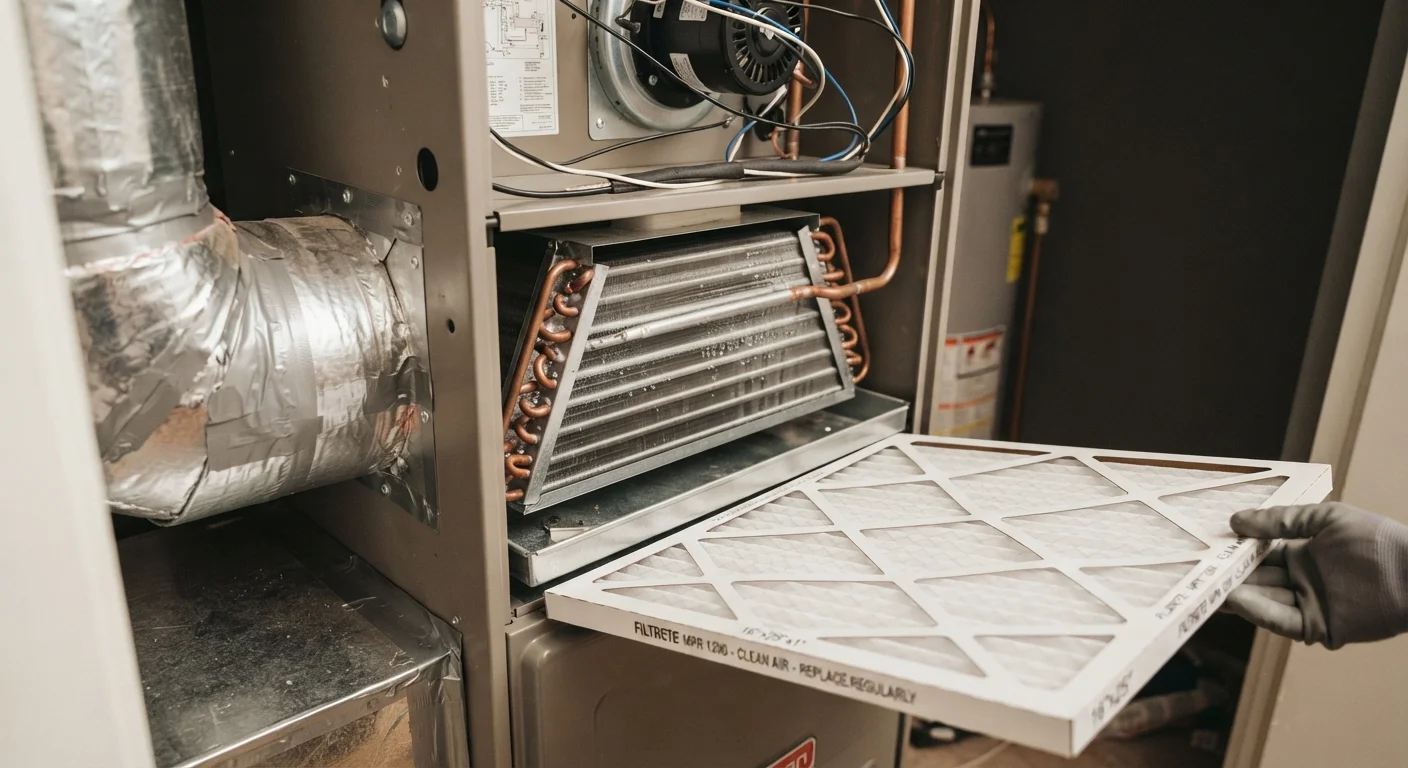
What Each Component Does — and Why It Matters
Your home's heating, ventilation, and air conditioning (HVAC) system is more than a thermostat and a box in the basement. It's an interconnected series of components that together manage air temperature, humidity, and quality throughout your home. When one part degrades, the entire system works harder — and ages faster.
| Typical filter replacement interval | 30–90 days (1-inch filters); 6–12 months (4–5-inch media filters) (HVAC manufacturer guidance) |
| Average residential HVAC lifespan | 15–20 years with regular maintenance (U.S. Department of Energy) |
| Efficiency loss from dirty coils | Up to 20%+ reduction in heat transfer (ASHRAE research findings) |
| Recommended professional tune-up frequency | Once per year (cooling and heating seasons) (ENERGY STAR program guidelines) |
| Compressor replacement cost range | $1,500–$2,500+ depending on unit and region (Industry cost estimates; varies widely) |
The three components most directly tied to system longevity are air filters, evaporator and condenser coils, and supply and return vents. Each plays a distinct role, and each has a predictable failure pattern when maintenance is neglected. Understanding these patterns is the foundation of informed ownership — much the same way that first-time homeowners benefit from understanding their systems before problems develop.
Air Filters
Filters trap airborne particles — dust, pollen, pet dander, mold spores — before they reach the system's mechanical core. A standard 1-inch fiberglass filter should typically be replaced every 30 to 90 days depending on household conditions. Thicker media filters (4–5 inches) can last 6 to 12 months. A clogged filter forces the blower motor to work against restricted airflow, raising energy consumption and accelerating motor wear.
Evaporator and Condenser Coils
The evaporator coil sits inside the air handler and absorbs heat from indoor air. The condenser coil sits in the outdoor unit and releases that heat outside. Both are made of thin metal fins that are highly susceptible to dirt accumulation. A layer of grime as thin as 0.042 inches on an evaporator coil can reduce system efficiency by more than 20%, according to ASHRAE research. Dirty coils also raise compressor temperatures, shortening its lifespan significantly.
Vents and Ductwork
Supply vents deliver conditioned air into rooms; return vents pull air back to be reconditioned. Blocked, dirty, or improperly balanced vents create pressure imbalances that strain the blower and can cause short-cycling — where the system turns on and off more frequently than designed, increasing mechanical wear throughout.
How Neglect Compounds Over Time
HVAC degradation rarely announces itself with a sudden failure. More often, it's a slow accumulation of small inefficiencies — each one adding load to the remaining healthy components. This pattern mirrors what happens in other complex mechanical systems: deferred maintenance on one part accelerates wear on others. The seasonal maintenance calendar approach exists precisely because many HVAC tasks are time-sensitive and easy to miss without a structured schedule.
20%+
Efficiency loss from a thin layer of coil grime
ASHRAE research indicates even a 0.042-inch coating on an evaporator coil can reduce system efficiency by more than 20%.
15–20 years
Expected lifespan of a well-maintained HVAC system
The U.S. Department of Energy notes that proper maintenance is the primary driver of reaching or exceeding this range.
5–15%
Energy savings from replacing a clogged filter
The U.S. Department of Energy estimates that replacing a dirty filter with a clean one can reduce energy consumption by this range.
A filter left unchanged for six months doesn't just reduce airflow — the debris it fails to capture settles on the evaporator coil. A fouled coil reduces heat transfer efficiency, forcing the compressor to run longer cycles. Longer cycles generate more heat in the compressor itself, degrading the refrigerant oil and eventually the compressor windings. Compressor replacement is one of the most expensive repairs in a residential HVAC system, often running $1,500 to $2,500 or more depending on the unit size and region.
Vent blockages create a parallel problem. When return vents are obstructed — by furniture, rugs, or closed interior doors — negative pressure builds in the return plenum. The system draws in unconditioned air through gaps in ductwork, introducing humidity in summer and cold air in winter. Over time this degrades duct seals and can promote mold growth inside the system.
Evaporator coil
The indoor coil in a split HVAC system that absorbs heat from interior air as refrigerant passes through it, cooling the air before it's circulated back into the home.
Condenser coil
The outdoor coil that releases the heat absorbed from inside your home to the outside air, completing the refrigeration cycle.
MERV rating
Minimum Efficiency Reporting Value — a standardized scale from 1 to 16 that rates how effectively an air filter captures airborne particles. Higher MERV ratings capture finer particles but can restrict airflow if the system isn't designed for them.
Short-cycling
A condition where an HVAC system turns on and off more frequently than its normal operating cycle, often caused by airflow restrictions, refrigerant issues, or an oversized unit. Short-cycling increases mechanical wear and reduces efficiency.
Return plenum
The chamber or duct section that collects air from return vents throughout the home and channels it back to the air handler for reconditioning.
Refrigerant
A chemical compound that cycles between liquid and gas states inside the HVAC system to transfer heat. Handling refrigerant requires EPA certification and must be performed by a licensed technician.
For homeowners managing older properties, these failure chains are especially relevant. The framework for maintaining older homes addresses how aging ductwork and legacy HVAC equipment require heightened attention to the basics covered here.
This article is for general informational purposes only. HVAC systems vary by make, model, and installation. For diagnosis, repair, or any work involving refrigerants or electrical components, consult a licensed HVAC technician. Always verify local permit and code requirements before undertaking system modifications.
The content on this site is for informational purposes only and is not a substitute for professional advice. Always consult a qualified professional for guidance specific to your situation.