

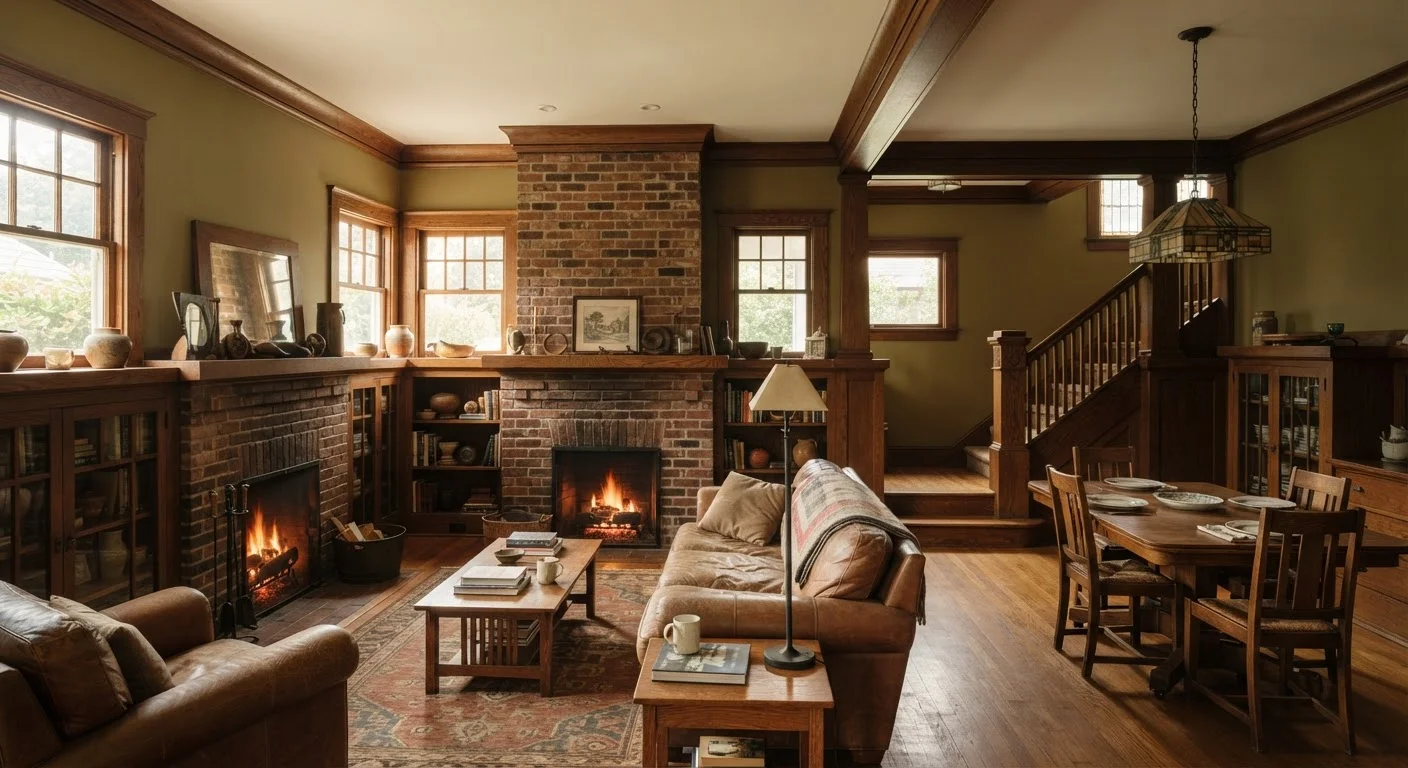
Why Older Homes Demand a Different Maintenance Mindset
A home built in 1955 or 1968 was constructed using the materials, building codes, and practices of its era. Many of those choices were reasonable at the time — but several are now understood to carry health or safety risks, and virtually all of them age differently than the systems in modern construction. Owning an older home is not a liability, but it does require knowledge.
The core principle is this: older homes reward proactive, informed inspection and penalize neglect more severely than newer builds. Deferred maintenance on a house with aging infrastructure compounds quickly. A slow plumbing leak behind original plaster walls, for example, can go undetected for years while silently damaging structure.
Pair your ownership with a structured seasonal schedule — our annual home maintenance calendar is a useful companion resource — and treat this framework as the deeper hazard-specific layer underneath it.
~40%
US homes built before 1970
According to the American Housing Survey, a substantial share of the existing US housing stock predates modern safety codes.
87%
Pre-1940 homes with lead paint
The EPA estimates 87% of homes built before 1940 contain some lead-based paint, declining to 69% for homes built in the 1940s–1960s.
1–2%
Recommended annual maintenance budget
Industry guidance widely suggests budgeting 1–2% of a home's value annually for maintenance; older homes often sit at the higher end.
Electrical Systems: Knob-and-Tube and Aluminum Wiring
Knob-and-tube (K&T) wiring, common in homes built before roughly 1950, uses separate hot and neutral conductors run through ceramic knobs and tubes. It has no ground wire and was never designed to carry today's electrical loads. While K&T that is intact and undisturbed is not automatically dangerous, any modification, insulation contact, or extension by unqualified work significantly raises fire risk. Most homeowners insurers either exclude or surcharge homes with active K&T.
Aluminum branch-circuit wiring was widely installed from the mid-1960s through the mid-1970s as a cost-saving substitute for copper. Aluminum expands and contracts at a different rate than the devices it connects to, which can loosen connections over time and create overheating at outlets and switches. The Consumer Product Safety Commission has documented fire risks associated with improperly maintained aluminum wiring.
Before assuming knob-and-tube wiring must be replaced immediately, have an electrician document exactly which circuits are still active K&T — many older homes have had partial rewires over the decades, and the scope of remaining K&T often surprises owners in both directions.
Targeted remediation based on actual circuit mapping is more cost-effective than blanket assumptions and helps prioritize the highest-risk circuits first.
When testing for lead paint before a renovation, test friction surfaces — window channels, door edges — separately from flat wall surfaces. These areas generate ongoing dust even without active work and are the most common exposure source in occupied homes.
EPA and CDC guidance identifies friction and impact surfaces as the primary lead dust sources in pre-1978 homes, often overlooked during standard inspections.
What to do: Have a licensed electrician conduct a full panel and circuit inspection. Remediation options for aluminum wiring include installing COPALUM crimped connectors (the method endorsed by CPSC) or replacing devices with those rated for aluminum (marked CO/ALR). A full rewire is the most comprehensive solution but also the most disruptive and expensive — weigh the scope against your plans for the property.
Electrical work on older homes often requires permits and inspections. Verify requirements with your local building department before any work begins.
Lead Paint and Asbestos: What You Must Know
The EPA estimates that approximately 87% of homes built before 1940 and 69% of homes built between 1940 and 1960 contain lead-based paint. The hazard is not the paint sitting intact on a wall — it is lead dust generated when painted surfaces are disturbed: sanding, cutting, demolishing, or even repeated friction from windows and doors. Children under six are at greatest neurological risk from lead exposure.
Never Sand or Demo Painted Surfaces Without Testing First
In any home built before 1978, assume painted surfaces may contain lead until proven otherwise by a certified inspector or risk assessor. Sanding, dry-scraping, or demolishing painted surfaces without proper containment and protective equipment can generate lead dust that persists in the home long after the work is done. The EPA's RRP Rule requires certified renovators for this work — this is a legal requirement, not just a best practice.
If you have children or are planning renovations, our guide on childproofing room by room addresses lead paint as part of a broader household safety review. Federal law (the EPA's Renovation, Repair and Painting Rule, or RRP) requires that contractors working on pre-1978 homes containing lead paint be EPA-certified. Hiring uncertified contractors for such work is both a legal and health risk.
Asbestos was used widely in insulation, floor tiles, ceiling tiles, pipe wrap, roofing shingles, and joint compound through the late 1970s. Like lead paint, intact asbestos that is not friable (crumbling or releasing fibers) is generally considered manageable in place. Disturbing it — drilling, sanding, breaking — releases fibers that are a serious respiratory hazard. Before any renovation that touches suspect materials, hire a licensed asbestos inspector to test samples. Removal requires licensed abatement contractors and, in most jurisdictions, permits.
Plumbing: Galvanized Pipes, Lead Solder, and Drainage
Galvanized steel pipes — the standard in homes built before the 1960s — corrode from the inside out. As zinc coating degrades, rust accumulates inside the pipe, progressively narrowing flow and eventually leaching iron into water. Early signs include discolored water at first draw, reduced pressure at fixtures, and localized rust staining. Replacement with copper or PEX (cross-linked polyethylene) is the standard remedy, typically done in sections or as a whole-house repipe.
Lead solder was used to join copper pipes until it was banned for potable water systems in 1986. Homes with copper pipes installed before that date may still have lead solder joints. Testing your water is straightforward and relatively inexpensive through certified labs — the EPA's Safe Drinking Water Hotline can direct you to state-certified testing resources. A certified plumber can identify soldered joints during an inspection.
Older homes also frequently have cast-iron or clay drain lines, which can crack, root-intrude, or simply corrode after 50–80 years of use. A drain camera inspection — a service offered by most licensed plumbers — provides a clear picture of lateral condition before problems become emergencies.
Test Your Water Before Assuming Pipe Condition
Water testing through a state-certified laboratory is the most direct way to detect lead or elevated iron levels regardless of what your pipes look like visually. Order a test that includes lead, copper, and total coliform at minimum. Results will help you prioritize plumbing work and determine whether a point-of-use filter is appropriate as an interim measure while planning larger repairs.
Foundation, Structure, and the Envelope
Pre-1980 foundations range from poured concrete to concrete block, brick, and stone rubble. Each has distinct failure modes. Horizontal cracking in block foundations suggests lateral soil pressure and warrants structural evaluation. Stair-step cracking in brick mortar often indicates differential settlement. Not every crack is catastrophic, but none should be self-diagnosed without a licensed structural engineer's assessment.
The building envelope — roof, exterior walls, windows, and doors — is where older homes most commonly lose efficiency and admit moisture. Original single-pane windows, inadequate attic insulation (or none at all), and deteriorated weatherstripping all contribute to energy loss. Addressing these in sequence — air sealing first, then insulation, then window replacement if warranted — yields the highest return per dollar spent. Many state and utility programs offer incentives for weatherization work; check with your state energy office for current options.
Wood-framed older homes built before modern structural codes may also lack hurricane straps, seismic anchoring, or adequate shear walls depending on your region. A structural inspection is especially important if you are in a high-wind or seismic zone.
Building Your Ongoing Maintenance Plan
The most effective older-home owners treat maintenance as a system, not a list of one-time fixes. Start with a baseline: commission a thorough inspection by a licensed home inspector experienced with older construction, and layer in specialty inspections — electrical, plumbing, structural, environmental — as the baseline reveals concerns.
From there, set a realistic annual maintenance budget. Industry guidance generally suggests budgeting 1–2% of home value per year for maintenance, though older homes with deferred issues may temporarily require more. Prioritize by safety first (electrical, lead, asbestos), then by water intrusion (roof, drainage, plumbing), then by energy efficiency.
“The biggest mistake older-home owners make is treating maintenance as something they catch up on rather than something they stay ahead of. By the time a problem in an old house is obvious, it has usually been developing for years.”
— Home & Real Estate Editorial Team, Editorial analysis based on licensed home inspector and contractor industry guidance
Document everything: keep records of inspections, permits, contractor work, and test results. This record protects you during resale and helps future contractors understand the home's history. For families with young children in an older home, pair this framework with our developmental stage home safety guide to align hazard priorities with your children's ages.
EPA Lead Paint Program
The EPA's official resource on lead paint regulations, the RRP Rule, certified contractor lookup, and testing guidance for pre-1978 homes.
Annual Home Maintenance Calendar
Our season-by-season maintenance schedule pairs with this framework to give you a month-by-month action plan for older home upkeep.
State Energy Office Weatherization Programs
Most states offer incentives or assistance for insulation, air sealing, and window upgrades. Your state energy office maintains the current program list.
This article provides general educational information about older home maintenance and is not a substitute for inspections or advice from licensed professionals. Always verify permit requirements, safety regulations, and testing protocols with qualified local contractors and your relevant government agencies.
The content on this site is for informational purposes only and is not a substitute for professional advice. Always consult a qualified professional for guidance specific to your situation.