

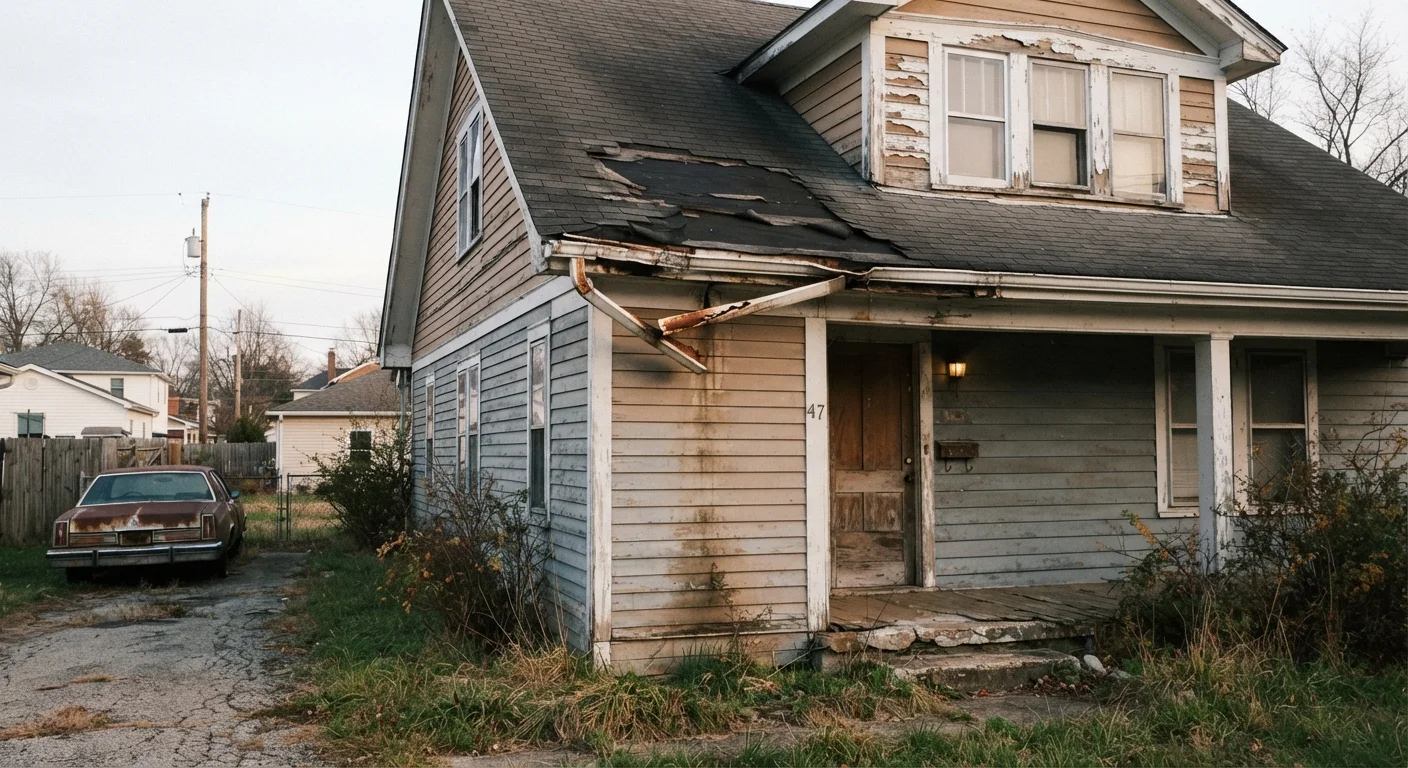
How Minor Repairs Become Major Bills
The financial logic of deferred maintenance is straightforward but consistently underestimated. A loose roof shingle costs little to reset. Left exposed through a wet season, it allows water beneath the underlayment, which leads to sheathing rot, then insulation damage, then potential mold remediation — a cascade that can reach tens of thousands of dollars from what started as a $50 fix.
This compounding pattern repeats across nearly every home system. A hairline crack in exterior caulking permits moisture into wall cavities. A slow-draining gutter directs water toward the foundation. An HVAC filter left unchanged forces the motor to overwork, shortening the equipment's lifespan by years. Each example follows the same arc: inexpensive prevention ignored, expensive repair required.
1–2%
Recommended annual home maintenance budget
Industry professionals commonly advise homeowners to set aside 1–2% of their home's value each year to cover ongoing maintenance and repairs.
~$4,000
Average cost of water damage repairs
According to home services industry data, interior water damage repairs — often rooted in neglected exterior maintenance — frequently run into the thousands of dollars.
Up to 10%
Potential home value reduction from deferred maintenance
Real estate professionals note that significant accumulated deferred maintenance can reduce a home's appraised or negotiated sale value by a meaningful percentage.
Homeowners who want a structured approach to preventing these scenarios can consult a season-by-season maintenance calendar to track which tasks to address throughout the year.
The Hidden Tax on Home Value
Deferred maintenance doesn't just inflate repair bills — it erodes the market value of the property itself. When a home is appraised for a sale or refinance, appraisers document visible maintenance deficiencies and reduce their valuation accordingly. This is classified as physical depreciation, and unlike cosmetic style preferences, it is treated as an objective reduction in value.
During a sale, a buyer's home inspection is designed specifically to surface deferred maintenance. Inspectors flag deteriorating rooflines, aging HVAC equipment, water stains, and failing seals — and buyers use those findings to negotiate price reductions or request seller-funded repair credits. Sellers who have deferred maintenance often discover at closing that they receive less than they anticipated, effectively paying for the neglect twice: once in reduced price, and again in concessions.
“Deferred maintenance is essentially a loan against your home's future — but one with no stated interest rate that quietly compounds every season you ignore it.”
— National Association of Home Inspectors (general guidance), Professional home inspection industry body
The parallel holds in other asset categories. Much like skipping routine vehicle maintenance creates compounding mechanical problems, overlooking home upkeep silently erodes your largest financial asset.
Prioritizing When Budgets Are Constrained
Not every homeowner can address all maintenance needs simultaneously, and that is a realistic starting point. When resources are limited, the priority framework should be anchored to two criteria: safety and water.
- Safety-critical systems first: Electrical issues, gas appliances showing warning signs, structural concerns, and failing smoke or carbon monoxide detectors must not be deferred regardless of cost.
- Water intrusion second: Any penetration of water into the structure — through the roof, foundation, windows, or exterior walls — should be addressed as promptly as possible. Water damage is the fastest-accelerating form of home deterioration.
- Mechanical systems third: HVAC, water heater, and plumbing components that are approaching end-of-life warrant attention before failure forces an emergency replacement, which is nearly always more expensive than a planned one.
Build a Maintenance Reserve Before You Need It
Rather than treating home repairs as financial surprises, open a dedicated savings account specifically for maintenance. Even a modest monthly contribution builds a buffer that allows you to address issues promptly rather than deferring them for budget reasons. Addressing problems early nearly always costs less than waiting until a system fails entirely.
Understanding how to allocate funds for home repairs connects directly to sound household budgeting. The fundamentals of budgeting can help homeowners build a maintenance reserve into their regular financial plan rather than treating repairs as unplanned emergencies.
This article is for general informational and educational purposes only. Readers should consult qualified licensed professionals before undertaking any home repair, improvement, or financial decision specific to their situation.
Frequently Asked Questions
The cost varies widely by issue, but the pattern is consistent: small problems become large ones. A $200 gutter cleaning skipped for two seasons can lead to a $4,000 foundation drainage repair. The compounding effect of neglect is nearly always more expensive than timely upkeep.
A widely cited industry guideline recommends setting aside 1–2% of your home's purchase price each year for maintenance and repairs. For a $350,000 home, that translates to $3,500–$7,000 annually. Older homes or those in harsh climates may require more.
Yes, significantly. Appraisers and buyers' inspectors are trained to identify deferred maintenance, and it reduces appraised value directly. Buyers frequently negotiate price reductions or repair credits when an inspection reveals neglected systems.
Roofing, gutters, HVAC systems, plumbing, and the home's exterior envelope (siding, windows, caulking) are most sensitive to neglect. Water infiltration, which affects several of these systems, is the single leading cause of accelerating damage.
There are situations — such as genuine financial hardship — where prioritization is necessary. In those cases, focus first on issues that affect safety or allow water intrusion. Cosmetic items like paint or landscaping can typically wait without triggering further damage.
The content on this site is for informational purposes only and is not a substitute for professional advice. Always consult a qualified professional for guidance specific to your situation.