

Why Deferred Maintenance Feels Harmless — Until It Isn't
Modern cars are engineered to feel reliable even when they're quietly deteriorating. That's part of what makes skipped maintenance so deceptive: the consequences are rarely immediate. A missed oil change doesn't strand you on the highway the next morning. An ignored cabin air filter won't trigger a dashboard warning. These systems degrade gradually, and by the time a driver notices something wrong, the damage is often already done — and far more expensive than the original service would have been.
Deferred car maintenance shares a lot of DNA with other forms of neglect that carry compounding costs over time. If you've ever wondered how the same principle plays out at home, our article on what deferred maintenance actually costs homeowners walks through exactly how small oversights erode value and inflate future bills.
Skipping oil changes or stretching intervals well beyond the manufacturer's recommendation.
Why it happens: Oil change reminders feel arbitrary, and many drivers assume that because the car still runs fine, the oil is doing its job. Marketing around "extended-life" oils sometimes reinforces this misperception.
Ignoring the air and cabin filters until they are visibly clogged or causing noticeable airflow problems.
Why it happens: Filters are out of sight and rarely checked during routine stops. Because a dirty filter doesn't trigger a warning light, drivers assume everything is fine until performance suffers.
Delaying tire rotation, alignment checks, and pressure monitoring until wear becomes obvious.
Why it happens: Uneven tire wear develops slowly and drivers often mistake it for normal aging. Pressure checks feel tedious when tires still appear inflated to the eye.
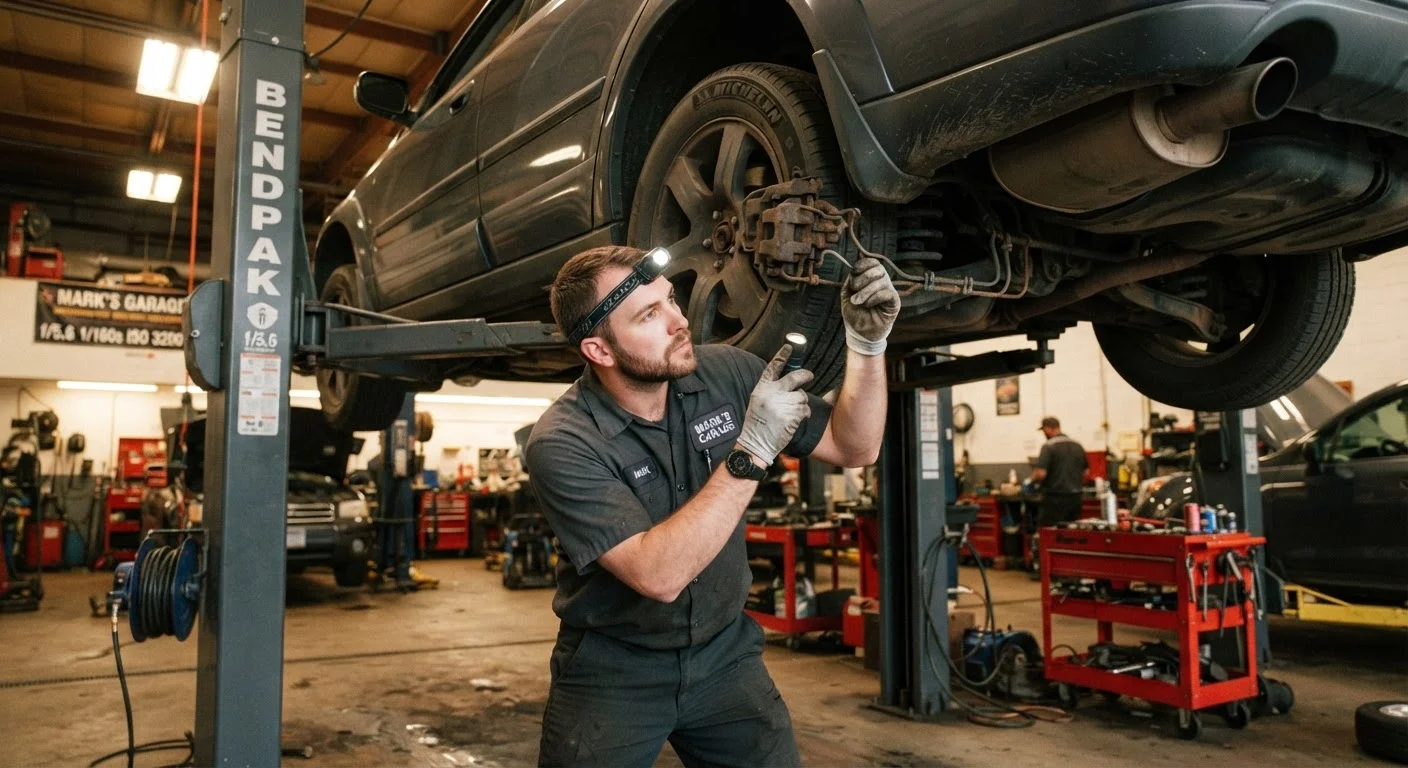
Ignoring brake pad wear until the characteristic squealing turns into grinding metal-on-metal contact.
Why it happens: Drivers often dismiss the first warning squeal as a temporary noise, especially if it fades after a few stops. The result is rotors that are scored or warped, turning a $150 pad replacement into a $500-plus job.
Neglecting coolant, transmission fluid, and power-steering fluid until a system failure occurs.
Why it happens: Most drivers check oil and windshield washer fluid but overlook other fluids entirely. These systems rarely give obvious warning until something breaks.
The Financial and Safety Reality
The cost argument for staying on schedule is straightforward. Routine maintenance — oil changes, tire rotations, fluid checks, filter replacements — typically runs between $100 and $300 per year depending on the vehicle. Engine replacement, by contrast, can cost $3,000 to $10,000 or more. Transmission rebuilds run in a similar range. When you look at it that way, routine service isn't an expense; it's a hedge against a far larger one.
$1,200+
Average cost of an engine repair from oil neglect
Industry repair data consistently shows that oil-related engine damage is among the most expensive preventable repairs in passenger vehicles.
5x
Cost multiplier when minor repairs are deferred
Consumer automotive research suggests that small maintenance items left unaddressed can cost five times more once they escalate into component failures.
Safety is the other side of the equation. Worn brake pads, cracked belts, and low power-steering fluid aren't just mechanical inconveniences — they're failure points that put drivers, passengers, and other people on the road at genuine risk. Drivers who want to keep a high-mileage vehicle running dependably will find our guide on extending your car's life past 150,000 miles particularly useful for building habits that actually stick.
Don't Rely Solely on Warning Lights
Dashboard warning lights are a last resort, not a maintenance system. By the time a check-engine or oil-pressure light illuminates, meaningful damage may already be underway. Many critical wear items — brake pads, belts, filters, tires — have no dedicated warning light at all. Regular scheduled inspections by a qualified mechanic are the only reliable way to catch these issues early.
If repair costs from years of deferred maintenance have piled up and strained your budget, the Saving & Debt hub offers practical guidance on building a financial cushion so you're never caught off-guard by a major vehicle expense again.
This article is for general informational purposes only. Always consult a qualified mechanic for diagnosis and repair recommendations specific to your vehicle.
The content on this site is for informational purposes only and is not a substitute for professional advice. Always consult a qualified professional for guidance specific to your situation.