Use this practical checklist to review your current routine—from scalp care to styling habits—and spot small gaps before they turn into bigger hair problems.
Most hair problems don't arrive overnight. Dryness, breakage, and scalp buildup tend to creep up gradually — the result of small habits compounding week after week. That's exactly why a quick, structured audit is so useful. It takes less time than a full wash day, but gives you a clear picture of what's working, what needs adjusting, and what to skip altogether.
This checklist covers five key areas: scalp condition, moisture and protein balance, styling habits, product use, and tool hygiene. Work through it at the start of each wash week and you'll spend less time troubleshooting — and more time enjoying your hair.
If you're also building a broader personal care routine, the guidance in our simpler grooming routine guide is a natural companion to this checklist.
Scalp Health
Check your scalp for flakiness, excess oiliness, itchiness, or any tender spots before washing.Must
Gently massage your scalp for 60–90 seconds while shampooing to stimulate circulation and loosen buildup.Must
Assess whether your current shampoo formula matches your scalp type — a sulphate-heavy formula may over-strip dry scalps, while a too-gentle one can leave oily scalps with residue. Our sulfate-free vs. regular shampoo breakdown can help you decide.Should
Consider a clarifying wash once or twice a month if you use dry shampoo, styling products, or hard water regularly.Should
Moisture and Protein Balance
Check strands for signs of moisture loss: dullness, rough texture, or tangling more than usual.Must
Check strands for signs of protein overload: stiffness, brittleness, or a straw-like feel — if so, skip protein treatments this week.Must
Apply a conditioner every wash and leave it on for at least 2–3 minutes before rinsing.Must
Assess whether your hair needs a deep conditioning treatment this week based on feel and recent styling activity.Should
Review the ingredient lists on your moisturising products to confirm they contain humectants, emollients, or occlusives suited to your hair type. For a plain-language breakdown, see our guide on reading hair product ingredient lists.Nice to have
Styling Habits and Heat Use
Confirm you applied a heat protectant before using any hot tool last week — if you skipped it, make this a non-negotiable step this cycle.Must
Review how many times you used direct heat (flat iron, curling wand, blow dryer on high) and consider whether frequency can be reduced.Should
Evaluate tension points: check whether braids, ponytails, or buns were pulling tightly at the hairline or nape — chronic tension leads to traction-related breakage over time.Should
If you rely on protective styles, verify that styles were installed without excessive tension and that ends are actually tucked and protected. Our article on protective styling principles covers the common pitfalls.Should
Experiment with one heat-free styling day this week to give your hair a low-manipulation break.Nice to have
Product Audit
Check expiry dates or consistency changes (separation, smell, colour shift) on any open products and discard anything past its best.Must
Assess whether your current leave-in or styler is causing buildup — if your hair feels weighed down mid-week, you may be applying too much or using the wrong formula for your porosity.Should
Avoid layering more than two or three products at a time; complexity doesn't improve results and makes it harder to identify what's working.Should
Note which products are running low so you can plan replenishment without gaps in your routine — keeping a simple list helps you stick to budget. For broader money-management tools, see budgeting basics.Nice to have
Tools and Accessories
Remove shed hair from brushes and combs after each use — trapped hair harbours product residue and reduces tool effectiveness.Must
Wash brushes and combs with mild shampoo and warm water at least once a week.Should
Inspect hair ties and clips for rough or broken edges that could snag or split strands, and replace any that are worn.Should
Swap cotton pillowcases for a satin or silk option, or use a satin-lined bonnet — fabric friction overnight is a subtle but steady source of frizz and breakage.Nice to have
How to Use This Audit Effectively
Run through each group below honestly — not aspirationally. The goal isn't a perfect score; it's an accurate snapshot. Flag items you skipped or struggled with last week, then pick one to improve before your next check-in.
Understanding your hair's underlying characteristics makes this audit far more actionable. If you haven't already, it's worth learning about hair porosity — it shapes which products and techniques will actually deliver results for your specific strands.
Don't Over-Correct After One Bad Week
If your hair feels dry or limp after a tough week, resist the urge to pile on multiple treatments at once. Stacking protein treatments, deep conditioners, and hot oil applications in rapid succession can overwhelm your strands and make it harder to diagnose what's actually needed. Make one targeted change at a time, then reassess at your next weekly audit.
Some changes in hair texture, thickness, or shedding patterns can reflect internal changes worth discussing with a healthcare provider. Our article on signs your hair is telling you something about your health outlines which symptoms deserve a professional conversation.
Required
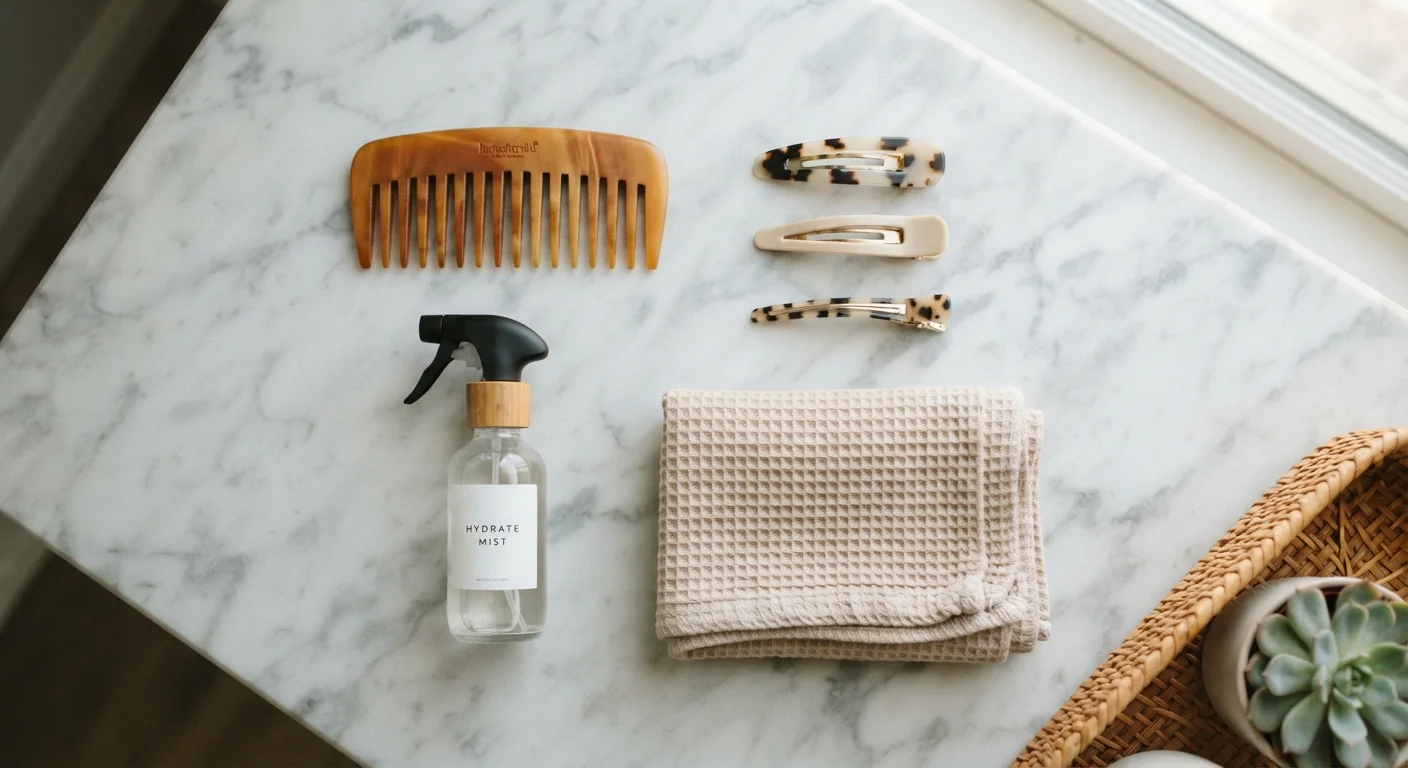
Wide-tooth comb
Detangles wet or conditioner-coated hair with minimal breakage — a gentler option than a brush on vulnerable, saturated strands.
Required
Spray bottle with water
Re-moistens dry sections before detangling or product application, reducing friction and breakage.
Optional
Microfibre towel or old T-shirt
Absorbs water without the roughness of a standard terry towel, which can cause frizz and weaken the cuticle.
Optional
Satin or silk hair bonnet
Protects hair overnight from friction against cotton pillowcases, helping preserve moisture and reduce tangles.
Optional
Small notebook or notes app
Track weekly audit observations so you can spot patterns in shedding, dryness, or product performance over time.
Style Editorial Team is the collective byline for our editorial team and contributor network. Articles published under this byline or an editorial pen name are researched, written, and reviewed according to our editorial standards for clarity, consistency, and independence before publication.
The content on this site is for informational purposes only and is not a substitute for professional advice. Always consult a qualified professional for guidance specific to your situation.