

Why Shaving Irritates Skin in the First Place
Every time a razor glides across skin, it does two things simultaneously: it cuts hair and it physically exfoliates the top layer of skin cells. That dual action is why even a clean, careful shave can leave redness, tightness, or that telltale burning sensation — especially on areas like the neck, bikini line, and underarms where skin is naturally thinner.
Razor burn is essentially a surface inflammation response. It typically shows up as a red, itchy rash within minutes to hours of shaving and is most often caused by dry shaving, a dull blade, or pressing too hard. Ingrown hairs are a different but related issue: when a hair is cut too short or at an angle, it can curl back and grow into the surrounding skin, causing raised, sometimes painful bumps. People with naturally curly or coarse hair are more prone to this.
Skin that's already compromised — dry, dehydrated, or sensitized by other active skincare products — reacts more strongly to shaving. If you're using exfoliating acids or retinoids in your routine, it's worth understanding which skincare ingredients can compound irritation when combined with the mechanical exfoliation of shaving.
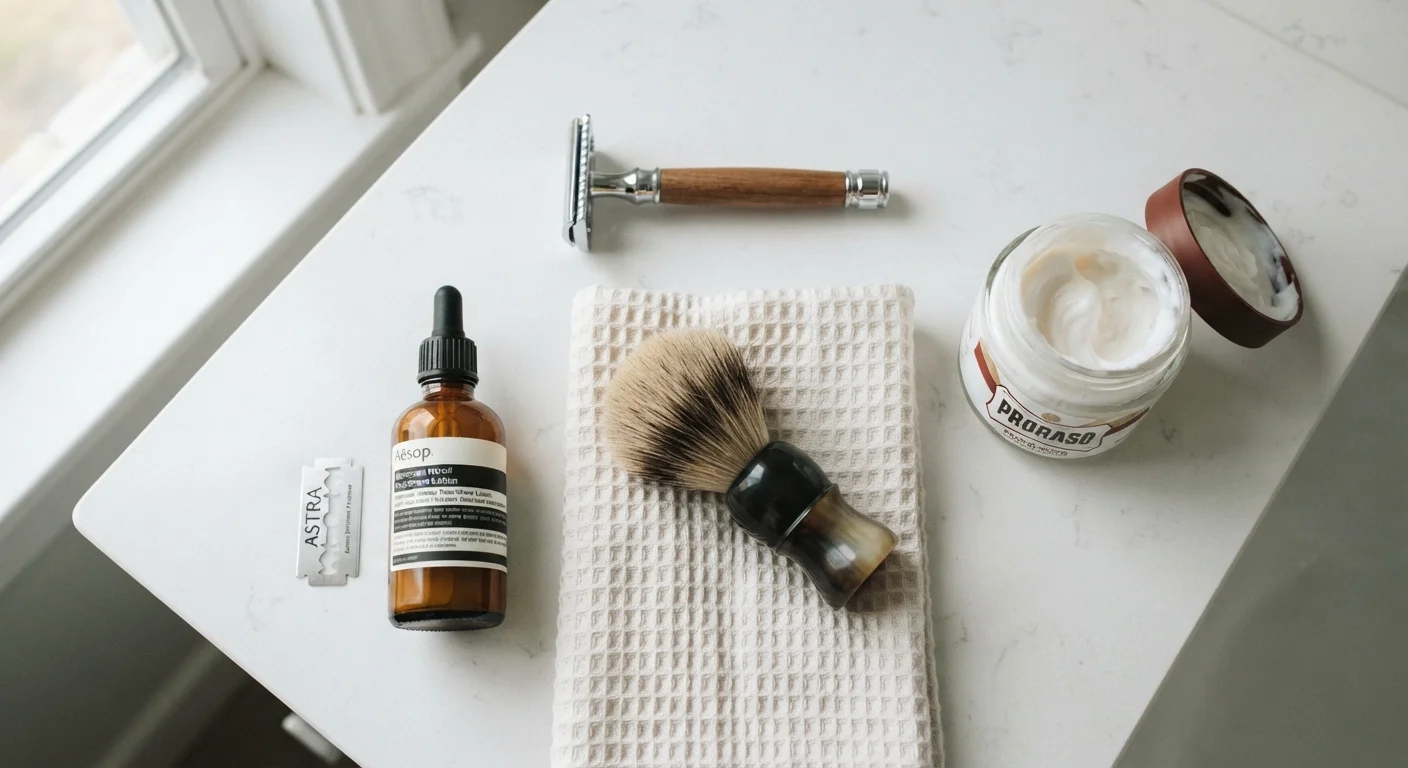
What you will need
Step-by-Step: A Less Irritating Shaving Routine
Adjusting your technique is where most of the improvement happens. The steps below are grounded in dermatological guidance and apply whether you're shaving your face, legs, or body.
Soften the skin and hair with warmth
Shave after a warm shower or press a warm, damp towel against the area for at least two minutes. Heat softens the hair shaft and opens follicles slightly, making the blade glide with significantly less resistance. Dry or cold skin forces the razor to drag, which is a primary driver of irritation.
Apply a generous layer of shaving lubricant
Dry shaving or using a thin layer of product is one of the most common mistakes. Apply a generous, even coat of shaving cream, gel, or soap lather to create a cushioning barrier between the blade and skin. Let it sit for 30–60 seconds before you start shaving — this further hydrates the hair and makes cutting easier.
Use a sharp, clean blade
A dull blade requires more pressure and repeated passes — both of which multiply irritation. Most dermatologists suggest replacing cartridge blades every five to seven shaves, or sooner if you notice tugging or resistance. Rinse the blade thoroughly between each stroke to clear away hair and product buildup that reduce glide.
Shave with light, short strokes in the direction of hair growth
Shaving with the grain (in the direction the hair naturally grows) reduces the risk of ingrown hairs and razor burn considerably, especially on the neck, underarms, and bikini area. Use short, gentle strokes with minimal pressure — let the blade do the work rather than pressing it into skin. Stretch the skin taut with your free hand to create a smooth, even surface.
Rinse and apply a soothing post-shave product
Rinse the shaved area with cool water to calm the skin and close follicles. Apply a fragrance-free balm or moisturizer immediately while skin is still slightly damp to lock in hydration. Avoid applying deodorant, perfume, or active-ingredient products (like AHAs or retinol) directly to freshly shaved skin, as these can sting or cause additional irritation on a compromised surface.
Sensitive Skin? Try a Single-Blade Razor
Multi-blade cartridge razors are designed to cut hair slightly below the skin surface, which can increase ingrown hair risk for those with curly or coarse hair. A single-blade safety razor or even an electric razor on the sensitive setting may cause less disruption to the follicle. Experimenting with blade type is worthwhile if technique improvements alone haven't resolved recurring irritation.
After the Shave: Caring for Your Skin
What you do in the first few minutes post-shave matters just as much as the shave itself. Rinse with cool or lukewarm water — hot water after shaving can intensify redness and strip remaining moisture. Pat (never rub) the area dry with a clean towel.
Apply a fragrance-free, alcohol-free moisturizer or aftershave balm while skin is still slightly damp. Alcohol-based aftershaves may feel refreshing but are harsh on a freshly exfoliated surface. Look for soothing, barrier-supporting ingredients like aloe vera, glycerin, or niacinamide.
Skip Active Skincare on Shave Days
Applying exfoliating acids (like AHAs or BHAs), retinoids, or vitamin C serums on the same day as shaving can push freshly sensitized skin into significant irritation territory. The mechanical exfoliation of the blade plus a chemical exfoliant is often too much at once. On shave days, stick to gentle, hydrating products only — and hold off on actives until the following evening.
If irritation persists for more than a day or two, or if you develop recurring infected ingrown hairs, it's a good idea to consult a dermatologist. Occasionally, persistent folliculitis (inflammation of hair follicles) needs targeted treatment. This article is general grooming guidance and is not a substitute for professional medical advice.
This article is for informational purposes only and does not constitute medical or dermatological advice. Consult a qualified healthcare professional for persistent or severe skin concerns.
The content on this site is for informational purposes only and is not a substitute for professional advice. Always consult a qualified professional for guidance specific to your situation.