

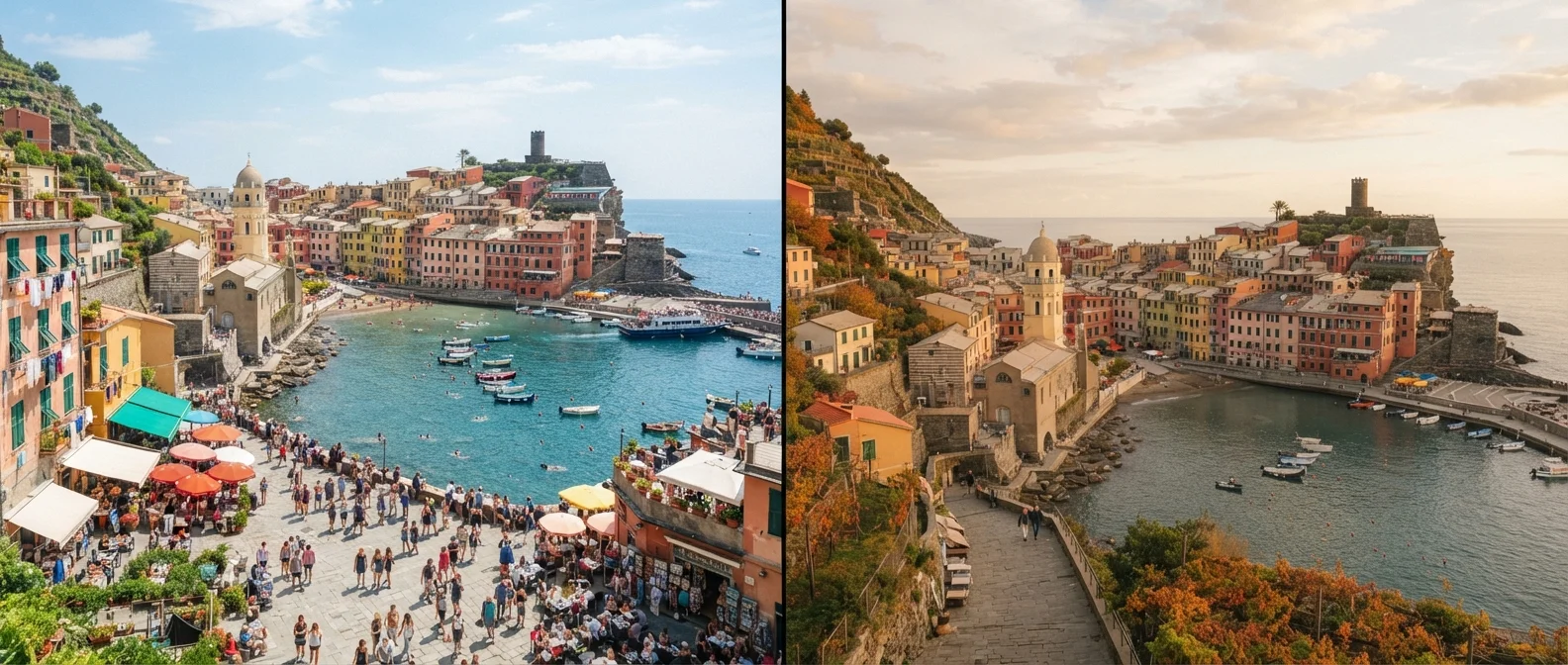
Our Verdict
Neither peak nor shoulder season is universally superior — the right choice hinges on what you value most in a trip. Budget-focused travelers with schedule flexibility tend to benefit most from shoulder timing, while families constrained by school calendars or travelers seeking guaranteed weather may find peak season worth the premium.
| Best for | Recommended |
|---|---|
| Travelers with flexible schedules and a tighter budget | Shoulder Season |
| Families tied to school breaks or holiday windows | Peak Season |
| First-time visitors wanting every attraction open and accessible | Peak Season |
| Experienced travelers who prefer atmosphere over convenience | Shoulder Season |
What 'Peak' and 'Shoulder' Actually Mean
Travel seasons aren't defined by a calendar date — they're defined by demand. Peak season is when the most visitors descend on a destination simultaneously. For beach destinations, that's typically summer. For ski resorts, it's midwinter. For European cities, July and August. Shoulder season sits in the transitional windows on either side — think May–June or September–October for much of Europe, or late spring and early fall for many U.S. national parks.
A third tier, off-season (or low season), exists beyond shoulder — when visitor numbers drop sharply and some businesses close entirely. This article focuses on the more practical comparison most travelers face: peak versus shoulder, where both options keep destinations fully functional but with dramatically different crowd levels, pricing, and atmosphere.
Understanding this framework helps you make deliberate choices rather than defaulting to popular windows by habit. Pairing smart timing with a solid itinerary structure — see our guide to building a well-paced itinerary — gives you the best shot at a trip that actually feels like a vacation.
The Case for Peak Season
Peak season exists for a reason: conditions are typically at their most reliable. Weather is often the driving factor — Mediterranean beaches in August, Rocky Mountain trails in July, Caribbean islands outside hurricane season. For many destinations, peak timing genuinely delivers the experience the place is known for.
Beyond weather, peak season means full infrastructure: every museum is open, ferry routes run at maximum frequency, tour operators are fully staffed, and seasonal festivals are in swing. First-time visitors especially benefit from this reliability — you're less likely to arrive and find a key attraction closed for maintenance or a restaurant shuttered for the winter.
For families, peak timing is often non-negotiable. School calendars compress travel windows into summer and holiday breaks, which align almost perfectly with peak season globally. The cost premium is real, but for households that can only travel during those windows, it's simply the operating reality.
Maximize Peak Season Without Overpaying
If peak season is your only option, book accommodations and key experiences as early as possible — often 6 to 9 months out for popular destinations. Arriving at major attractions at opening time or in the late afternoon can dramatically cut wait times. Traveling midweek rather than over a weekend can also shave costs even within peak windows.
The Case for Shoulder Season
Shoulder season's appeal is hard to overstate once you've experienced it. The most immediate benefit is financial: flights and lodging frequently cost meaningfully less than their peak-season equivalents, and popular experiences that require advance booking in summer may be walk-up accessible. For budget-conscious travelers, those savings can fund extra nights, nicer accommodation, or simply less financial stress — all of which improve the trip.
But the value goes beyond the wallet. Shoulder season often transforms the feel of a destination. Paris in October, New Orleans in the spring, Japan in late autumn — these are moments when locals reclaim their cities, restaurant reservations open up, and landmarks can be appreciated without a queue 30 people deep.
Weather in shoulder months is frequently underestimated. Many destinations experience mild, agreeable conditions just outside peak windows — sometimes preferable to the intense heat or humidity that defines high summer. That said, weather variability increases, and travelers need to pack and plan accordingly. Our seasonal wardrobe transition guide has practical ideas for packing versatile layers without overloading your bag.
| Peak Season | Shoulder Season | |
|---|---|---|
| Typical cost (flights & lodging) | Higher — demand-driven pricing | Noticeably lower in most markets |
| Crowd levels | High — queues, packed sites | Moderate — manageable at most attractions |
| Weather reliability | Generally most predictable | More variable; destination-dependent |
| Attraction availability | Full hours, all operators running | Most open; some seasonal closures possible |
| Booking flexibility | Advance booking often required | Greater last-minute availability |
| Atmosphere / local feel | Tourist-heavy in many places | Often more authentic, quieter vibe |
| Best for | Families, first-timers, event-goers | Flexible, budget-conscious, repeat visitors |
What to Watch Out For on Either Side
Peak season's downsides run deeper than just cost. Overcrowding can actively degrade the experience — long queues, packed accommodations, difficulty securing restaurant reservations, and a general sense of being processed through a tourist machine rather than genuinely exploring. In fragile destinations, overtourism during peak periods also raises ethical and environmental concerns worth considering.
Shoulder Season Isn't Risk-Free
Don't assume shoulder season is a guaranteed deal. Major holidays, local festivals, and conference seasons can spike prices in shoulder windows just as sharply as peak season. Always check the destination's specific event calendar before assuming off-peak pricing applies. A shoulder week that coincides with a national holiday can behave exactly like peak season in both crowds and cost.
Shoulder season carries its own risks. Some attractions run reduced hours or close entirely. Weather can turn unexpectedly, especially in shoulder windows that border true off-season. Traveling with specific health considerations adds an additional layer of planning — the framework for health-conscious trip planning is a useful starting point, though personal medical decisions should always involve your doctor.
Airfare timing is a separate variable layered on top of season. The window in which you book — not just when you travel — affects price significantly. Common myths about booking flights covers what research actually says about pricing patterns, which can help you avoid costly misconceptions.
Making the Decision for Your Trip
There's no universal right answer — the decision is a function of your specific constraints and priorities. A useful exercise is to ask four questions before choosing: How flexible is my travel window? If it's fixed, your choice may already be made. What's my weather tolerance? If rain or cool temps won't bother you, shoulder season opens up considerably. What matters most to me at this destination? If it's a specific festival or seasonal event, peak timing may be essential. What's my budget flexibility? Shoulder savings can be redirected toward experiences that genuinely enrich the trip.
Travel timing also interacts with your broader travel style. Solo travelers and couples generally have more scheduling freedom than families, which tends to make shoulder season more accessible. How you structure the trip itself — solo versus guided group — also shapes how much timing matters to your overall experience.
Whatever timing you choose, always verify current entry requirements, local event schedules, and weather outlooks through official government and tourism sources before booking. Conditions change, and no article can substitute for up-to-date information specific to your destination and travel dates.
30–50%
Potential lodging savings in shoulder season
Industry analyses from travel researchers suggest average hotel rates in popular European cities can fall 30–50% outside peak summer months.
2–3 hrs
Average wait time at top peak-season attractions
Major landmarks such as the Eiffel Tower and Colosseum routinely report 2–3 hour entry queues during July and August high season.
The content on this site is for informational purposes only and is not a substitute for professional advice. Always consult a qualified professional for guidance specific to your situation.