

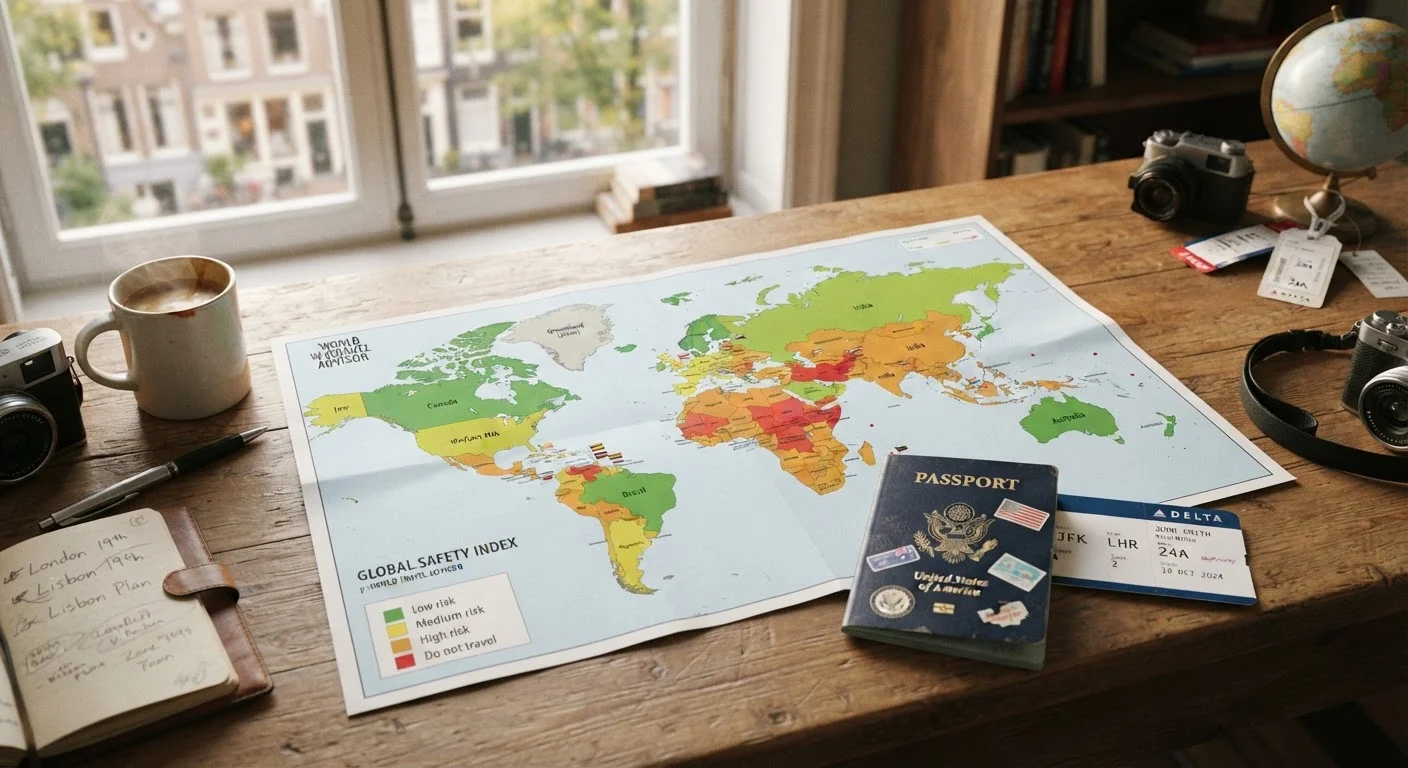
The Four-Level System, Explained
The U.S. Department of State assigns one of four advisory levels to every country. Think of them as a spectrum — not a binary safe/unsafe switch.
- Level 1 — Exercise Normal Precautions: The baseline. Risks are similar to what you'd expect traveling anywhere. Most popular tourist destinations in Western Europe, Japan, and Canada typically sit here.
- Level 2 — Exercise Increased Caution: Heightened risks exist, such as elevated crime in certain areas, political tensions, or specific health concerns. You can travel, but go in informed and with a plan.
- Level 3 — Reconsider Travel: Serious risks — including widespread crime, civil unrest, or terrorism — make this destination one to think hard about before visiting. Travel insurance implications become significant here.
- Level 4 — Do Not Travel: The State Department's strongest warning. Reserved for active conflict zones, extreme safety threats, or situations where the U.S. government has limited ability to assist citizens in an emergency.
The level assigned is based on a composite assessment — crime statistics, political stability, health infrastructure, terrorism risk, and the U.S. government's ability to assist its citizens on the ground all factor in.
Advisories vs. Entry Requirements Are Separate
A low advisory level does not mean a country has open-door entry for Americans. Visa requirements, passport validity rules, and health documentation (such as vaccination records) are governed separately from advisory levels. Always check entry requirements through official government sources and verify with the destination country's embassy or consulate before traveling.
Why the Details Matter More Than the Number
The headline level is just the starting point. Two countries both rated Level 2 can look very different on the ground — one might have isolated crime hotspots easily avoided by sticking to tourist areas, while another might have nationwide political volatility that affects travel everywhere.
Sub-regional alerts are especially important. A country can carry an overall Level 2 rating, but a specific border region or province might be flagged at Level 4. If your itinerary takes you through that area, the national-level number is largely irrelevant to your actual risk.
The State Department advisory pages also publish Country-Specific Information sections covering local laws, health conditions, entry and exit requirements, and crime patterns. That supporting detail is often more actionable than the level number itself. Before any international trip, scroll past the rating and read those sections carefully.
“A travel advisory is designed to help Americans make informed decisions — it's not a prohibition, but it does reflect what our embassies and consulates observe on the ground every day.”
— U.S. Department of State, Bureau of Consular Affairs, travel.state.gov
How Advisories Should Shape Your Planning
Travel advisories are one data point, not a final verdict. Here's how to use them effectively:
- Check early, check late. Look up the advisory when you start researching, then again in the week before departure. Conditions — and ratings — can shift without warning.
- Map your itinerary against sub-regional alerts. If a northern region of your destination country is flagged separately, know whether your route passes through it.
- Review your insurance policy. Many insurers reduce or eliminate coverage for Level 3 and Level 4 destinations. Call your provider directly and get the answer in writing.
- Enroll in STEP. The Smart Traveler Enrollment Program (STEP) at step.state.gov lets you register your trip with the U.S. Embassy, so officials can reach you in an emergency and you receive real-time alerts.
If your trip involves specific health considerations or you're traveling with a complex medical need, the advisory is only part of the picture — destination healthcare infrastructure matters too. See our guide to planning around health needs for a practical framework.
And for the full picture on what documents you'll need regardless of advisory level, check out international travel documents every American needs.
Register Your Trip for Free
The Smart Traveler Enrollment Program (STEP) at step.state.gov is a free service that connects you with the nearest U.S. Embassy or Consulate when you're abroad. Enrolling takes minutes and means you'll receive emergency alerts and can be contacted if a crisis develops. It's one of the easiest safety steps any international traveler can take.
Frequently Asked Questions
Official travel advisories are published on travel.state.gov, the U.S. Department of State's dedicated travel information portal. Each country page shows the current level, a plain-language explanation of risk factors, and any sub-regional alerts. Always go directly to the official site rather than relying on third-party summaries.
There is no law preventing Americans from traveling to high-advisory destinations unless a formal travel ban or restriction is in place. However, Level 3 and Level 4 advisories signal significant risks, and the State Department strongly discourages travel to those areas. If you do travel, consult your insurer beforehand, as many policies exclude or limit coverage at Level 3 and above.
The State Department reviews advisories regularly and can update them at any time in response to new developments — such as a coup, natural disaster, or disease outbreak. Check the advisory for your destination close to your travel date and again shortly before departure, since conditions can change quickly.
Many advisories include sub-regional designations. A country might carry an overall Level 2 rating, but a specific state, province, or border zone within it could be flagged at Level 3 or Level 4. Always read the full advisory, not just the headline level, to understand if your planned destination falls under a more specific alert.
Potentially, yes. Many travel insurance policies exclude claims related to events in countries under a Level 3 or Level 4 advisory at the time of booking or travel. Review your policy terms carefully and contact your insurer directly for clarification before purchasing coverage or traveling.
The content on this site is for informational purposes only and is not a substitute for professional advice. Always consult a qualified professional for guidance specific to your situation.