

The Hidden Price Tag on Every Extra Pound
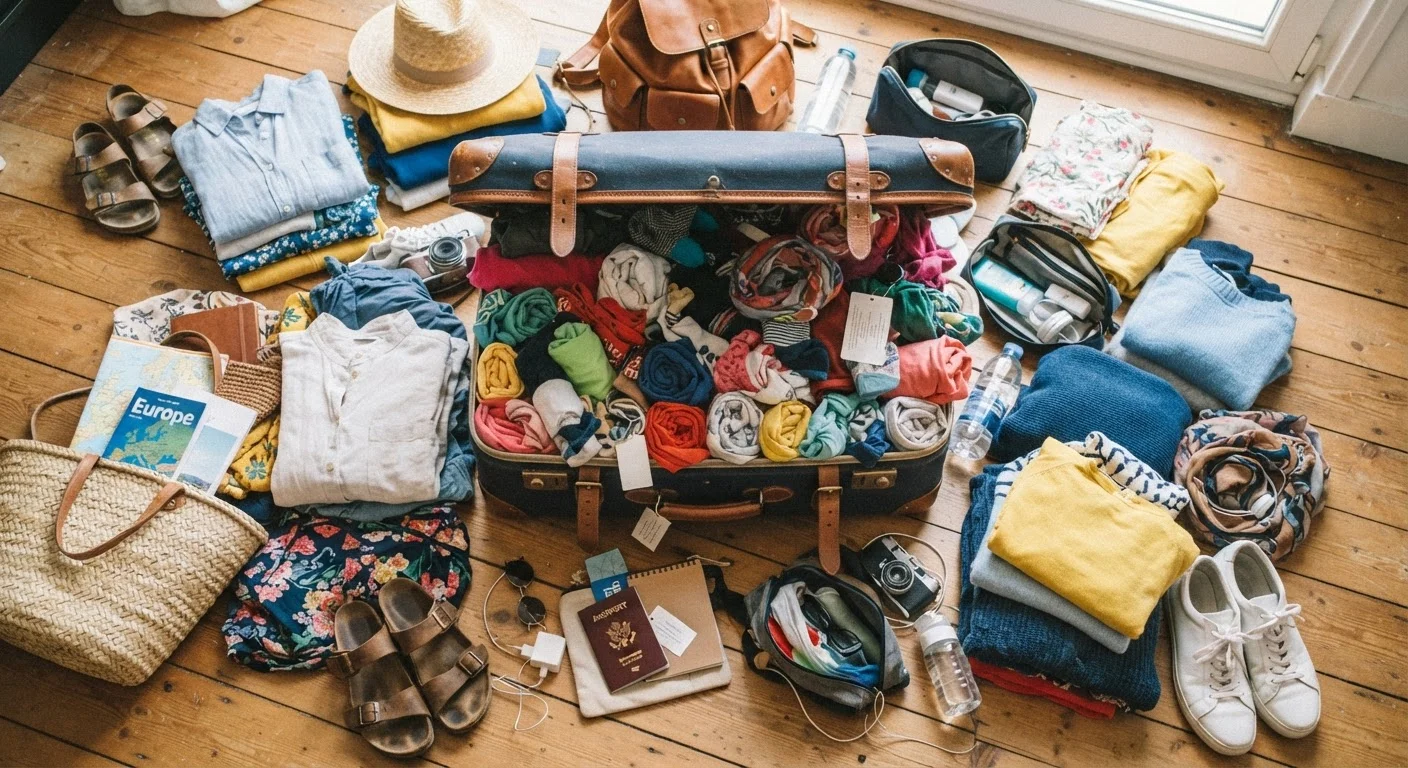
Overpacking feels harmless when you're standing in your bedroom deciding what to bring — after all, you might need that fourth pair of shoes or the just-in-case rain jacket. But by the time you're at the airport, those decisions have a dollar amount attached to them.
Many major U.S. airlines charge fees for checked bags, and those fees compound quickly. A round trip for two passengers with one checked bag each can add $140 or more to your travel costs before you've even left home. On top of that, airlines impose strict weight limits — typically 50 lbs per bag — and overweight fees can run $100 or more per bag per flight. If you're trying to keep your trip on budget, this is a leak worth plugging. See our budgeting basics hub for practical ways to track and manage travel spending.
$75+
Typical one-way checked bag fee on U.S. carriers
Many major U.S. airlines charge $35–$75 for a first checked bag each way; fees vary by airline and fare class and are subject to change.
50 lbs
Standard checked bag weight limit before overweight fees apply
Most U.S. airlines enforce a 50-pound limit per checked bag; overweight fees commonly range from $100–$200 per bag per segment.
The financial cost is just the most visible part. There's also time: checking a bag means arriving earlier, waiting at baggage claim, and losing flexibility if a flight change arises. Travelers who carry on move through airports faster and on their own timeline.
The Mistakes Travelers Make — and How to Fix Them
Packing for every hypothetical scenario instead of your actual itinerary.
Why it happens: Travelers mentally rehearse worst-case situations — sudden cold snaps, formal dinners, surprise hikes — and pack defensively for all of them.
Bringing full-size toiletries and duplicating items already available at your destination.
Why it happens: People default to their home routine and assume they'll need everything they normally use, including bottles that weigh half a pound each.
Packing clothes without considering how they combine with each other.
Why it happens: Items get chosen in isolation — a great top here, a nice pair of pants there — without a mental map of complete outfits.
Ignoring airline weight and size limits until the airport.
Why it happens: Travelers assume their bag is probably fine, or they forget that limits vary by airline and fare class.
Overpacking 'just in case' on shorter trips where laundry is accessible.
Why it happens: The default assumption is that you need a full outfit change for every day, regardless of trip length or access to laundry.
Many of these habits are easy to break once you recognize them. The shift from "what if I need it" thinking to "what will I actually use" thinking is the core of smarter packing. For a complete walk-through of what to handle before your flight — from carry-on rules to ID requirements — see our pre-trip checklist for domestic flights.
Packing Light Without Sacrificing Style or Comfort
The biggest misconception about light packing is that it means wearing the same outfit twice or looking underdressed. In reality, it's a skill: building a travel wardrobe where every piece works with at least two others. Neutral colors, layerable fabrics, and versatile shoes do the heavy lifting.
Carry-On Size Rules Are Strictly Enforced
Airlines have tightened carry-on enforcement, and gate agents increasingly measure and weigh bags before boarding. A bag that fits your home closet may not fit the overhead bin — or may trigger a fee at the gate that exceeds what a checked bag would have cost. Always verify the specific carry-on dimensions for your airline before you pack.
If you're not sure where to start, getting more outfits out of fewer clothes breaks down exactly how to think about combinations intentionally — useful whether you're packing for a weekend trip or two weeks abroad.
The same logic applies to toiletries, electronics, and gear. Travel-size containers, multi-use products, and honest self-assessment about what you'll realistically use all reduce bag weight. Rolling clothes instead of folding, and using packing cubes to compress soft items, can also reveal just how little space your essentials actually need.
Pairing your packing strategy with a well-paced itinerary makes the whole trip run smoother — the anatomy of a well-built travel itinerary can help you plan days that leave breathing room rather than requiring you to haul everything everywhere just in case.
The content on this site is for informational purposes only and is not a substitute for professional advice. Always consult a qualified professional for guidance specific to your situation.