

Why Carbon Monoxide Is Uniquely Dangerous
Most household hazards give some kind of warning - a smell, a visible flame, a sound. Carbon monoxide gives none. It earns the name "silent killer" because it accumulates in a home with no sensory signal whatsoever. By the time a person feels unwell, the concentration may already be at a level that causes lasting harm.
CO is produced any time a carbon-based fuel burns without enough oxygen to complete the reaction. That covers a wide range of everyday appliances: gas furnaces and boilers, water heaters, fireplaces, wood stoves, gas ranges, clothes dryers, and attached-garage vehicles. In most situations these appliances vent safely outdoors. Problems arise when combustion is inefficient, ventilation is blocked, or equipment malfunctions.
“Carbon monoxide poisoning is entirely preventable. The combination of properly maintained appliances and working detectors eliminates the vast majority of risk in a typical home.”
— U.S. Consumer Product Safety Commission, Federal agency responsible for home product safety
Enclosed or poorly ventilated spaces accelerate the danger. During colder months, when windows are sealed and heating systems run continuously, any leak has fewer pathways to dissipate. This seasonal pattern is reflected in poisoning data: the majority of non-fire-related CO deaths in the U.S. occur during winter months, according to the Centers for Disease Control and Prevention.
Recognizing Symptoms That Are Easy to Miss
The symptoms of CO poisoning are frustratingly nonspecific. Mild to moderate exposure typically causes headache, dizziness, weakness, upset stomach, vomiting, chest pain, and confusion. Severe exposure can lead to loss of consciousness. Because these effects mirror a common flu or food poisoning, many people rest at home - remaining in the very environment that is harming them.
One important clue: flu does not cause symptoms that improve dramatically when you step outside. If multiple people in the household feel ill at the same time and feel better in fresh air, that pattern warrants immediate action - evacuate, call 911, and do not re-enter until emergency responders have cleared the space.
Trust Your Body - and Go Outside
If you or anyone in your household suddenly feels dizzy, confused, or nauseated and the feeling eases when you step outdoors, treat it as a potential CO emergency. Don't stop to gather belongings - get everyone out, including pets, then call 911 from outside. Let trained responders measure CO levels before anyone re-enters.
Children and pets may show signs first. Because children breathe a higher volume of air relative to their body weight, they absorb CO faster than adults. Our related article on indoor air quality and children's health explores why developing lungs are especially sensitive to airborne pollutants.
Prevention: Detectors, Maintenance, and Habits
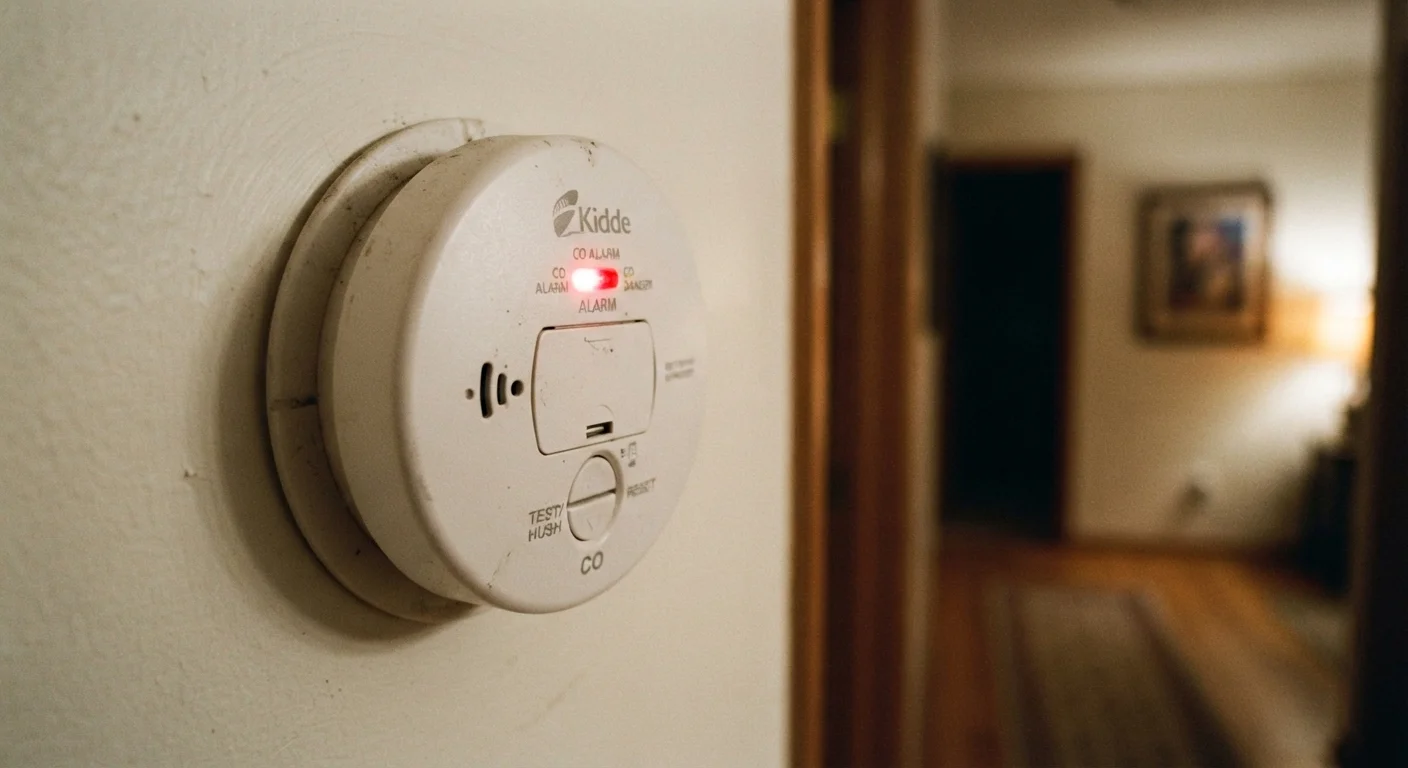
The most reliable protection is a working carbon monoxide detector. Unlike smoke alarms, which respond to particles, CO detectors use electrochemical sensors to measure gas concentration in the air. The two devices are not interchangeable - a smoke alarm will not alert you to CO. Some combination units exist, but it is worth confirming what your existing devices actually detect. For a closer look at how these safety devices differ, see our guide on smoke detector types.
~400
Annual U.S. non-fire CO deaths
The CDC estimates approximately 400 Americans die each year from unintentional, non-fire-related carbon monoxide poisoning.
100,000+
Annual U.S. ER visits from CO
More than 100,000 people visit emergency rooms in the United States each year due to accidental CO poisoning, according to CDC data.
5-7 years
Typical CO detector lifespan
Most manufacturers rate their CO detector sensors for five to seven years, after which replacement is recommended regardless of whether the alarm appears functional.
Beyond detectors, annual professional servicing of any fuel-burning appliance - furnace, boiler, water heater, fireplace - is one of the most effective preventive steps a household can take. Technicians check heat exchangers, venting, and combustion efficiency, catching problems before they become dangerous. Never use a gas oven or range for heating, and never idle a vehicle inside an attached garage, even briefly with the garage door open.
Finally, know your detector's limits. Sensors degrade over time, and most units have a service life of five to seven years. Check the manufacture date and replace units on schedule. Our article on testing CO detectors and other safety devices covers how to confirm these devices are actually working when it matters.
This article is for general home safety information only and is not a substitute for guidance from qualified fire safety, HVAC, or medical professionals. If you suspect carbon monoxide exposure, leave the building immediately and call 911.
Frequently Asked Questions
Early symptoms include headache, dizziness, fatigue, shortness of breath, nausea, and confusion. These symptoms can closely mimic the flu, which is one reason CO poisoning is so dangerous - people may not realize they need to leave the building. If symptoms improve when you go outside, CO exposure should be suspected.
Install a CO detector on every level of your home, including the basement, and outside each sleeping area. Avoid placing them directly next to fuel-burning appliances, since some amount of CO there is normal during startup. Follow the manufacturer's placement instructions for the specific unit you have.
Yes. Most carbon monoxide detectors have a lifespan of five to seven years, after which the sensor degrades and may no longer detect CO accurately. Check the manufacture date on the back of the unit and replace it according to the manufacturer's guidance. For testing schedules, our <a href="/home-real-estate/home-maintenance/smoke-alarms-co-detectors-and-gfci-outlets-testing-what-you-rarely-think-about">CO detector testing guide</a> covers what to look for.
No. Portable generators produce large amounts of CO and should never be operated inside a home, garage, or enclosed porch - even with windows open. Place generators at least 20 feet away from any door, window, or vent, following guidance from the U.S. Consumer Product Safety Commission.
Yes. Children, elderly individuals, pregnant people, and anyone with cardiovascular or pulmonary conditions absorb and respond to CO more severely than healthy adults. Infants and young children are particularly vulnerable because they breathe more air relative to their body weight.
The content on this site is for informational purposes only and is not a substitute for professional advice. Always consult a qualified professional for guidance specific to your situation.