

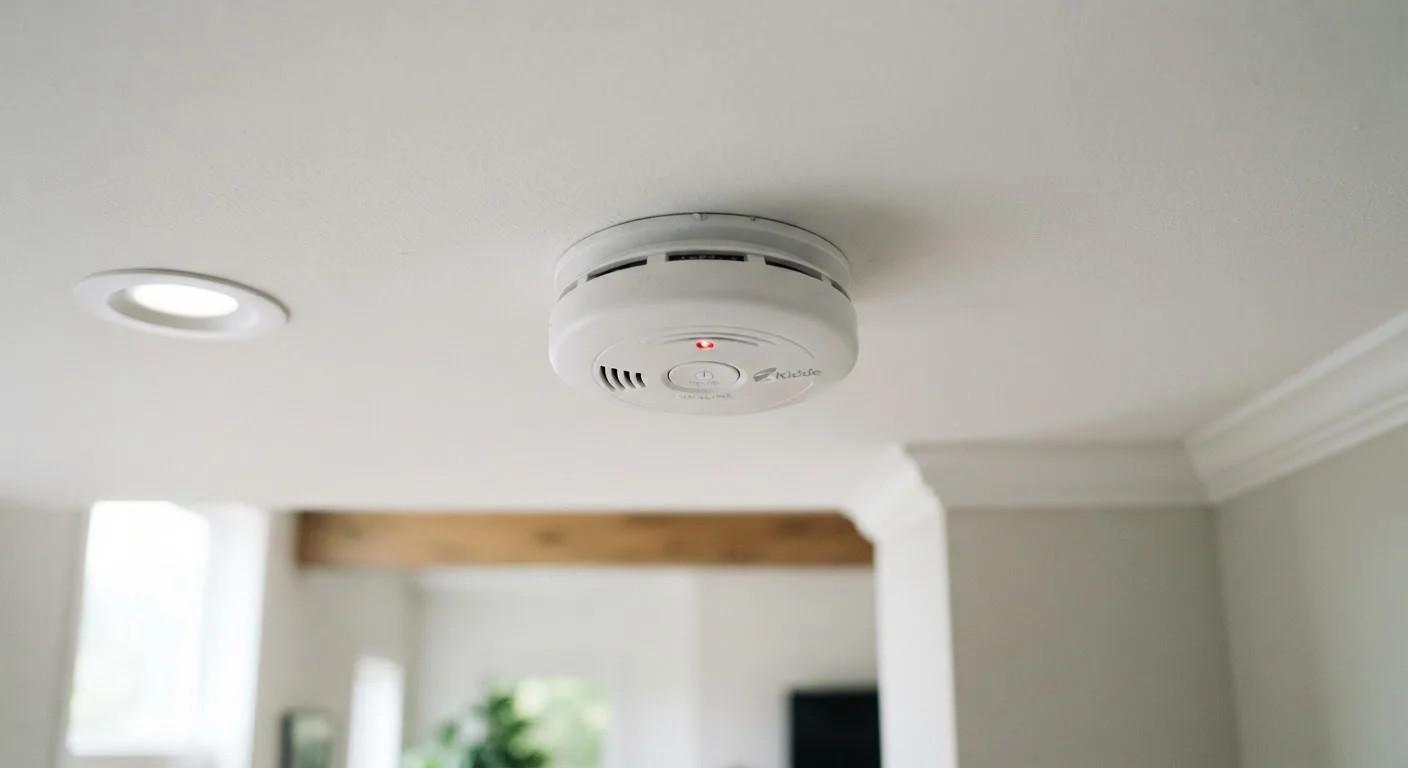
Why These Devices Fail Silently
Smoke alarms, carbon monoxide detectors, and GFCI outlets share one critical characteristic: they can appear perfectly normal while no longer providing the protection they were installed to deliver. A smoke alarm with a dead battery looks identical to a working one. A GFCI outlet that has failed internally still accepts plugs. CO detectors that have exceeded their rated service life may show no external sign of degradation.
This is precisely why routine testing matters more than a visual inspection. These are not devices you can assess by looking at them — you have to actively verify that they respond correctly.
For a broader look at what else may need attention in your home, reading your home like a professional inspector covers the signs that trained inspectors look for room by room. And if you do seasonal safety reviews, this testing routine fits naturally into a structured home safety audit.
Chirping Alarms Should Not Be Silenced and Ignored
A persistent chirping sound from a smoke alarm or CO detector almost always indicates a low or failing battery — not a harmless glitch. Silencing the alarm without replacing the battery leaves the device unable to protect your household. Replace the battery promptly, and if chirping continues after a fresh battery is installed, the device itself may have reached the end of its service life and should be replaced.
What You Need Before You Start
This is a low-skill task that most homeowners can complete in under 30 minutes. You do not need electrical training or specialized tools — just the items listed below and a methodical room-by-room approach.
What you will need
Stepladder or step stool
Provides safe, stable access to ceiling- or high-wall-mounted smoke and CO detectors.
Replacement batteries
Used to swap out weak or dead batteries found during testing; type varies by device model.
Small lamp or phone charger
Plugged into a GFCI outlet after resetting to confirm power has been restored correctly.
Device manuals or manufacturer documentation
Confirms correct battery type, placement requirements, and rated service life for each device.
Before beginning, note that GFCI outlet testing involves working with live outlets. The process described here — pressing the Test and Reset buttons — does not require opening the outlet or touching any wiring, and is safe to perform without professional training. Any work beyond that scope should be left to a licensed electrician.
How to Test Your Safety Devices
Follow these steps in sequence. If you have a larger home, work floor by floor to avoid missing any devices.
Locate every smoke alarm, CO detector, and GFCI outlet in your home
Walk through each room and make a simple written list. Smoke alarms are typically found on ceilings or high on walls in hallways and each bedroom. CO detectors may be standalone units or combination smoke/CO devices. GFCI outlets — identifiable by the small Test and Reset buttons on their face — are most commonly found in bathrooms, kitchens, garages, and outdoor areas.
Test each smoke alarm using the test button
Press and hold the test button on each alarm for up to 5 seconds. A working alarm will emit a loud, continuous beep. If the sound is weak, delayed, or absent, the battery likely needs replacing. After swapping the battery, test again to confirm the alarm sounds at full volume.
The U.S. Fire Administration recommends testing smoke alarms at least once a month.
Check smoke alarm age and replace outdated units
Flip or remove the alarm and look for a manufacture date printed on the back or inside the battery compartment. Most smoke alarms should be replaced after 10 years from that date, regardless of whether they appear functional. Sensors degrade over time in ways the test button cannot fully detect. If you cannot find a date, replace the unit — when in doubt, err on the side of safety.
Test each CO detector
Press and hold the test button on each carbon monoxide (CO) detector. A functioning unit will beep in its alarm pattern (typically a series of four beeps). If there is no sound or only a brief chirp, replace the battery and test again. CO detectors typically have a service life of 5–7 years; check the unit's label for its rated lifespan and replace it accordingly.
CO detectors should be installed on every level of your home, including the basement, and within 10 feet of each sleeping area — consistent with guidance from the National Fire Protection Association (NFPA).
Test GFCI outlets using the Test and Reset buttons
Plug a small lamp or phone charger into the GFCI outlet and confirm it is working. Then press the Test button — the outlet should immediately cut power, turning off the lamp or charger. Press the Reset button; power should restore. If pressing Test does not cut power, or if Reset does not restore it, the outlet has failed and should be evaluated by a licensed electrician.
GFCI (Ground Fault Circuit Interrupter) outlets are designed to cut power within milliseconds when they detect an imbalance in electrical current — a critical protection against shock in wet areas.
Set a recurring reminder to retest monthly
These devices are only protective when they are functional. Set a recurring monthly calendar reminder — tying it to a routine task such as paying a bill or changing the month on a wall calendar makes it easier to follow through. Changing batteries annually (or when a chirp signals low power) and replacing devices at their rated end-of-life completes the maintenance cycle.
Interconnected Alarms Offer Added Protection
If your home has interconnected smoke alarms — either wired or wirelessly linked — testing one should trigger all of them to sound. This is an important feature to verify: if alarms are supposed to be interconnected but only the tested unit sounds, there may be a wiring or pairing issue worth investigating. Consult your alarm's documentation or a licensed electrician if interconnection is not working as expected.
Failed GFCI Outlets Require a Licensed Electrician
If a GFCI outlet does not respond correctly to the Test and Reset process — or trips repeatedly without an apparent cause — do not continue using it. A failed GFCI outlet provides no shock protection. This is not a DIY repair situation: contact a licensed electrician to inspect and replace the device. Depending on your local jurisdiction, this type of electrical work may require a permit.
Keeping Up With the Maintenance Cycle
Testing is only one part of a maintenance routine. The full cycle includes:
- Monthly: Test all smoke alarms, CO detectors, and GFCI outlets.
- Annually (or at first chirp): Replace batteries in all alarms and detectors.
- Every 5–7 years: Replace CO detectors at or before their rated end-of-life date.
- Every 10 years: Replace smoke alarms at or before their manufacture-date-based expiration.
Renters should note that landlord obligations for smoke and CO detectors vary by state and locality. If you are unsure what is required in your jurisdiction, check with your local fire marshal's office or housing authority.
Homes with pets have additional safety considerations worth reviewing — pet-proofing your home covers hazards that are easy to overlook. For plumbing-side maintenance that pairs well with this kind of routine, plumbing maintenance tasks every homeowner should know outlines non-invasive checks that can prevent costly failures.
The content on this site is for informational purposes only and is not a substitute for professional advice. Always consult a qualified professional for guidance specific to your situation.