

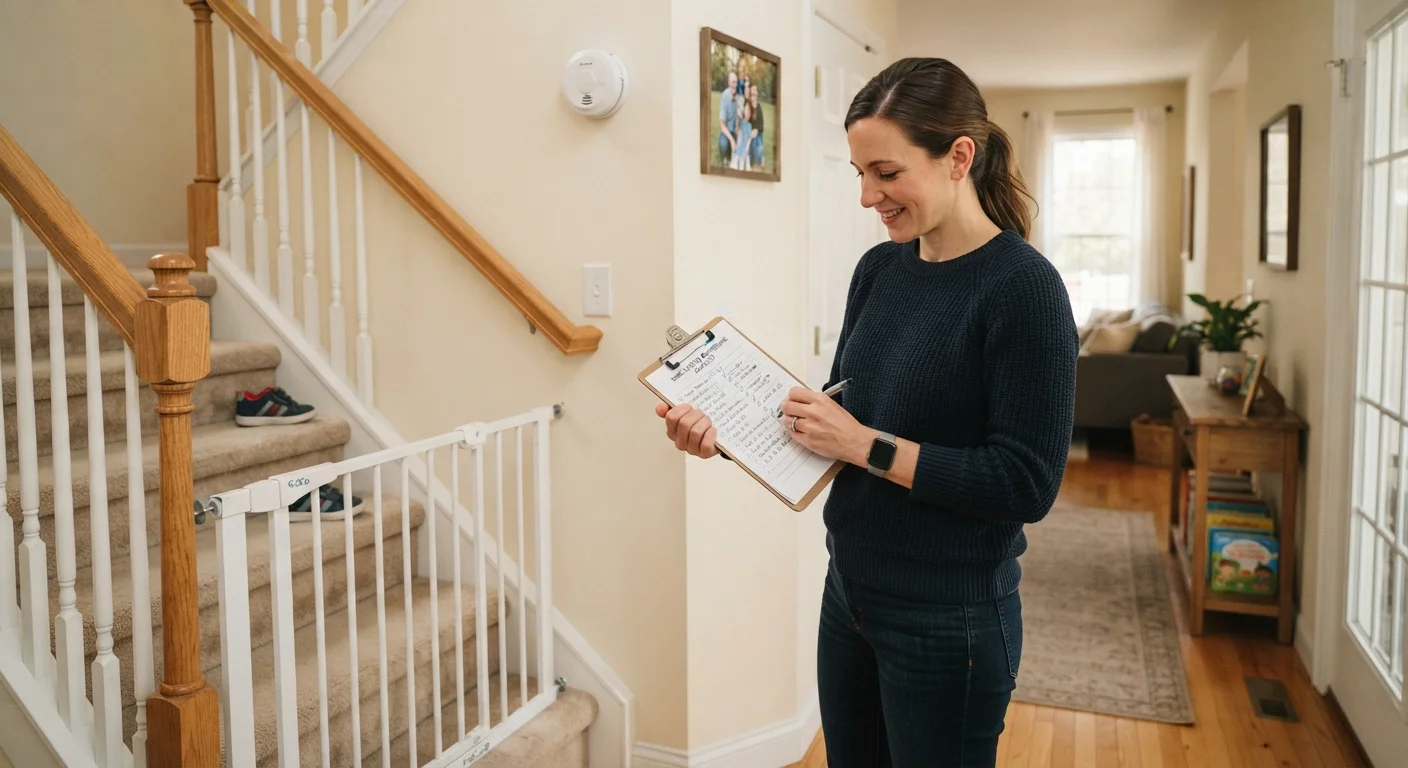
Summary
24 items · 45–90 minutes
Why Seasonal Audits Make a Difference
Most home safety advice focuses on one-time fixes — outlet covers, cabinet locks, and the occasional smoke detector battery swap. But the truth is, the hazard landscape inside and around your home shifts meaningfully four times a year. Winter brings portable heaters and ice on walkways. Summer introduces pool risks and lawn chemicals. Spring and fall carry their own transition-period dangers, from stored equipment being pulled back out to ventilation changes that affect air quality.
A brief, structured walk-through at each season change gives families a reliable way to stay ahead of those shifting risks — rather than discovering a problem after something goes wrong. This checklist is designed to be completed in a single session, covering the areas that matter most across every season. For a broader view of ongoing home upkeep, see our annual home maintenance calendar — it pairs well with the safety-focused approach here.
If you have young children at home, this audit works hand-in-hand with the guidance in our room-by-room childproofing guide, which covers hazards that are easy to overlook beyond the basics.
Some Repairs Require a Licensed Professional
This audit may surface issues involving electrical wiring, gas appliances, or structural elements. Do not attempt to repair these yourself — contact a licensed contractor or qualified technician. Unpermitted or improper repairs can create additional hazards and may affect your home insurance coverage.
Tools You'll Need for the Audit
Before you start walking through your home, gather a few basic items. Having everything on hand prevents interruptions and helps you document findings you want to address later.
Clipboard and printed checklist
Lets you walk through rooms efficiently without losing track of findings.
Screwdriver and pliers
Needed to tighten loose railings, hardware, or furniture anchors identified during the walk-through.
Step stool or ladder
Required to safely reach and test smoke detectors and high-mounted carbon monoxide alarms.
Flashlight or phone torch
Helps you inspect poorly lit areas such as utility closets, under sinks, and crawl spaces.
Replacement batteries (9V and AA)
Allows you to replace detector batteries on the spot rather than scheduling a separate trip.
Camera or note-taking app
Used to document hazards or damage that need professional repair so you have a clear record for follow-up.
The Seasonal Safety Checklist
Work through each group in order, or skip to the areas most relevant to the current season. Items marked must are non-negotiable safety fundamentals — address these promptly. Should items are strongly recommended and reduce meaningful risk. Nice-to-have items add an extra layer of protection when time allows.
Fire & Carbon Monoxide Safety
Heating, Cooling & Ventilation
Chemical & Medication Storage
Interior Fall & Injury Risks
Outdoor & Seasonal Hazards
Emergency Preparedness
If You Find an Immediate Hazard
If your audit reveals an active gas smell, electrical sparking, structural instability, or any condition that poses an immediate risk to household members, stop the audit and address that hazard first. Leave the home if necessary and call emergency services. Do not delay action on urgent safety issues in order to complete the checklist.
For families with infants, toddlers, or school-age children, keep in mind that the hazards that matter most shift as kids grow. Our guide to home safety across developmental stages can help you fine-tune which items deserve the most attention right now. And for households with pets, don't overlook chemical storage and outdoor perimeter checks — animals are often exposed to toxins before their owners notice anything is wrong.
After the Audit: Turning Findings Into Action
A completed checklist is only useful if findings are followed through. At the end of your walk-through, group your notes into three categories: items to fix this week, items to schedule within the month, and items to monitor next season. Keep a simple running document — even a shared note on your phone — so nothing slips between audits.
If your audit surfaces a fire escape concern, review our fire escape planning guide for families with children or pets, which goes deeper on adapting standard plans for households that include young kids and animals. Talking with your children about what you found — in age-appropriate terms — also reinforces a safety-aware mindset. Our piece on teaching young children about home safety offers calm, constructive ways to have that conversation. Revisit this checklist at each season change, and adjust the items you focus on as your family's needs evolve.
This article provides general home safety information for educational purposes. It is not a substitute for professional inspection or advice. Requirements for safety equipment, permits, and building codes vary by location — consult local authorities or a licensed professional for guidance specific to your home and jurisdiction.
The content on this site is for informational purposes only and is not a substitute for professional advice. Always consult a qualified professional for guidance specific to your situation.