

Our Verdict
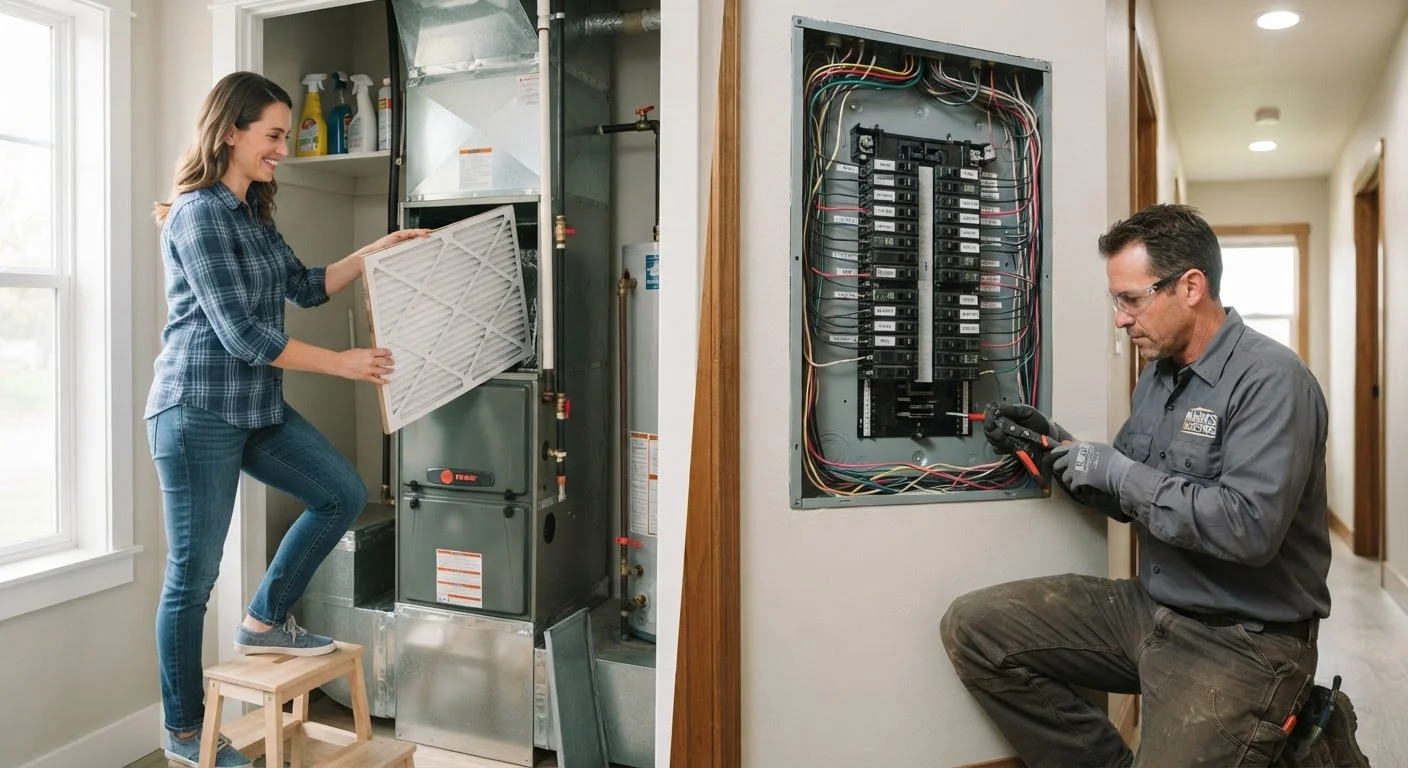
The clearest dividing line between DIY and professional work is risk—to safety, to code compliance, and to your home's long-term value. Cosmetic repairs, basic maintenance, and low-stakes upkeep are reasonable DIY territory for most motivated homeowners. Work touching gas, electrical panels, structural elements, or anything requiring a permit is firmly in professional territory.
| Best for | Recommended |
|---|---|
| Homeowners with basic tools and moderate skill | DIY maintenance |
| Any project involving electrical panels, gas lines, or load-bearing structure | Licensed professional |
| Permitted renovations affecting resale or insurance | Licensed professional |
| Routine upkeep like filter changes, caulking, and gutter cleaning | DIY maintenance |
The Real Question Isn't Skill—It's Risk
Most homeowners frame the DIY-vs.-pro question around ability: Can I do this? A more useful frame is: What happens if something goes wrong? A poorly painted wall costs a few extra hours to fix. A mishandled gas line or incorrectly wired outlet can cause fire, carbon monoxide exposure, or electrocution.
Risk in home maintenance falls into three buckets: safety risk (injury or fire hazard), code risk (work that requires permits and inspections), and investment risk (repairs that, if done wrong, accelerate damage or void warranties). Understanding which bucket a task falls into cuts through the guesswork faster than any skill assessment.
For a broader look at what to schedule and when, see our annual home maintenance calendar — it maps routine tasks to the seasons in which they're most effective.
Tasks That Are Reasonable DIY Territory
A large category of maintenance tasks carry minimal safety risk, require no permits, and don't touch utility systems. These are generally appropriate for homeowners willing to invest time and follow manufacturer instructions carefully.
- HVAC filter replacement: Monthly or quarterly filter changes are straightforward and significantly extend system life.
- Caulking and weatherstripping: Sealing gaps around windows, doors, and tubs prevents water intrusion and energy loss.
- Gutter cleaning and minor repairs: Clearing debris twice a year protects fascia boards and foundations from water damage.
- Painting interior surfaces: Cosmetic in nature, no permit required, and mistakes are correctable.
- Basic plumbing maintenance: Tasks like checking shut-off valves, flushing sediment from a water heater, or replacing a toilet flapper are low-risk with proper guidance. Our plumbing maintenance guide covers the specifics.
- Drywall patching: Small holes and cosmetic damage are manageable without structural implications.
Start With Low-Stakes Tasks to Build Confidence
If you're new to home maintenance, build skill with low-consequence tasks first—replacing filters, sealing gaps, or cleaning gutters. Document what you do and note any observations about system condition. Over time, this record becomes valuable for professional consultations and for tracking the home's maintenance history.
The line shifts based on experience. A homeowner who has successfully completed a task before carries meaningfully lower risk than someone attempting it for the first time on a critical system.
Work That Belongs in Professional Hands
Certain categories of home work carry risks that make professional involvement not just advisable but often legally required. Most jurisdictions mandate licensed contractors and permits for the following:
Never Skip Permits on Regulated Work
Unpermitted electrical, gas, or structural work can invalidate your homeowner's insurance coverage in the event of a related claim. It can also surface as a material defect during a home sale, requiring costly remediation before closing. When a task requires a permit, pulling one protects both your safety and your investment.
- Electrical panel and wiring work: Breaker replacement, new circuit installation, and any work inside the main panel require a licensed electrician in virtually every U.S. jurisdiction. Errors cause fires and fail home inspections.
- Gas line work: Connecting, moving, or repairing gas lines is regulated by local codes and should only be performed by licensed plumbers or gas fitters. This applies to appliance hookups as well as supply lines.
- Structural repairs: Work involving load-bearing walls, foundation repair, or roof framing typically requires both a licensed contractor and a permit. Improper structural changes can compromise the entire building.
- Roofing beyond minor patching: Full or partial roof replacement involves fall risk, structural considerations, and warranty requirements that almost universally call for professional work. See our roof maintenance guidance for what homeowners can reasonably inspect themselves.
- HVAC system replacement: Installing a new furnace, air handler, or central AC involves refrigerant handling (federally regulated), gas connections, and electrical work—all licensed trades.
Skipping permits on regulated work isn't just a legal risk. It can affect homeowner's insurance claims and create serious problems during future home sales.
How to Compare Costs Honestly
DIY saves money on labor, but the calculation is rarely as simple as "free vs. contractor fee." Relevant costs to weigh honestly include materials (often priced higher for small quantities), tool rental or purchase, time value, and the potential cost of a mistake requiring professional remediation.
| Criteria | DIY Maintenance | Hiring a Pro | |
|---|---|---|---|
| Upfront cost | Lower (materials only) | Higher (labor + materials) | |
| Safety risk | Low for routine tasks | Managed by licensed trade | |
| Permit & code compliance | Not required for most routine work | Required for regulated systems | |
| Quality assurance | Depends on skill and research | Backed by license and insurance | |
| Impact on resale/insurance | Minimal for cosmetic work | Essential for structural/utility work | |
| Time investment | Significant personal time | Minimal homeowner time |
Deferred or botched maintenance compounds over time. Our article on what deferred maintenance actually costs shows how skipping small tasks—whether DIY or professional—translates into significantly larger bills later.
If you're new to homeownership and calibrating your approach, our guide for first-time owners lays out the foundational habits worth building early.
This article is for general informational purposes only. Always verify local permit requirements and consult a licensed professional before beginning any work involving electrical systems, gas lines, structural components, or other regulated trades.
The content on this site is for informational purposes only and is not a substitute for professional advice. Always consult a qualified professional for guidance specific to your situation.