

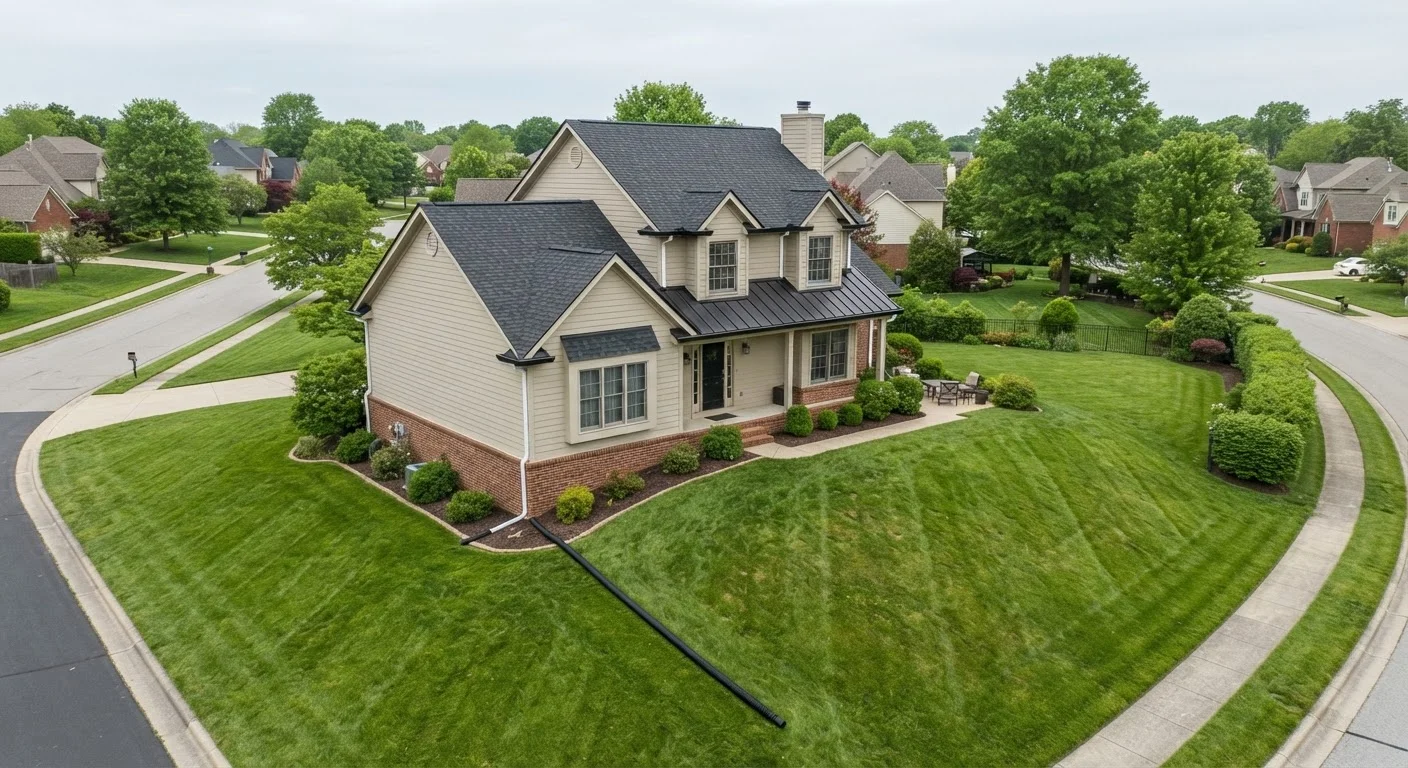
The System Approach: Why One Fix Is Never Enough
Water damage is the most common — and often most expensive — problem homeowners face. But the cause is rarely mysterious. In the majority of cases, water gets into basements and damages foundations because exterior systems failed to move it away from the house in the first place.
Exterior water management is not a single product or fix. It is a layered system: gutters capture roof runoff, downspouts channel it to ground level, proper grading carries it away from the foundation, and a sump pump handles whatever water still migrates into the soil and reaches the basement perimeter. Remove any layer and the remaining components have to compensate — often unsuccessfully.
For first-time owners especially, understanding how these systems interact is foundational. Home Maintenance for First-Time Owners provides a broader introduction to property systems, but water management deserves particular attention because the damage it prevents is both common and severe.
98%
Basements that will experience some water damage
According to the American Society of Home Inspectors, an estimated 98% of homes with basements will experience some type of water damage during the life of the structure.
$10,000+
Typical cost range for foundation water damage repair
Foundation waterproofing and repair costs vary widely, but significant water intrusion damage commonly runs into five figures according to estimates cited by home inspection and construction industry sources.
6 in / 10 ft
Recommended minimum grading slope from foundation
Many building codes and professional home inspectors cite a minimum slope of 6 inches of drop for every 10 horizontal feet as the standard for positive drainage away from a foundation.
Gutters and Downspouts: The First Line of Defense
A typical American home's roof sheds an enormous volume of water during a rainstorm. Gutters exist to capture that sheet of runoff before it pours off the eave directly against the foundation. When gutters are clogged, damaged, or improperly pitched, water spills over the edge and concentrates at the worst possible location — right at the base of the house.
Downspouts are equally important. A gutter that drains through a downspout ending 12 inches from the foundation is only marginally better than no gutter at all. Extensions — whether rigid, flexible, or buried underground in a French drain system — are necessary to move water to a safe discharge point.
Check Gutters After Every Major Storm
Heavy rain can deposit significant debris — broken branches, shingle granules, and compacted leaves — in gutters even shortly after a cleaning. A quick visual check from the ground after a major storm, looking for overflow or sagging sections, takes minutes and can catch problems before they cause damage.
Common maintenance tasks include clearing debris from gutter channels, checking for sags or separations at seams, confirming downspout connections are tight, and verifying that extensions or splash blocks are properly positioned. Professional inspectors know what to look for — and gutters are consistently on their checklist.
Grading: The Slope That Does the Work
Grading refers to the slope of the soil and landscaping surrounding your home. Properly graded ground slopes away from the foundation on all sides, allowing surface water to flow toward the yard, street, or a designated drainage area rather than pooling against the house.
Over time, soil settles. Mulch compresses. Landscaping projects inadvertently create low spots. Any area where ground slopes toward the foundation — known as negative grading — becomes a collection zone that keeps soil saturated against the wall for extended periods after rain.
Correcting minor grading issues often involves adding clean topsoil to low areas and resloping them away from the structure. More significant issues may require a licensed grading contractor. Homeowners should be aware that altering grading can affect neighboring lots and may be subject to local codes or drainage easements — professional consultation is advisable before significant changes.
Grading Changes May Require Permits
In many municipalities, significant changes to site grading — particularly near property lines or in areas with drainage easements — require a permit and may need to comply with stormwater management regulations. Before moving soil or altering drainage patterns on a larger scale, check with your local building or planning department to confirm what is required in your jurisdiction.
Sump Pumps: The Last Line of Defense
Even with well-maintained gutters and properly graded landscaping, groundwater can still accumulate below grade, particularly in regions with high water tables, heavy clay soils, or prolonged rainfall. A sump pump is the system designed to handle that residual water before it enters finished living space.
The pump sits in a pit — the sump basin — typically located at the lowest point of the basement or crawlspace. As groundwater rises into the pit, a float trigger activates the pump, which ejects the water through a discharge line to a safe location away from the house.
Critically, a sump pump should not be treated as a substitute for exterior drainage work. A pump running constantly because gutters are clogged or grading is reversed is both inefficient and more likely to fail from overuse. The pump is most effective when exterior systems have already done their job, leaving only modest groundwater infiltration to manage.
Homeowners in flood-prone areas or those who have experienced basement water intrusion should also consider a battery backup system, since sump pumps require electricity at precisely the moment power outages are most likely during severe storms.
Routine maintenance is straightforward: test the pump periodically, check the discharge line for blockages, and ensure the pit screen is clean. Broader plumbing maintenance habits can complement this routine and help catch related issues early.
Planning for the Costs of Proper Water Management
Keeping gutters clean, regrading a section of lawn, or replacing a worn sump pump are not glamorous home expenses — but they are predictable ones. Setting aside funds in advance for these recurring maintenance costs is one of the most practical ways to avoid being caught off guard. Sinking funds are a savings approach specifically suited to this kind of planned, irregular spending.
The true financial argument for exterior water management, however, is the cost of what it prevents. Foundation repair, basement waterproofing, and mold remediation are among the most expensive home repairs a property owner can face. Maintaining these exterior systems is, in most cases, a fraction of those downstream costs.
This article provides general home maintenance information for educational purposes only. Requirements for permits, professional licensing, and local building codes vary by jurisdiction. Consult a licensed contractor or drainage professional before undertaking significant grading, drainage, or structural work on your property.
Frequently Asked Questions
Most building professionals recommend extending downspout discharge at least 6 feet from the foundation. In areas with heavy rainfall or poor soil drainage, extending to 10 feet or more may be advisable. Splash blocks or flexible extensions can help direct flow further away.
Gutters should typically be cleaned at least twice a year — once in late spring and again in late fall after leaves drop. Homes surrounded by pine trees or heavy tree cover may require more frequent cleaning, as debris accumulates faster.
General guidance from many building codes and home inspectors calls for the ground to slope away from the foundation at a rate of at least 6 inches of drop over the first 10 feet. This slope encourages sheet flow away from the structure.
You can test a sump pump by slowly pouring water into the pit until the float rises and the pump activates. The water should drain quickly and the pump should shut off automatically. Testing two or more times a year — particularly before wet seasons — is a reasonable practice.
Minor regrading with topsoil to correct a small reverse slope near the foundation is within many homeowners' capabilities. However, significant grading changes can affect neighboring properties, drainage easements, and local code requirements, so consulting a licensed grading contractor or civil engineer is advisable before undertaking larger projects.
Not always, but sump pumps are strongly recommended in areas with high water tables, heavy seasonal rainfall, or clay-heavy soils that drain slowly. Even well-maintained gutters and grading cannot always prevent groundwater from rising into a basement during extreme weather events.
The content on this site is for informational purposes only and is not a substitute for professional advice. Always consult a qualified professional for guidance specific to your situation.