

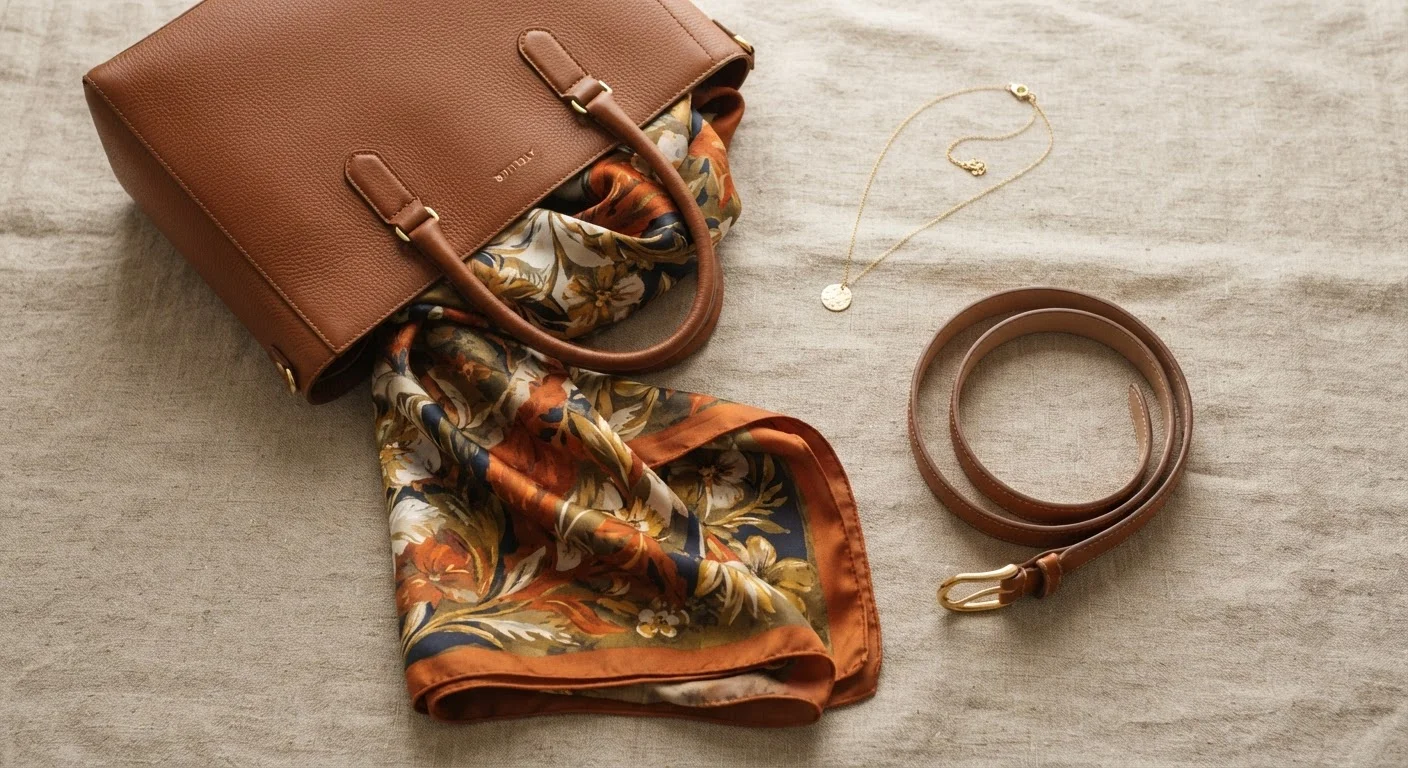
The Quiet Power of a Single Addition
Most outfit problems aren't about the clothes themselves — they're about what's missing around them. A plain white button-down and dark jeans can read five completely different ways depending on whether you add a silk scarf, a chunky watch, a structured bag, or nothing at all. That shift in perception happens fast, and it happens without a single trip to the dressing room.
Accessories are the most flexible tool in a wardrobe precisely because they're interchangeable. The same blazer becomes workwear with a leather tote and weekend-ready with a crossbody. The same dress reads bohemian with layered necklaces and sleek with one gold cuff. Understanding how each type of accessory shifts a look — not just that it does — is what separates an intentional outfit from a guessing game.
This list breaks down the most impactful accessory categories and explains exactly what each one communicates, so you can make deliberate choices rather than hopeful ones. For more on building outfits with fewer decisions, see how to balance neutrals and statement pieces.
Belts: The Fastest Way to Change a Silhouette
A belt doesn't just hold things up — it redraws the body's proportions entirely. Cinching a loose shirt or oversized blazer at the waist creates structure where there was none, instantly making an outfit look more deliberate. A slim, minimalist belt reads polished and tailored; a wide statement belt adds drama and a retro confidence.
The key variable is placement. A belt worn at the natural waist elongates the legs visually. Worn lower on the hips, it creates a more relaxed, casual proportion. Even a belt you can barely see — a thin one in a similar color to the garment — adds a finishing detail that signals intentionality to anyone looking.
A belt redraws your silhouette in seconds — no tailoring required.
Scarves: The Most Versatile Piece You're Probably Underusing
Scarves are shape-shifters. Tied at the neck, a silk scarf adds a Parisian ease that elevates even a simple tucked-in tee. Looped loosely through a bag handle, it adds color and texture without touching your outfit at all. Worn as a headband or tied around a ponytail, it shifts the whole vibe toward something more playful and creative.
Fabric matters enormously here. A lightweight silk or satin scarf reads refined and elevated. A chunky knit scarf reads cozy and relaxed. Mixing a luxe-feeling scarf with casual separates is one of the most effective ways to make an everyday outfit feel considered without spending much — which is why scarves are a favorite tool for transitioning a wardrobe across seasons.
A silk scarf tied at the neck can make a plain tee look genuinely put-together.
Bags: The Accessory That Sets the Occasion
More than almost any other accessory, a bag signals where you're going and how seriously you're taking it. A structured tote reads professional and organized. A canvas tote reads approachable and casual. A mini bag reads fashion-forward and evening-ready, even in the middle of the day.
Bag shape, size, and how you carry it all contribute to this reading. A crossbody worn across the chest looks active and practical; a clutch tucked under the arm looks deliberate and dressed-up. If your outfit is already doing a lot — bold color, strong print, interesting texture — a low-key bag in a neutral lets everything breathe. If your outfit is understated, the bag is your opportunity to add the punctuation. This is directly related to what makes a piece genuinely versatile.
Your bag signals the occasion before you say a word.
Jewelry: Volume Control for Any Look
Jewelry operates on a spectrum from whisper to shout, and understanding where you want to land is everything. Delicate layered chains add dimension without competing with the outfit. A single bold earring (or an asymmetric pair) draws attention upward toward the face. A cuff or stack of bracelets adds movement and a tactile richness that reads as effortful in the best way.
What jewelry communicates also depends heavily on metal finish. Gold tends to read warm and relaxed; silver reads cooler and more modern; mixed metals read creative and confident. The neckline of a top shapes which jewelry makes sense — something to consider alongside the advice in why outfits often stop working at the collar. A deep V calls for a pendant that follows the line; a high neck often works better with statement earrings than a layered necklace.
Jewelry is volume control — one bold piece says everything; too many compete.
Shoes and Socks: The Detail That Ties It Together
Shoes are technically clothing, but they function as accessories in how they close out a look's story. The same midi skirt reads romantic with strappy sandals, grounded with chunky loafers, and playful with sneakers. A pointed toe adds polish; a rounded toe reads softer and more vintage. The proportion of the shoe relative to the garment's hem matters — voluminous pants often need something with a bit of presence at the foot to avoid the look becoming bottom-heavy.
Socks have re-emerged as a genuine style detail rather than an afterthought. A pop of patterned or brightly colored sock visible above a sneaker or loafer adds character without any additional effort. A no-show sock or bare ankle keeps things streamlined and modern. Neither is right or wrong — it's about whether the detail supports or distracts from what the rest of the outfit is doing.
The same skirt reads three different ways depending solely on what's on your feet.
Keeping the Balance Without Overthinking It
The rule most stylists return to is simple: if everything is interesting, nothing is. When you add an accessory that draws the eye — a bold scarf, a wide belt, a statement earring — the rest of the outfit should quiet down. Busy print plus layered jewelry plus a logo bag creates visual noise, not personality.
Try the One-Focal-Point Rule
Before you leave the house, identify which single accessory you want to do the most visual work. Then scale back everything else to support it. This isn't about being boring — it's about being clear. A great scarf, a bold earring, or a structured bag each makes a stronger impression when it isn't competing with two other things for attention.
A practical starting point is the "one focal point" approach: choose the single accessory you want to do the most work, then keep everything else understated. It's a flexible framework that works across occasions and budgets. Over time, a small collection of accessories in your personal color palette will mix and match almost automatically, which means fewer decisions and more confident dressing. For ideas on stretching those combinations further, getting more outfits from fewer clothes is a great next read.
The content on this site is for informational purposes only and is not a substitute for professional advice. Always consult a qualified professional for guidance specific to your situation.