

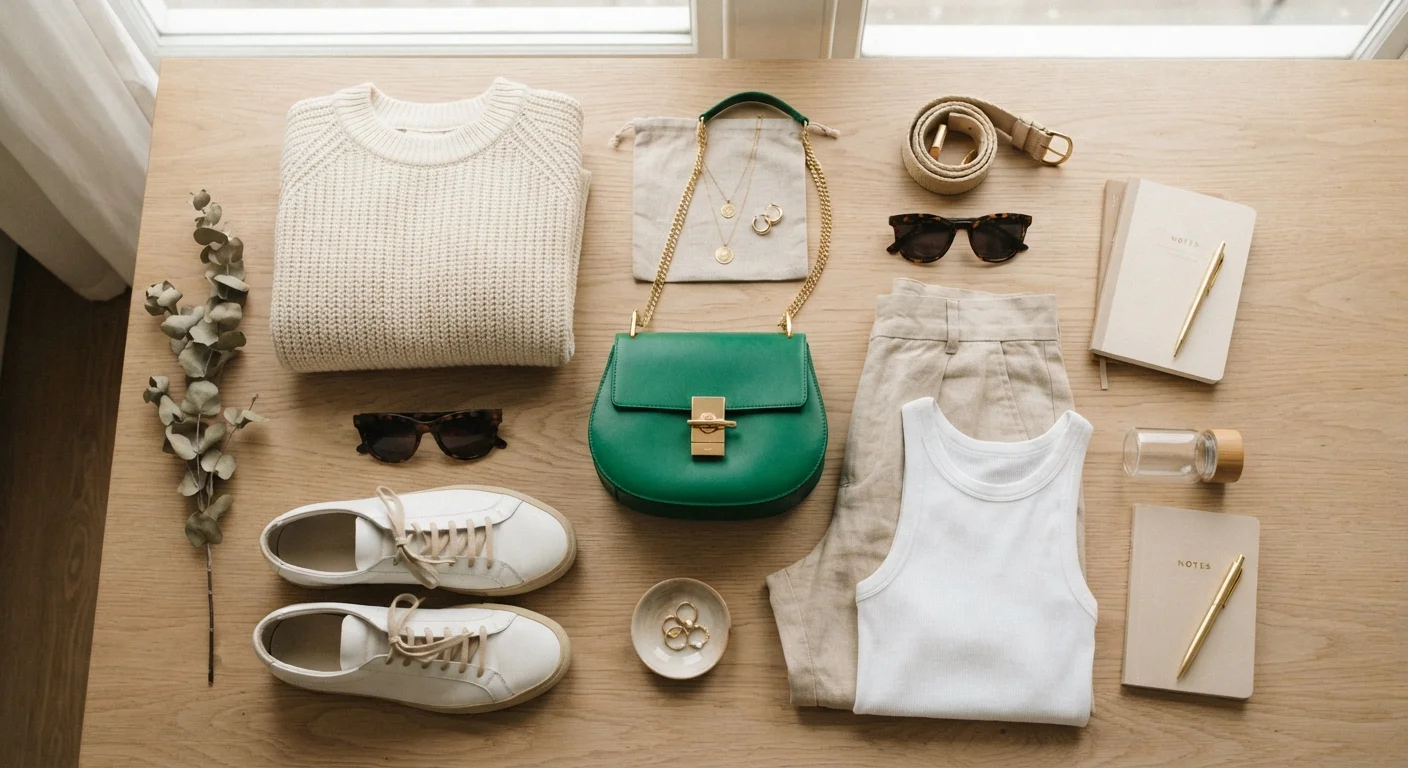
Option A
Neutral Pieces
The quiet foundation that makes everything else work.
Best for: Building a versatile, mix-and-match wardrobe base that works across seasons and occasions.
Option B
Statement Pieces
The expressive element that gives an outfit its personality.
Best for: Adding visual interest, reflecting personal style, and elevating an otherwise simple look.
What We Mean by Neutrals and Statement Pieces
Before diving into balance, it helps to define what each category actually means — because the line isn't always obvious.
Neutral pieces are items that don't demand attention on their own. Think of them as the supporting cast: white tees, mid-wash denim, camel trousers, grey crewnecks, black trousers, tan loafers. Their power is in compatibility — they pair easily with almost anything else in your wardrobe. Neutrals aren't limited to black-white-grey; navy, warm beige, olive, and soft cream all function as neutrals depending on context.
Statement pieces are the opposite — they draw the eye and carry expressive weight. A cobalt blue blazer, wide-leg floral trousers, a color-blocked bag, chunky platform shoes, or an oversized graphic coat all qualify. Importantly, a statement piece doesn't have to be brightly colored. An unusual silhouette, a bold texture (think faux fur, metallic fabric, or heavy brocade), or an unexpected pattern can be just as expressive as a neon hue.
For a deeper look at what makes any piece genuinely adaptable across occasions, check out what makes a piece truly versatile.
| Criterion | Neutral Pieces | Statement Pieces |
|---|---|---|
| Primary role | Foundation and background | Focal point and personality |
| Mix-and-match ease | High — pairs with nearly anything | Lower — requires thoughtful pairing |
| Expressive power | Subtle, context-dependent | Immediate and direct |
| Risk of clashing | Low | Higher when layered together |
| Wardrobe longevity | Tends to stay wearable longer | Trend-dependent pieces may date faster |
| Cost-per-wear potential | Often high due to frequent rotation | Varies — worn less often but impactfully |
The One-Statement Rule (and When to Break It)
Stylists often suggest limiting an outfit to one clear statement element at a time — and for good reason. When two or more pieces compete for attention, the eye doesn't know where to land, and the look can read as chaotic rather than intentional.
The practical application: if you're wearing a printed blouse, pair it with solid-color trousers and understated shoes. If you love your bold sneakers, let them be the star by keeping everything else simple. One focal point keeps the outfit coherent.
80/20
Common wardrobe ratio: neutrals to statements
Many stylists suggest an 80% neutral, 20% statement wardrobe split as a practical starting framework for everyday dressing.
1 focal point
Recommended statement elements per outfit
Visual design principles suggest limiting focal points to one per composition — a concept widely applied in fashion styling.
That said, rules exist to be understood before they're bent. Mixing prints or stacking statement pieces can work — but it generally requires that the pieces share a color palette or a consistent scale of pattern. This is where instinct and experience come in. For a grounded take on when fashion rules help versus when they create unnecessary confusion, see style rules that often backfire.
A simple gut-check: look in the mirror and ask where your eye goes first. If the answer is clear and intentional, the outfit is balanced. If you're not sure, something is competing.
Why All-Neutral Isn't Always the Safe Bet
Head-to-toe neutrals can look incredibly chic — but only when there's enough variation in texture, silhouette, or tone to keep the outfit from feeling like a non-event. A beige linen shirt tucked into cream wide-leg trousers with tan slides can look effortlessly put-together. But the same colour family in flat, similar fabrics and cuts can look like an accident.
If you're going monochromatic or all-neutral, introduce contrast through fabric weight (a chunky knit vs. smooth satin), finish (matte vs. sheen), or silhouette (oversized on top, slim on bottom). These subtle variations read as intentional even without a single pop of color or pattern.
Tonal Dressing Needs Texture to Work
Wearing one color family head to toe — often called tonal or monochromatic dressing — can look very polished, but only when different textures, weights, or finishes are in play. Without variation, the eye reads it as unintentional. Think ribbed knit paired with smooth trousers, or a matte coat over a slightly shiny blouse. Those small contrasts do the work that color difference would otherwise handle.
Neutrals also make it easier to get more outfits out of fewer clothes, since they naturally rotate across combinations without clashing.
Using Accessories to Dial the Balance Up or Down
Accessories are arguably the most flexible tool for adjusting where your outfit lands on the neutral-to-statement spectrum — and they're far easier to swap than a whole outfit.
A completely neutral look can be elevated with a single striking accessory: a structured bag in a rich color, a bold belt that breaks up a monochrome silhouette, or a pair of statement earrings. Conversely, if an outfit already has a strong print or color, swapping flashy jewelry for something minimal keeps the look from tipping into overload.
Accessories that change how an outfit reads — without overwhelming it — is a genuinely useful skill to develop. It's often more cost-effective and less permanent than building a wardrobe around statement clothing, making it a smart place to start experimenting. And since fit shapes how every piece reads, pairing balanced outfits with well-fitting basics makes the whole system work better — explore more on that in fit vs. style and which matters more.
The content on this site is for informational purposes only and is not a substitute for professional advice. Always consult a qualified professional for guidance specific to your situation.