

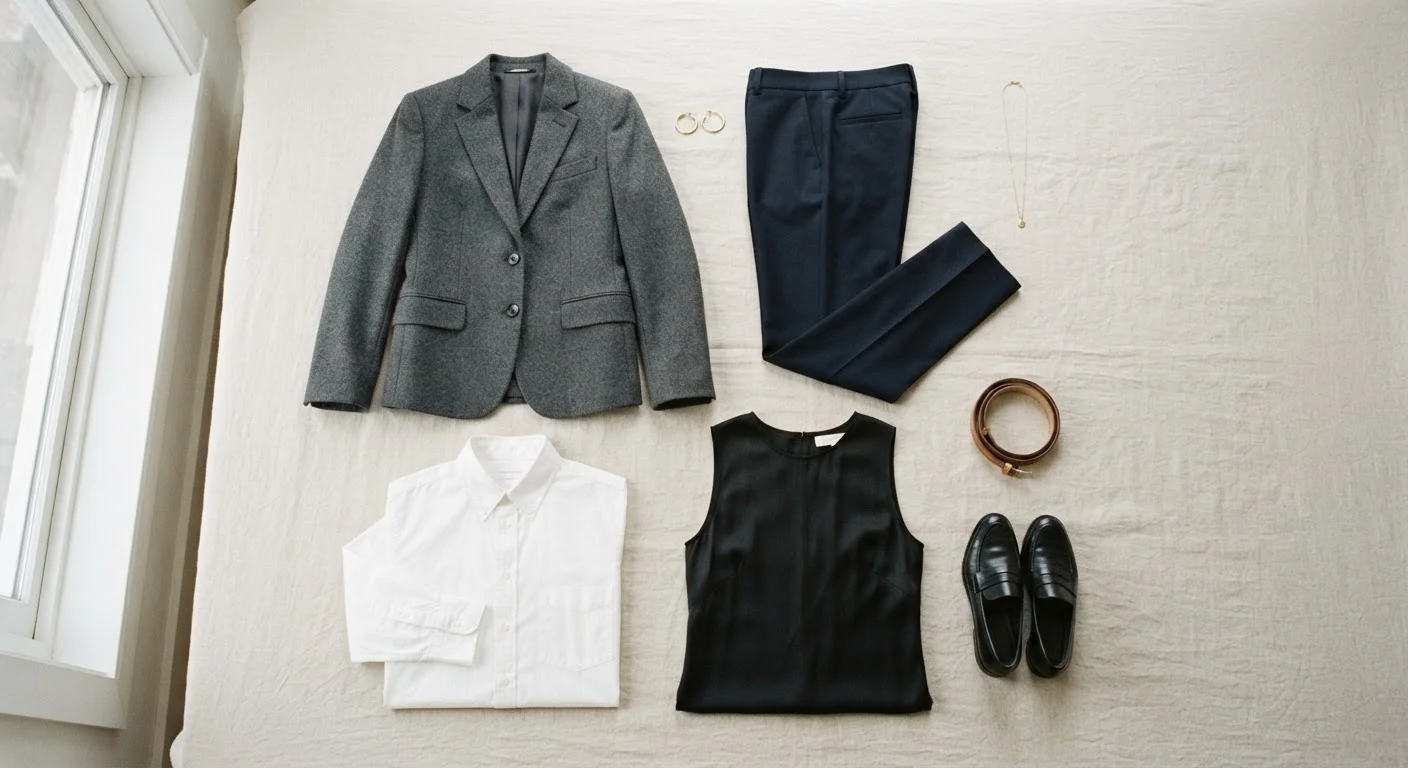
Why 'Versatile' Is Often a Meaningless Word
Walk through any clothing store and nearly every rack is labeled versatile. But a bodycon dress covered in sequins and a classic trench coat are not the same kind of versatile — even if both tags say so. The word has been diluted to the point of uselessness, which is exactly why it's worth understanding what the quality actually requires.
Genuine versatility is a design outcome, not a marketing claim. It's the result of specific choices about color, silhouette, fabric, and detail — and when those choices align, a single piece can anchor a weekday meeting, a weekend brunch, and a casual evening out without reinventing your entire look. When they don't align, even an expensive, beautiful garment earns itself one narrow slot in your rotation.
Understanding what makes a piece actually adaptable puts you in a better position to make confident choices — and to stop being sold items that look flexible on the hanger but frustrate you in real life. For more on how principles drive smarter dressing decisions, see dressing well on a budget.
The Four Qualities That Drive Real Adaptability
Versatile pieces tend to share four overlapping characteristics. No single factor does all the work — it's the combination that matters.
Color and Saturation
Low-saturation colors — navy, camel, slate, ivory, olive, charcoal — pair easily because they don't compete visually with what's around them. High-saturation brights or very specific shades (think cobalt or burnt sienna) can be beautiful but require more deliberate coordination. This doesn't mean you should only own neutrals — it means the pieces you want to work hardest for you should live in that quieter color range. Our guide to balancing neutrals and statement pieces explores this tradeoff in detail.
Silhouette and Detail
Clean silhouettes with minimal ornamentation are functionally easier to dress up or down. Embellishment — ruching, rhinestones, cutouts, bold prints — tends to make a piece feel occasion-specific. A streamlined blazer or a simple A-line skirt can absorb styling changes; a heavily detailed top usually can't. Unembellished doesn't mean boring — it means the piece leaves room for you to direct the conversation.
Fabric Weight and Texture
Fabric communicates formality more than most people realize. High-sheen materials (satin, patent finishes) read as dressy; very casual textures (rough linen, thick jersey) read as relaxed. Mid-weight fabrics with a matte or subtle finish — a ponte knit, a brushed cotton, a medium-weight wool — sit comfortably in the middle, which is exactly where versatility lives. Seasonal range matters too: a mid-weight fabric can usually be layered into colder months and worn alone in transitional weather.
Fit and Proportion
Fit may be the single most powerful variable. A well-fitted piece signals intentionality, which reads as polish across almost any context. An ill-fitting garment struggles to look deliberate regardless of its color or silhouette. This doesn't mean everything needs to be tailored slim — but it does mean the fit should look chosen rather than accidental. See how fit and style interact for a deeper look at why fit usually wins.
~80%
Clothes worn only rarely after purchase
Research from the Ellen MacArthur Foundation has estimated that a significant majority of clothing items are worn far fewer times than consumers anticipate at the point of purchase.
3–4x
More outfits from core versatile pieces
Wardrobe consultants and capsule wardrobe advocates commonly find that a small set of genuinely versatile foundation pieces generates disproportionately more outfit combinations than a larger mixed wardrobe.
How Accessories Extend What a Piece Can Do
A versatile garment is a foundation, not a complete outfit. Much of the actual occasion-shifting work is done by what surrounds it. The same slim trousers worn with a clean sneaker and an unstructured jacket read as smart-casual; pair them with a low-heeled mule and a structured bag and the same pants move into a business-casual register without any change to the core piece.
This is why choosing the right accessories is so directly tied to versatility. If you're evaluating whether a piece is genuinely adaptable, it's worth asking: how many distinct ways can I style this with what I already own? If the answer is two or fewer, it may not be earning the versatile label regardless of what the tag claims.
Test Versatility Before You Buy
Before adding a new piece, mentally style it three ways using items you already own. If you can't picture at least three distinct combinations — not just variations on the same look — the piece may be less adaptable than it appears. This quick mental exercise takes less than a minute and can save significant buyer's remorse.
Putting It Together: A Practical Lens for Shopping
The next time you're evaluating whether something new earns a place in your wardrobe, run through a quick mental checklist: Does the color work with at least three things I already own? Is the silhouette clean enough to dress up and down? Does the fabric weight feel appropriate for more than one season? Does the fit look intentional on my actual body?
A piece that clears all four bars has real staying power. One that clears two or three may still be worth it — but with eyes open about its limits. And one that struggles on all counts, no matter how appealing it looks in the store, is likely to become a single-use hanger resident.
Building from this kind of thinking naturally leads to getting more outfits from fewer pieces — which is where real wardrobe confidence comes from. When you invest in adaptable foundations, even a modest closet can cover a surprising range of occasions without daily frustration. And as the seasons shift, those same principles help you transition your wardrobe without starting over.
Frequently Asked Questions
True versatility comes from a combination of neutral or low-saturation color, a clean and unembellished silhouette, a mid-weight fabric with low sheen, and a fit that reads as intentional rather than sloppy. Pieces that hit all four of those marks tend to work across far more situations than those that hit only one or two.
Black is extremely easy to combine, but it isn't automatically the most versatile option for everyone. Navy, camel, slate grey, and off-white can be just as combinable while working better for certain skin tones or warmer climates. The key quality is low visual competition with other pieces, which black achieves but doesn't hold a monopoly on.
Not exactly. A wardrobe made entirely of basics can feel flat and uninspiring. The goal is to have a strong foundation of versatile pieces that anchor outfits, then add a smaller number of personality-driven items to those. The ratio matters more than eliminating all statement choices.
Fit is arguably the most important factor. A piece that fits well reads as polished even in casual contexts, while an ill-fitting item struggles to look intentional regardless of the occasion. A slightly tailored or structured fit typically travels across dress codes more successfully than an overly relaxed or overly tight silhouette.
Absolutely. Versatility is partly personal — it depends on the occasions you actually navigate, the other pieces already in your wardrobe, and your lifestyle. A midi wrap dress might be highly versatile for someone who moves between office meetings and dinners out, but less so for someone whose week is entirely casual or athletic.
Accessories are often what actually shifts a piece from one occasion register to another. A plain crewneck sweater worn with sneakers reads differently than the same sweater tucked into tailored trousers with a leather belt. The garment provides the foundation; the accessories do much of the contextual signaling.
The content on this site is for informational purposes only and is not a substitute for professional advice. Always consult a qualified professional for guidance specific to your situation.