

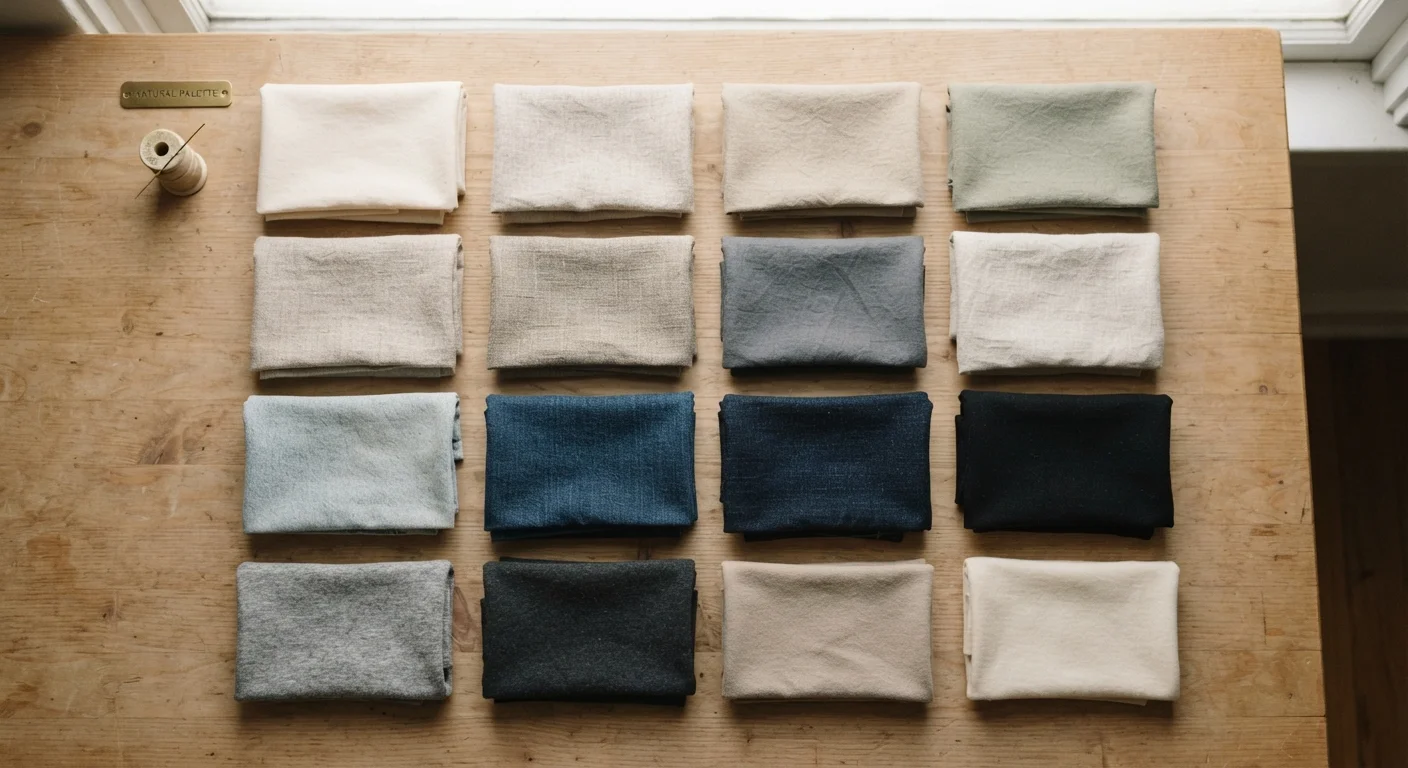
Why Fabric Knowledge Actually Matters
Most of us have grabbed a shirt off the rack, loved it in the store, and watched it pill, shrink, or wrinkle beyond rescue after a few washes. Fabric is usually the culprit. Knowing what a material does — how it breathes, how it ages, how to clean it — takes the guesswork out of getting dressed and helps your clothes last longer.
This isn't about becoming a textile expert. It's about reading a care label and actually understanding it, or knowing why that linen shirt looks more relaxed than crisp by noon (and deciding whether that bothers you). Think of it as a practical toolkit, not a fashion school curriculum.
If you're starting your wardrobe from scratch, fabric awareness is one of the first skills that saves you money and regret.
| Most breathable natural fiber | Linen |
| Most common everyday fabric | Cotton |
| Best for wrinkle resistance | Polyester or poly-cotton blends |
| Most delicate to launder | Viscose / Rayon |
| Natural odor-resistance | Wool (especially merino) |
| Stretch added by | Spandex / Elastane (often 2–5% in a blend) |
The Core Fabrics, Decoded
Here's a plain-language breakdown of the materials you'll encounter most often in everyday clothing.
Cotton
A natural plant fiber that's breathable, absorbent, and comfortable against skin. It's widely available at various price points but can wrinkle easily and may shrink if washed in hot water.
Linen
Made from the flax plant, linen is lightweight and exceptionally breathable — ideal for warm weather. It wrinkles readily, which many people embrace as part of its relaxed aesthetic.
Polyester
A synthetic fiber known for durability, wrinkle resistance, and color retention. It's less breathable than natural fibers, which can make it feel warm in hot conditions, but it holds its shape well over time.
Viscose (Rayon)
A semi-synthetic fiber made from plant cellulose, processed to create a soft, drapey fabric. It mimics the feel of silk or cotton but requires gentle care — it can shrink or warp when wet.
Wool
A natural animal fiber that insulates even when damp, resists odor, and is naturally elastic. Merino wool is a finer, softer variety often used in everyday clothing that can be worn close to the skin.
Nylon
A strong, lightweight synthetic fiber often used in activewear, hosiery, and outerwear linings. It's abrasion-resistant and dries quickly but, like polyester, breathes less than natural fibers.
Acrylic
A synthetic fiber designed to mimic wool. It's lighter, often cheaper, and machine washable, but it pills more readily and doesn't insulate as effectively as genuine wool.
Spandex (Elastane/Lycra)
A highly stretchy synthetic fiber rarely used alone but blended into fabrics to add stretch and recovery. Even a small percentage (2–5%) significantly improves a garment's fit and flexibility.
Blended Fabrics
Many garments combine two or more fibers — poly-cotton, for instance, pairs the durability and color-retention of polyester with the breathability of cotton. Blends are designed to offset each fiber's weaknesses, which is why a poly-cotton tee often holds its shape better than 100% cotton. The trade-off is that blends can be trickier to recycle or resell. When a label reads "60% cotton, 40% polyester," the dominant fiber usually determines how the fabric feels and how you should care for it.
Weight and Weave Matter Too
Beyond fiber type, the way a fabric is woven or knitted changes everything about how it performs. A lightweight cotton lawn is sheer and breezy; a heavy cotton twill is structured and durable. Knit fabrics (jersey, rib) stretch and move with you; woven fabrics (poplin, chambray) have more structure but less give. Understanding weight helps you pick the right piece for the right season — which ties directly into what makes a garment genuinely versatile.
Caring for Your Fabrics (Without Overthinking It)
Care labels exist for a reason: the wrong wash cycle or dryer setting is often what shortens a garment's life, not the wearing itself. A few general principles go a long way.
- Natural fibers like cotton and linen generally tolerate machine washing but can shrink in high heat — cold or warm water and a low-heat dry cycle is safer.
- Wool and silk prefer gentle or hand-wash cycles, and most wool should be laid flat to dry to keep its shape.
- Synthetic fibers (polyester, nylon, acrylic) are usually machine-wash friendly and dry quickly, but high heat can cause pilling or distortion.
- Viscose and rayon are notoriously delicate when wet — many pieces labeled viscose will shrink or lose shape if machine washed; hand wash or dry clean is often worth it.
When you're doing a wardrobe audit, checking care labels on items you already own is a great way to figure out which pieces have been getting the wrong treatment — and whether that explains the wear.
When "Dry Clean Only" Isn't the Whole Story
Some garments labeled "dry clean only" — particularly structured items like blazers — carry that label as a conservative precaution rather than a strict requirement. That said, following the care label is always the lower-risk choice, especially with unfamiliar fabrics. If you're unsure, test a small, hidden area or consult a professional cleaner before washing at home.
Understanding fabric also reinforces the principles behind dressing well on a budget: a well-cared-for natural fiber piece will often outlast a cheaper synthetic that's been mishandled.
The content on this site is for informational purposes only and is not a substitute for professional advice. Always consult a qualified professional for guidance specific to your situation.