

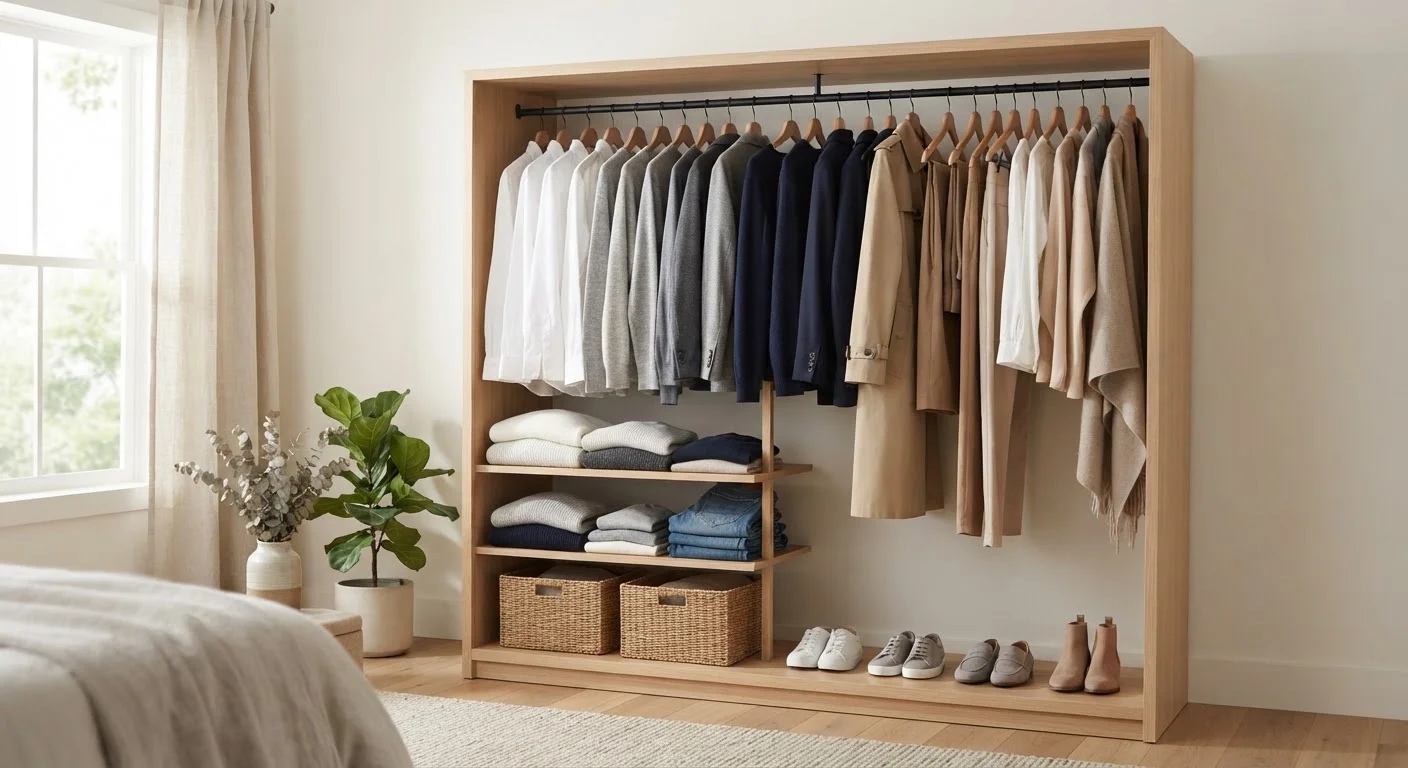
Where the Idea Came From
The phrase "capsule wardrobe" was first used by Susie Faux, owner of a London boutique called Wardrobe, in the 1970s. She used it to describe a set of timeless, high-quality basics that could anchor a woman's wardrobe season after season. The idea gained mainstream attention when designer Donna Karan introduced her "Seven Easy Pieces" collection in 1985 — a handful of versatile garments designed to carry a professional woman from the office to evening without a full outfit change.
The concept drifted in and out of fashion conversation for decades before surging again in the 2010s alongside growing interest in sustainable consumption and intentional living. Today it resonates with anyone who's ever stared at a full closet and felt like they had nothing to wear — a surprisingly common experience that a capsule approach directly addresses.
“A capsule wardrobe is about making getting dressed easier — it's not about restriction, it's about clarity. When everything in your wardrobe works together, getting dressed stops being a problem to solve.”
— Susie Faux, London boutique owner and originator of the capsule wardrobe concept
What Makes a Wardrobe "Capsule"
A capsule wardrobe has a few defining characteristics that separate it from simply owning fewer clothes:
- Versatility: Each piece works with multiple other items in the collection. A well-chosen jacket, for example, might pair with casual jeans, work trousers, or a dress.
- Longevity: Capsule pieces tend to be classic in cut and construction — not trendy — so they remain wearable across years, not just a single season.
- Intentionality: Every item is chosen deliberately based on how often you'll actually wear it and how well it fits your real life, not an imagined one.
- Cohesion: The pieces in a capsule work together as a system. When most items can be mixed and matched, you multiply your outfit options without multiplying your clothing count.
It's worth noting that a capsule wardrobe is personal — there's no master list of required items that applies to everyone. A teacher's capsule looks very different from a freelancer's. Getting more outfits out of fewer clothes is easier when the pieces you own are chosen with combination in mind from the start.
~20%
Clothes worn regularly from the average closet
Research and wardrobe studies frequently cite the figure that most people wear roughly 20% of their clothes 80% of the time, suggesting significant room for intentional editing.
25–50
Typical capsule wardrobe item range
Style educators and wardrobe consultants commonly suggest this range as a practical target, though the right number varies by lifestyle and climate.
Why It Works: The Practical Benefits
The capsule wardrobe concept works because it solves real, everyday friction points around getting dressed. Here's what makes it effective in practice:
Less Decision Fatigue
Research in behavioral science consistently shows that making too many decisions depletes mental energy. A smaller, well-curated closet means fewer choices in the morning — which, for many people, translates to noticeably smoother mornings and more mental bandwidth for other things.
Lower Long-Term Spending
A capsule approach shifts spending from frequent impulse purchases toward occasional, deliberate ones. Over time, buying fewer but better-chosen pieces typically costs less than repeatedly buying things that don't work with the rest of the wardrobe.
More Consistent Personal Style
When your wardrobe is intentional, you dress more like yourself — consistently. That kind of style coherence tends to feel more confident and polished than a closet that reflects years of varied impulses.
Start With What You Already Own
Before buying a single new item, spend time with what's already in your closet. Pull out pieces you reach for consistently and notice what they have in common — fit, color, fabric, occasion. That pattern is the seed of your capsule. Buying comes later, after you know what's genuinely missing.
If you're curious whether a capsule approach might suit you, a good starting point is a wardrobe audit: assessing what you already own before buying anything new. Our room-by-room closet checklist walks you through that process methodically.
Getting Started Without Starting Over
You don't have to throw everything out or make a major purchase to begin. Most capsule wardrobes are built gradually — identifying what you already own that earns its place, setting aside what doesn't, and filling gaps thoughtfully over time.
If your closet feels sparse to start with, that's actually an advantage. Our guide on building a wardrobe from almost nothing outlines which foundational pieces to prioritize first and in what order, so you're never spending without direction.
For a broader framework that ties wardrobe building to daily dressing habits, the everyday style framework covers everything from core pieces to getting dressed with confidence each morning.
Frequently Asked Questions
There's no universal rule, but most practitioners recommend somewhere between 25 and 50 items, including shoes and outerwear. The right number depends entirely on your lifestyle, climate, and how often you do laundry. Start with what feels manageable rather than aiming for a specific count.
Not at all. Neutrals are commonly recommended because they mix easily, but your capsule can include any colors that you genuinely enjoy wearing and that work together. The key principle is cohesion — pieces that can be combined in multiple ways — not any particular palette.
They overlap but aren't identical. Minimalism is a lifestyle philosophy focused on owning less overall. A capsule wardrobe is a practical dressing strategy that happens to involve fewer items. You can build a capsule wardrobe without subscribing to minimalism as a broader value system.
Yes — many people maintain a core capsule year-round and swap in seasonal pieces as the weather changes. A small set of transitional items like lightweight layers can bridge the gaps. See strategies for <a href="/style/everyday-fashion/seasonal-wardrobe-transition-refreshing-your-closet-without-starting-over">refreshing your wardrobe between seasons</a> without starting over each time.
No. The capsule concept is about intentionality, not price tags. Many people build capsules entirely from what they already own, supplemented by secondhand or budget-friendly finds over time. The goal is to stop buying things you won't wear, which typically saves money in the long run.
The content on this site is for informational purposes only and is not a substitute for professional advice. Always consult a qualified professional for guidance specific to your situation.