

Our Verdict
Secondhand shopping is a genuinely valuable tool for building a wardrobe on a budget, and its sustainability benefits are hard to ignore. But it works best as a strategy, not a blanket replacement for all clothing purchases. Approached with clear priorities and realistic expectations, it can stretch your clothing budget meaningfully without sacrificing how you look or feel.
Best for budget-conscious shoppers who enjoy the hunt, have flexible style preferences, and are willing to invest some extra time in exchange for lower spending.
Why Secondhand Is Worth Taking Seriously
Thrift stores, resale apps, consignment shops, and clothing swaps have moved well past their scrappy reputation. Secondhand clothing is now a mainstream wardrobe strategy embraced by people across every income level — and for good reason. The potential to pay a fraction of retail price for quality pieces is real, not exaggerated.
If you're thinking about stretching your clothing budget further, secondhand is worth understanding thoroughly — including where it genuinely delivers and where it creates friction. This isn't about cheerleading for thrift culture or dismissing it; it's about giving you an honest map before you commit your time and money.
For a broader framework on dressing well without constant spending, the principles behind budget dressing are a strong starting point.
Substantially lower price points than retail
Secondhand prices on comparable items typically run 50–80% below original retail, making quality fabrics and construction more accessible at every budget level.
Access to durable, higher-quality construction
Older garments — particularly those made before fast fashion dominated — often feature heavier fabrics, stronger seams, and longer-lasting hardware than modern equivalents at the same price.
Lower environmental footprint per garment
Extending the life of existing clothing reduces demand for new production, which is resource-intensive. Buying secondhand doesn't eliminate your footprint, but it meaningfully reduces it compared to buying new.
Opportunity to experiment with style at low risk
Trying out a new silhouette, color palette, or aesthetic costs far less secondhand, making it easier to experiment without committing significant money to something you're unsure about.
Unique pieces that stand out from mass retail
Thrifting regularly surfaces items you simply won't find in current stores — vintage cuts, discontinued fabrics, and one-of-a-kind details that add character to a wardrobe.
The Real Limitations to Plan Around
None of these drawbacks are dealbreakers on their own, but ignoring them leads to frustration — and ironically, more spending, not less. Going in with eyes open makes the whole process more efficient.
Time-consuming and unpredictable
Unlike retail, secondhand shopping offers no guaranteed inventory. Finding what you need can require multiple trips or hours of browsing online listings, which adds up quickly.
Inconsistent sizing and fit across eras and brands
Vintage sizing in particular runs differently from modern sizing conventions, and trying items on or measuring carefully becomes essential rather than optional.
Limited availability in some size ranges
Plus sizes, petites, and tall sizes are often underrepresented in physical thrift environments, which can make building a complete wardrobe secondhand significantly harder for some shoppers.
Condition varies and damage isn't always visible
Pilling, fabric thinning, weakened seams, and set-in odors aren't always obvious under store lighting. Items that look wearable may need repairs or cleaning that adds cost and effort.
Basics and intimate apparel are harder to source well
High-turnover basics like undershirts, underwear, and socks are best bought new for hygiene and quality reasons, limiting how thoroughly you can rely on secondhand alone.
~50–80%
Typical savings vs. retail price
Resale industry observers and consumer reporting consistently cite this range for comparable garments across thrift and consignment channels.
2x+
Extended garment lifespan impact
Research from environmental organizations suggests doubling the active life of a garment can meaningfully reduce its per-use environmental cost compared to disposal after limited wear.
The time investment is the trade-off most people underestimate. Unlike walking into a store with a clear inventory, secondhand shopping requires patience, repeat visits, and a tolerance for coming home empty-handed. If your schedule is tight, building a full wardrobe secondhand can feel more like a part-time job than a money-saving shortcut.
Size and fit gaps are another real issue. Certain size ranges — particularly plus sizes and petites — tend to be underrepresented in many thrift environments. This is a legitimate limitation, not a personal failing. Online resale platforms have improved availability, but even there, selection varies widely by size.
Where Secondhand Works Best (and Where It Struggles)
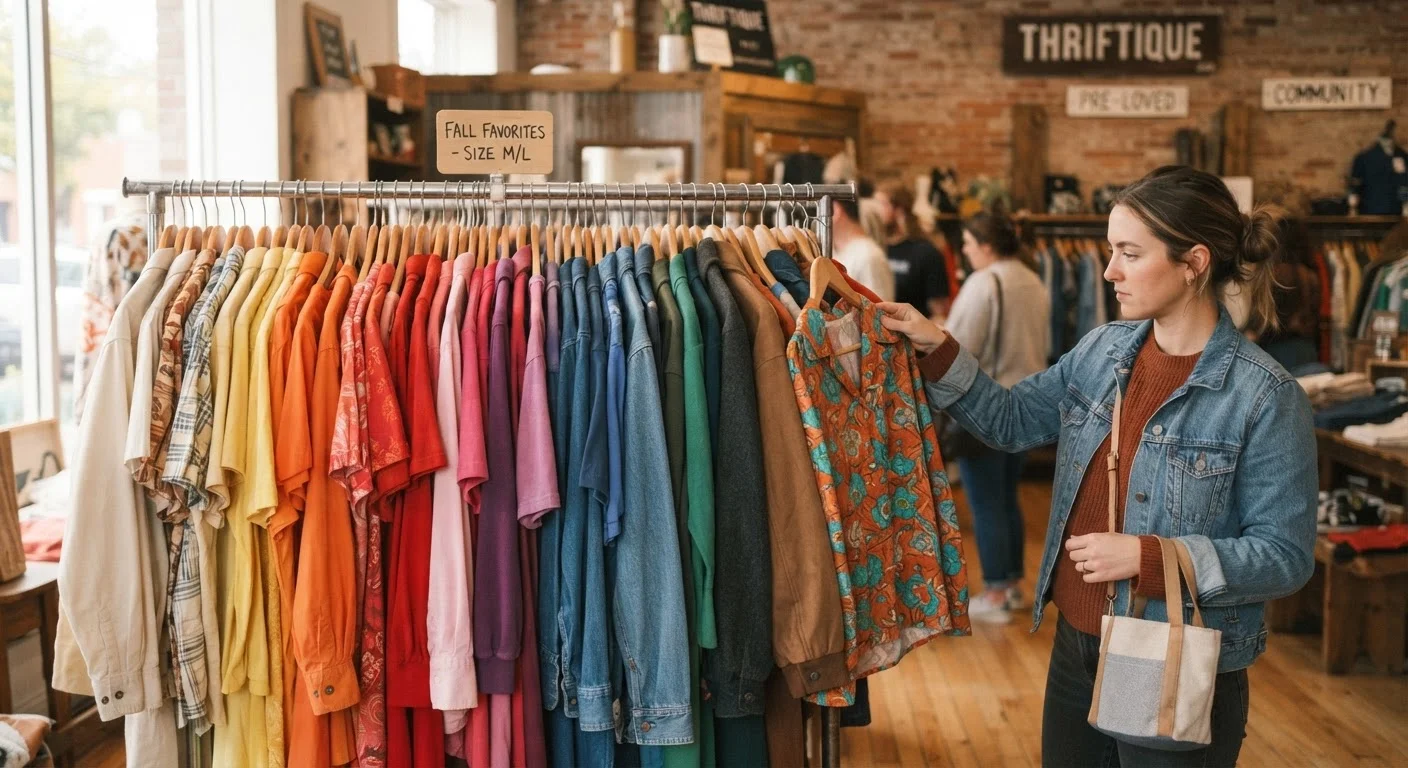
Not all clothing categories are equally thrift-friendly. Outerwear, denim, blazers, and sturdy knitwear tend to hold up well secondhand and are often available in abundance. These are the categories where secondhand shopping delivers its strongest value.
On the other hand, everyday basics — plain white tees, underwear, socks, fitted athletic wear — are trickier. Quality control matters most for items worn against skin or laundered frequently, and thrifted versions often show wear in ways that aren't immediately obvious in-store. For these, buying new and buying intentionally usually makes more sense.
A Note on 'Sustainable' Shopping
Buying secondhand is generally lower-impact than buying new, but it isn't automatically sustainable in the fullest sense. Purchasing large quantities of cheap secondhand clothing still consumes resources and creates textile waste eventually. The most durable strategy pairs secondhand shopping with genuine intentionality — buying what you'll actually wear, repeatedly, for a long time.
If you're using secondhand shopping to complement a leaner closet rather than replace thoughtful purchasing, check out how to get more outfits from fewer clothes — the two approaches work well together. And if you're refreshing for a new season, transitioning your wardrobe between seasons without starting over is worth reading before you shop.
Before committing to a major secondhand overhaul, a wardrobe audit will clarify exactly what you need — so you're filling genuine gaps rather than just accumulating more clothing at a lower price per item.
The content on this site is for informational purposes only and is not a substitute for professional advice. Always consult a qualified professional for guidance specific to your situation.