

Our Verdict
Protective styling is a genuinely useful strategy for reducing breakage and retaining length—but only when installation, maintenance, and removal are all handled with care. Done correctly, it gives hair a needed rest from daily manipulation. Done carelessly, it can lead to traction alopecia, matting, or moisture loss that sets hair health back significantly.
Protective styling is best suited for anyone with textured, natural, or chemically treated hair who wants to reduce daily manipulation while maintaining a consistent moisture and scalp-care routine.
The Core Idea Behind Protective Styling
At its simplest, a protective style is any hairstyle that keeps the ends of your hair tucked away and minimizes day-to-day manipulation. The theory is straightforward: the ends of your hair are the oldest part of the strand and most vulnerable to damage from friction, environmental exposure, and repeated styling. By shielding them, you reduce breakage and give your hair a better chance of retaining length over time.
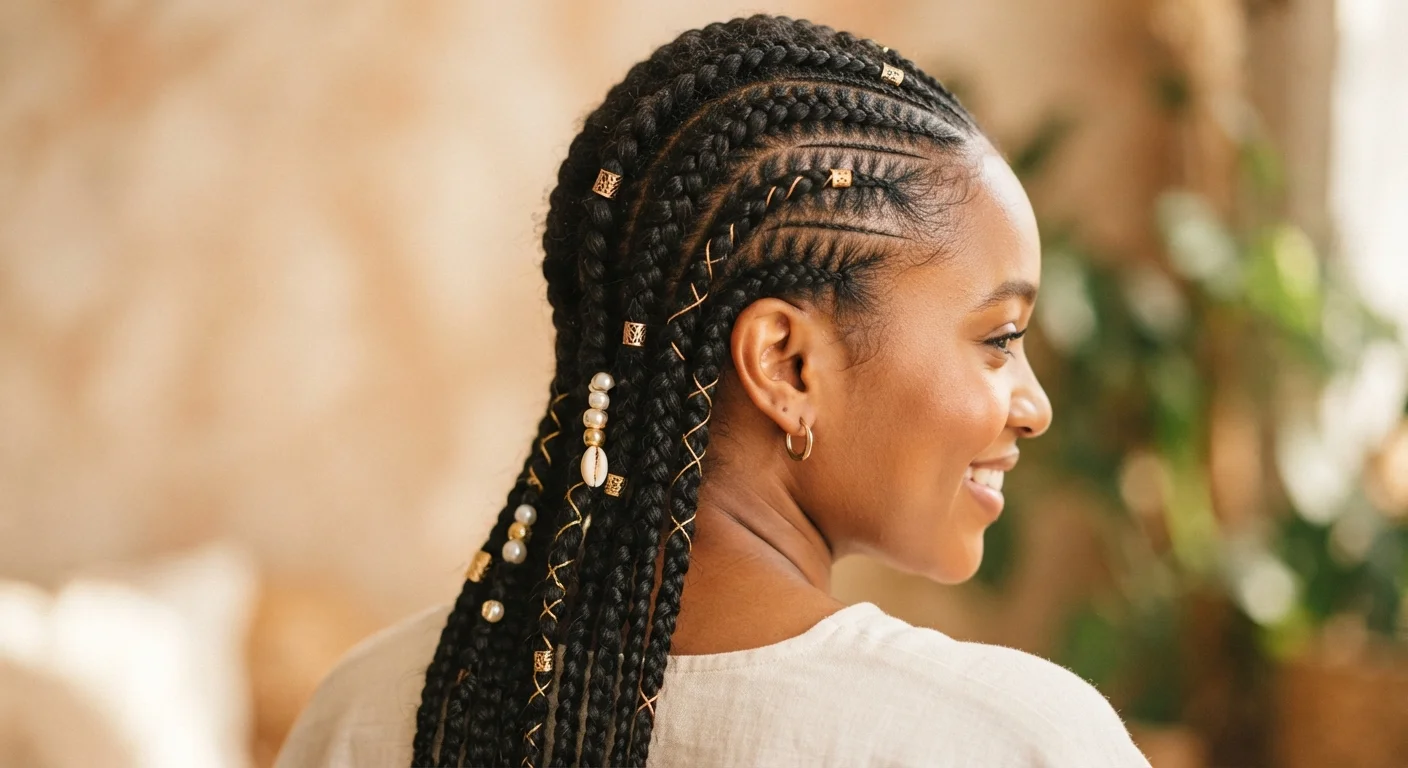
Common protective styles include braids, twists, cornrows, buns, locs, and updos. What unites them is that they limit the contact your ends have with clothing, fingers, combs, and environmental elements—reducing what stylists call mechanical damage. This concept is well-established in hair care, and dermatologists often recommend reduced manipulation as part of managing fragile or transitioning hair.
It's worth noting that protective styling is not a culturally neutral practice—it has deep roots in Black hair traditions and has served as both a practical and expressive tool for generations. Understanding that history adds meaningful context to its current popularity across hair communities. If you want to separate fact from fiction about hair care broadly, our piece on common hair care myths is a great companion read.
What Protective Styling Is NOT
Here's where a lot of well-meaning routines go sideways: protective styling is frequently misunderstood as a permission slip to ignore your hair entirely. It isn't. Installing a style and then leaving it untouched for weeks without cleansing your scalp, moisturizing, or monitoring tension is a recipe for damage—not protection.
Scalp Care Doesn't Stop When the Style Goes In
One of the most persistent misconceptions about protective styling is that once your hair is braided or twisted, you can skip your scalp routine. In reality, your scalp continues to produce oil, sweat, and shed skin cells whether your hair is styled or not. Lightly cleansing your scalp with a diluted shampoo or scalp-specific spray every one to two weeks—even while in a protective style—helps prevent buildup and keeps your follicles healthy throughout the wear period.
Equally important: tight is not the same as secure. Styles installed with excessive tension at the hairline or scalp put sustained stress on follicles, which can contribute to traction alopecia—a form of hair loss caused by repeated pulling. This is a medically recognized condition, and unlike many other forms of hair loss, it can become permanent if the tension continues long-term.
Protective styling also doesn't replace a good cleansing and conditioning routine. You can—and should—wash or at minimum cleanse your scalp while in a protective style. Neglecting moisture because hair is braided or twisted is one of the most common mistakes, and it often leads to breakage at removal. For more on keeping hair well-conditioned, see our guide on leave-in vs. deep conditioners.
The Real Pros and Cons
Like any hair care strategy, protective styling has genuine advantages and real limitations. Understanding both helps you use it as an actual tool rather than a trend.
Reduces daily mechanical damage to hair ends
Tucking ends away limits friction from clothing, brushing, and repeated styling—each of which contributes to split ends and breakage over time.
Supports length retention for fragile hair types
Textured and chemically treated hair is particularly prone to breakage at the ends; reduced manipulation can help more length survive over weeks and months.
Provides a break from daily heat styling
Going weeks without blow dryers or flat irons allows the hair shaft to recover, especially beneficial for those transitioning away from heavy heat use.
Versatile and culturally expressive
From sleek buns to elaborate braided designs, protective styles offer significant creative range and can be adapted to many hair textures and personal aesthetics.
Can simplify a daily styling routine
Once installed, many protective styles require only light maintenance, freeing up time otherwise spent on daily detangling, washing, and styling.
On the downside, the benefits of protective styling can disappear quickly if a few critical factors aren't managed well.
Excessive tension can lead to traction alopecia
Styles that pull tightly at the edges or scalp over time stress the follicle, potentially causing hair loss that may become permanent if not addressed early.
Neglected scalp care increases buildup and irritation
Leaving a style in without cleansing the scalp allows product buildup, sweat, and debris to accumulate, which can lead to itching, inflammation, or dandruff.
Leaving styles in too long causes matting and breakage
Hair continues to shed naturally while styled; when not removed at an appropriate interval, shed strands tangle into the style and break off during removal.
Moisture loss is easy to overlook
Hair that appears 'put away' can still become dry and brittle—particularly at the ends—if leave-in moisture isn't applied regularly throughout the style's duration.
Poor removal technique causes significant damage
Rushing takedown or skipping detangler can undo weeks of protective benefit in minutes; careful, methodical removal is just as important as a careful installation.
The bottom line: the style itself is only part of the equation. How it's installed, maintained, and removed matters just as much—if not more.
When Protective Styling Actually Helps
Protective styles tend to deliver the most benefit when used intentionally and paired with strong foundational care habits. Specifically, they shine during periods of active length retention, seasonal transitions (like harsh winter months when hair is more prone to dryness and breakage), or when recovering from heat or chemical damage.
8–10 weeks
Recommended maximum duration for most protective styles
Many hair care professionals suggest removing and reassessing braided or twisted styles after 6–10 weeks to prevent matting and follicle stress.
~50–100
Normal daily hair shed strands
According to the American Academy of Dermatology, losing 50 to 100 strands per day is considered normal; these accumulate inside protective styles and must be detangled carefully at removal.
If you're currently relying on heat tools regularly, protective styling offers a meaningful break. That said, the goal should be improving your overall hair health—not just swapping one potentially damaging habit for another done wrong. Our article on heat styling and hair damage covers what actually happens to the hair shaft under high temperatures and which protective habits reduce long-term harm.
A consistent care routine is the real engine behind healthy hair. Protective styling works best as one component of a thoughtful regimen. Use our weekly hair care audit to spot any gaps in your current habits before adding or changing styles.
This article is for general informational and educational purposes only. If you are experiencing hair loss, scalp issues, or significant changes in hair health, consult a licensed dermatologist or trichologist for personalized guidance.
The content on this site is for informational purposes only and is not a substitute for professional advice. Always consult a qualified professional for guidance specific to your situation.