

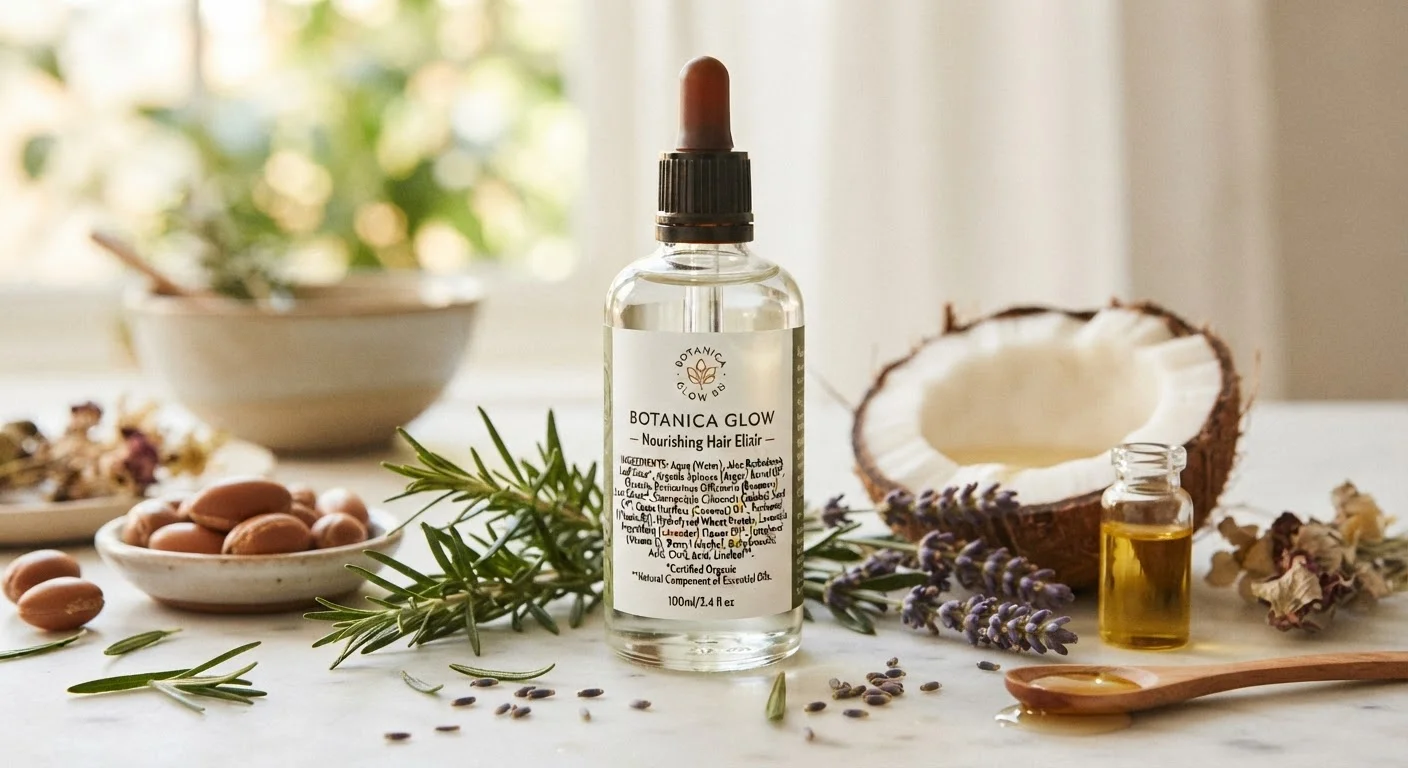
Why Ingredient Lists Are Worth Your Attention
The front of any hair product bottle is pure marketing real estate — words like nourishing, repairing, or strengthening have no legal definition and no standard. The ingredient list on the back, however, is regulated and standardized. It's the one part of the label that actually tells you what's in the bottle.
Reading it doesn't require a chemistry degree. Once you recognize a handful of functional categories — humectants, emollients, proteins — you can evaluate almost any product more objectively than any front-of-pack claim will allow. If you're already building or refining your routine, see our guide to building a hair care routine from the ground up for the broader framework these skills fit into.
What you will need
How to Read Any Hair Product Label: Step by Step
Order on the Label Is Meaningful
Hair product ingredients are listed in descending order of concentration — the first five ingredients typically make up the bulk of the formula. If a hero ingredient (like a protein or a botanical oil) appears near the very end of a long list, it's present in only a trace amount and unlikely to make a significant difference. Focus your evaluation on what appears in the top third of the list.
Find the full ingredient list on the packaging
Look for the section labeled Ingredients — usually printed on the back or bottom of the bottle in small type. In the U.S., the Food, Drug, and Cosmetic Act requires cosmetics to list ingredients using standardized INCI (International Nomenclature of Cosmetic Ingredients) names. This is why you'll see aqua instead of water, or butyrospermum parkii instead of shea butter. Don't let the Latin-sounding names intimidate you — the system is there to ensure consistency, not to confuse consumers.
Identify the base ingredients in the first few positions
The first one or two ingredients are almost always water (aqua) — that's your solvent base, and it's perfectly normal. What comes immediately after water tells you a lot about the product's texture and weight. Thick, cream-based conditioners will list fatty alcohols like cetyl alcohol or stearyl alcohol early on. These are not the drying alcohols found in hairsprays — they are moisturizing, waxy compounds that give products slip and smoothness.
Spot the humectants — your moisture magnets
Humectants attract and bind water molecules to the hair shaft, helping hair stay hydrated throughout the day. Common ones to recognize include:
- Glycerin — one of the most effective and widely used humectants
- Aloe barbadensis leaf juice (aloe vera) — soothing and hydrating
- Panthenol (provitamin B5) — improves moisture retention and adds softness
- Sodium PCA — a naturally occurring humectant found in skin and hair
The higher these appear on the list, the more hydrating potential the product has.
Recognize the emollients — your smoothers and sealants
Emollients coat and smooth the hair cuticle, reducing frizz and adding shine. They tend to be oils, butters, and silicones. Look for:
- Dimethicone / cyclomethicone — silicones that create a smooth, frizz-reducing coating
- Argan oil, jojoba oil, coconut oil — plant-derived emollients that vary in molecular size and penetration ability
- Shea butter (butyrospermum parkii) — rich emollient, particularly effective for coarse or thick hair types
Whether silicones suit your routine is a personal choice — they work well for many hair types but may require a clarifying wash periodically to prevent buildup. Our guide to sulfate-free vs. regular shampoo covers that tradeoff clearly.
Identify proteins — and know when you need them
Hair is made of keratin, a protein — so protein-based ingredients can help reinforce damaged or weakened strands. Watch for:
- Hydrolyzed keratin, hydrolyzed silk, hydrolyzed wheat protein — broken-down proteins small enough to penetrate or bond to the hair shaft
- Collagen — adds body and strengthens
The word hydrolyzed means the protein has been broken into smaller molecules, which makes it more effective at interacting with the hair structure. That said, too much protein without adequate moisture can make hair feel stiff or brittle — a balance matters. If your hair feels crunchy after use, back off protein-heavy products temporarily.
Scan the tail end of the list for actives and preservatives
The final 10–20% of an ingredient list typically contains preservatives, colorants, fragrance, and small-concentration actives. Preservatives are essential — they prevent microbial growth and keep the product safe to use. Common ones include phenoxyethanol, sodium benzoate, and potassium sorbate, all of which are considered safe at the concentrations used in cosmetics. Fragrance (parfum) appears here too; if you have a sensitive scalp, this is the first ingredient category worth filtering out when shopping.
Match Ingredients to Your Hair Porosity
High-porosity hair tends to absorb moisture quickly but loses it just as fast — heavier emollients and sealants help lock hydration in. Low-porosity hair may resist heavy oils and benefit more from lighter humectants. Understanding your porosity is the fastest shortcut to reading labels productively. See our guide on hair porosity for a simple at-home test.
Watch for Potential Allergens and Sensitivities
Fragrance (listed as 'fragrance' or 'parfum') and certain preservatives like methylisothiazolinone are common sources of scalp irritation and contact dermatitis in some individuals. If you experience scalp sensitivity, scanning for these ingredients first is a smart habit. When in doubt about a reaction, consult a dermatologist.
Once you've worked through a few labels using this approach, the process becomes fast and almost instinctive. You'll start recognizing familiar ingredient names across different products and develop a clearer sense of what your hair actually responds to — which is far more useful than relying on packaging promises. For a deeper look at how these same labeling conventions work in skincare, reading a skincare label applies many of the same decoding skills.
Putting It All Together in Your Routine
Ingredient literacy is most powerful when paired with self-knowledge. The difference between a leave-in and a deep conditioner, for example, makes a lot more sense once you can see how their ingredient profiles differ — deep conditioners tend to front-load proteins and heavy emollients, while leave-ins lean on lighter humectants and slip agents.
Use the weekly hair care audit as a regular checkpoint: once you've identified what ingredients your hair thrives on, a quick scan of your current product lineup will tell you whether your routine is aligned with those needs. Label reading isn't a one-time exercise — it's a skill that compounds over time.
This article is for general informational purposes only and is not a substitute for professional dermatological or trichological advice. If you experience scalp concerns or persistent hair loss, consult a qualified healthcare provider.
The content on this site is for informational purposes only and is not a substitute for professional advice. Always consult a qualified professional for guidance specific to your situation.