

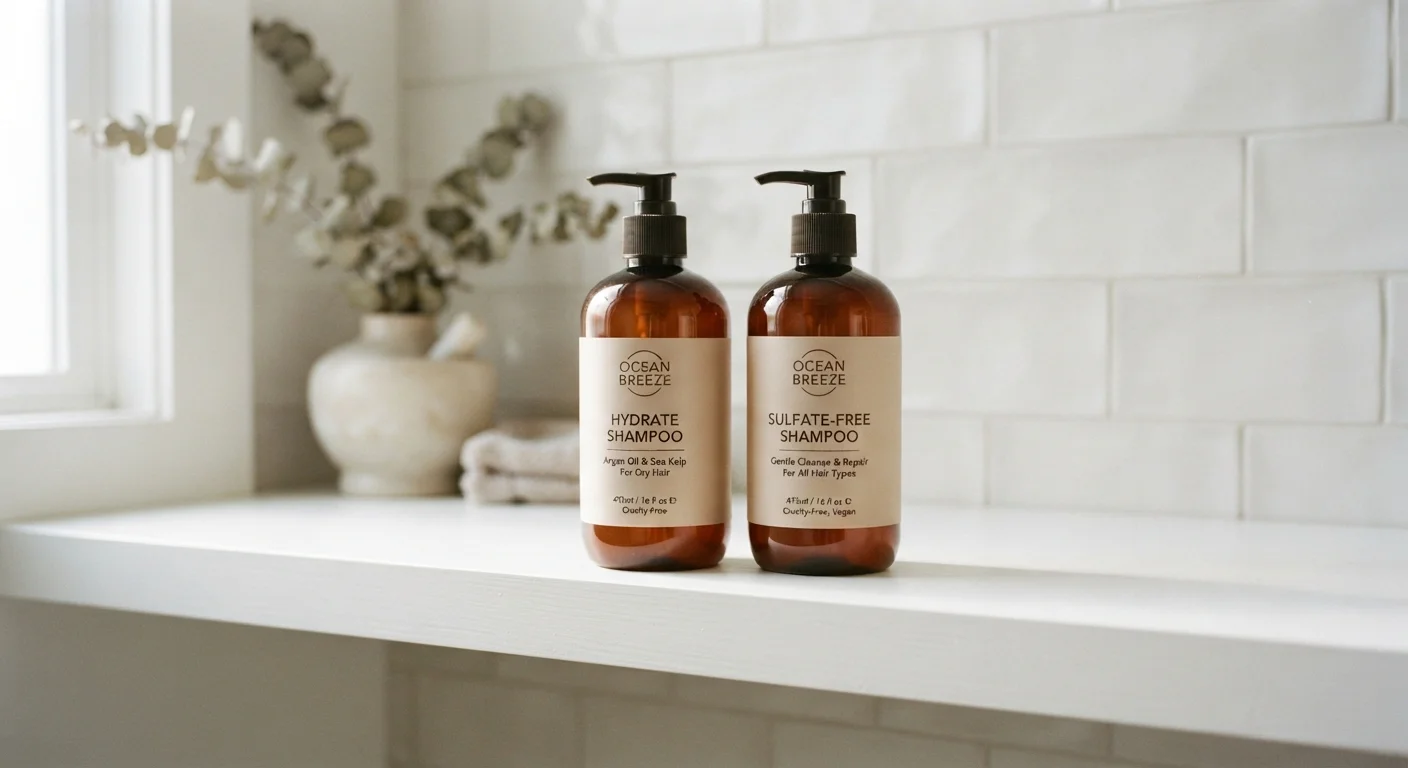
Option A
Sulfate-Free Shampoo
The gentler, moisture-conscious cleanse.
Best for: Best for color-treated, chemically processed, dry, curly, or low-porosity hair that needs a lighter touch.
Option B
Regular (Sulfate-Based) Shampoo
The powerful, deeply cleansing workhorse.
Best for: Best for oily scalps, fine or straight hair, and anyone who uses heavy styling products regularly.
What Are Sulfates, Exactly?
Sulfates are a category of surfactants — ingredients that attract both water and oil, allowing them to lift grease and dirt off the hair shaft and rinse it away. The most common ones you'll see on a shampoo label are sodium lauryl sulfate (SLS) and sodium laureth sulfate (SLES). They're highly effective cleansers and produce the satisfying lather many people associate with feeling clean.
Sulfate-free shampoos replace these with milder surfactants like cocamidopropyl betaine, sodium cocoyl isethionate, or decyl glucoside. These still cleanse, but with less aggressive oil removal and, typically, much less foam. If you want to get comfortable reading those ingredient lists, our ingredient label guide is a useful starting point.
Lather Doesn't Equal Clean
Many people associate thick foam with effective cleansing, but lather is largely a cosmetic effect produced by sulfates. Sulfate-free shampoos can clean just as thoroughly for many hair types despite producing much less foam. Rinsing thoroughly matters far more than how much your shampoo bubbles up.
Side-by-Side: How They Compare
The real differences between these two formula types come down to cleansing intensity, moisture retention, and how well they suit different hair profiles. Here's a direct comparison:
| Criterion | Sulfate-Free Shampoo | Regular Shampoo |
|---|---|---|
| Cleansing strength | Moderate — gentler lift | Strong — thorough removal |
| Lather | Low to moderate foam | Rich, high lather |
| Moisture retention | Higher — less stripping | Lower — strips more oils |
| Color-treated hair | Color-safe, fading reduced | Can accelerate color fade |
| Oily scalp performance | May leave residue behind | Effectively clears excess oil |
| Curly / coily hair | Well-suited | Can cause dryness and frizz |
| Heavy product buildup | May not fully clear buildup | Handles buildup well |
| Scalp sensitivity | Generally better tolerated | May irritate sensitive scalps |
Keep in mind that formulations vary widely within each category. A gentle drugstore sulfate-based formula might actually cleanse more mildly than a concentrated sulfate-free clarifying shampoo, so ingredient-level reading matters more than label claims alone.
Who Benefits From Going Sulfate-Free?
Sulfate-free formulas tend to shine for specific hair situations rather than across the board. Color-treated hair is a strong candidate — research and stylist consensus both suggest that harsh surfactants can accelerate color fading by opening the hair cuticle more aggressively. Chemically relaxed or keratin-treated hair may also respond better, since these processes already alter the hair's structural bonds.
Curly and coily hair textures typically have a harder time retaining moisture because the natural oils from the scalp travel more slowly down a curved strand. Stripping those oils away with a strong sulfate can leave curls feeling dry, frizzy, or brittle. For these textures, pairing a sulfate-free shampoo with the right conditioner is often a game-changer.
That said, switching to sulfate-free isn't a magic fix. If your scalp is oily or you use silicone-heavy styling products, a gentler formula may leave residue behind that builds up over time.
When Regular Shampoo Is the Right Call
Standard sulfate-based shampoos remain genuinely useful tools — they haven't fallen out of favor without reason. Fine, straight hair that tends to look flat or greasy quickly often benefits from the deeper cleanse sulfates provide. The same applies to anyone who works out frequently, uses a lot of styling products, or lives in a humid climate where the scalp produces excess oil.
Sulfate-based formulas are also the go-to for occasional clarifying washes — even for people who primarily use sulfate-free products. If you notice buildup, dullness, or your conditioner isn't absorbing as well as it used to, a sulfate-containing wash every few weeks can reset the hair. This ties closely into how often you're washing: washing frequency plays a big role in how much cleansing strength you actually need.
~65%
Share of shampoo buyers checking ingredients
Consumer surveys by market research firms suggest roughly two-thirds of U.S. shampoo shoppers report looking at ingredient lists when choosing a product.
2–4 weeks
Typical adjustment period when switching formulas
Hair stylists commonly note that the scalp may need several weeks to recalibrate oil production when transitioning between sulfate and sulfate-free products.
Building the Right Cleansing Habit
The best shampoo is one that matches your scalp's behavior, your hair's porosity and texture, and your lifestyle — not whichever one has the most appealing packaging. A useful starting exercise: pay attention to how your scalp and strands feel 24–48 hours after washing. Still greasy? Your formula may not be cleansing enough. Dry, tight, or frizzy immediately after? You may be over-stripping.
Some people find that rotating between a sulfate-free formula for regular washes and a sulfate-based clarifying shampoo monthly gives them the best of both worlds. If you're building your overall routine from scratch, our hair care basics guide walks through how cleansing fits into a complete, manageable routine. And if you want a structured way to assess what's working, the weekly hair care audit is a practical place to start.
The content on this site is for informational purposes only and is not a substitute for professional advice. Always consult a qualified professional for guidance specific to your situation.